

Snap, YouTube, and TikTok have resolved a lawsuit regarding school addiction, leaving Meta to stand trial by itself.
Snap, YouTube, and TikTok have reached settlements in the inaugural lawsuit from a school district regarding claims of social media addiction disrupting education and necessitating significant spending on mental health initiatives. This case, documented on Friday in federal court in Oakland, California, leaves Meta Platforms as the only defendant set to go to trial on June 12.
The lawsuit was initiated by Breathitt County School District, a small rural district located in eastern Kentucky, over 160 kilometers southeast of Frankfort, the state capital. This case is classified as a bellwether, meaning it aims to represent issues pertinent to over 1,200 similar lawsuits filed by school districts nationwide. The results of the trial may establish a framework for broader settlements across the ongoing litigation.
Details of the settlements were not revealed in the recent filings. YouTube stated that the issue had been "amicably resolved" and reaffirmed its commitment to developing age-appropriate products and parental controls. Snap expressed satisfaction in resolving the matter amicably, while TikTok has not responded to requests for comments. Attorneys for the school districts maintain their commitment to seeking justice for the remaining 1,200 districts with pending lawsuits.
Meta now finds itself in an increasingly isolated position. In March, a jury in Los Angeles determined that Meta and Google were liable for creating addictive platforms that harmed a woman who testified to starting her use of YouTube at six and Instagram at nine. The jury awarded $6 million in damages, allocated 70-30 between Meta and Google, marking the first occasion when social media companies were deemed responsible for the addictive nature of their products.
In an unrelated trial in New Mexico, a jury mandated that Meta pay $375 million after ruling that the company had breached state consumer protection laws by falsely assuring users about the safety of its platform and enabling child sexual exploitation. This case arose from an undercover operation where New Mexico Attorney General Raúl Torrez created a fictitious profile of a 13-year-old girl, which quickly attracted sexually explicit content and interactions from predators. New Mexico became the first state to win a trial against a major tech company over child safety issues.
The legal theory in the school district litigation differs from personal injury cases but shares a common claim: social media companies designed their products to be addictive, were aware of the harm inflicted on young users, and failed to take action. School districts argue that this resulting mental health crisis has compelled them to reallocate educational resources toward counseling and crisis management. Bloomberg Intelligence estimates that these lawsuits could potentially expose tech companies to nearly $400 billion in liabilities.
The pattern of social media litigation in 2026 has been consistent, with Snap and TikTok settling a personal injury addiction case in Los Angeles earlier this year before it proceeded to trial. Unlike them, Meta and Google did not settle and ultimately lost that case. In the school district litigation, all three co-defendants have now settled, while Meta remains the lone holdout.
Meta's choice to contest rather than settle comes with considerable risk. A trial involving numerous state attorneys general is slated to commence in August, and an unfavorable outcome could necessitate operational changes to Meta's products. During its Q1 2026 earnings call, Meta focused predominantly on AI investments, with no inquiries from investors regarding the child safety litigation, which some analysts believe poses a greater financial risk than Meta's entire AI initiative.
For Snap, the settlements carry significant implications. Being considerably smaller than Meta, Google, or ByteDance, Snap has recently reported its first decline in users in years, partly due to regulatory challenges concerning child safety. The company has attempted to distinguish itself from larger competitors, asserting that Snapchat is an alternative to social media rather than social media itself. Whether this distinction holds in court and public perception remains to be seen. Settling the bellwether trial alleviates one existential threat but does not conclude the broader litigation.
Currently, over 3,300 lawsuits alleging addiction are pending in California state court against social media firms, alongside an additional 2,400 cases consolidated in federal court from individuals, municipalities, states, and school districts. The extent of this litigation is often likened to the lawsuits against tobacco companies in the 1990s, which ultimately prompted significant industry changes regarding marketing, product design, and disclosures.
While not a perfect comparison, it is nonetheless illustrative. The tobacco litigation yielded a $206 billion master settlement agreement, as the liabilities became considerable enough that settlement proved cheaper than ongoing litigation. Social media companies are nearing a similar pivotal moment. Bloomberg Intelligence’s estimate of $400 billion is theoretical, but each verdict and settlement shifts the likelihood toward a negotiated resolution.
Meta will confront the Breathitt County School District alone on June 12. This trial will assess whether a jury holds a social media company accountable not for harming an individual user but for imposing costs on the entire public education system. A ruling in favor of the district could provide a framework for the remaining 1,200 school district lawsuits, substantially increasing the pressure on Meta to
Other articles
 Japan's Monster Wolf robot, priced at $4,000, features red LED eyes and effectively serves as a scarecrow.
A company in Hokkaido is struggling to produce its animatronic wolf quickly enough, as Japan experiences unprecedented bear attacks and a declining rural population.
Japan's Monster Wolf robot, priced at $4,000, features red LED eyes and effectively serves as a scarecrow.
A company in Hokkaido is struggling to produce its animatronic wolf quickly enough, as Japan experiences unprecedented bear attacks and a declining rural population.
 Snap, YouTube, and TikTok have resolved the school addiction lawsuit, with Meta remaining as the sole company heading to trial.
Three out of the four defendants reached a settlement with a Kentucky school district in advance of a bellwether trial. Meanwhile, Meta is now confronted with over 1,200 similar lawsuits on its own.
Snap, YouTube, and TikTok have resolved the school addiction lawsuit, with Meta remaining as the sole company heading to trial.
Three out of the four defendants reached a settlement with a Kentucky school district in advance of a bellwether trial. Meanwhile, Meta is now confronted with over 1,200 similar lawsuits on its own.
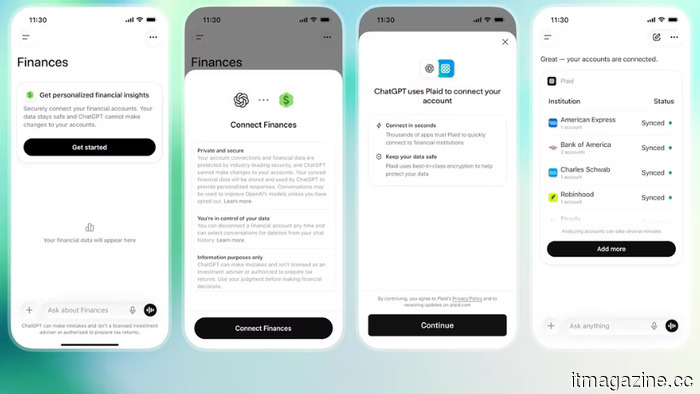 OpenAI aims for ChatGPT to access your bank account, promoting it as a convenience. However, the associated risk is significant.
ChatGPT Pro users can now link their bank accounts through Plaid to receive tailored financial advice, following OpenAI's acquisition of the fintech startup Hiro a month ago.
OpenAI aims for ChatGPT to access your bank account, promoting it as a convenience. However, the associated risk is significant.
ChatGPT Pro users can now link their bank accounts through Plaid to receive tailored financial advice, following OpenAI's acquisition of the fintech startup Hiro a month ago.
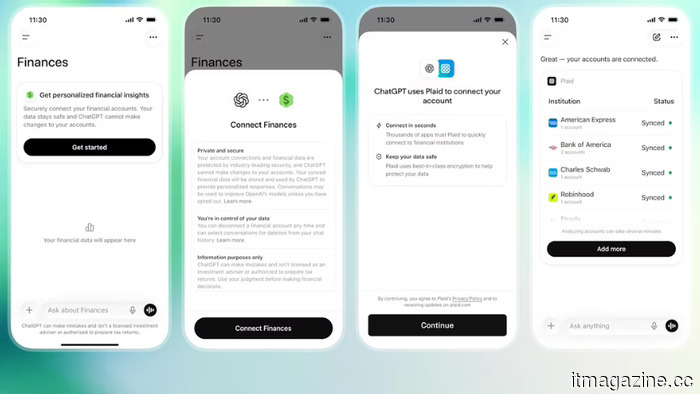 OpenAI aims for ChatGPT to access your bank account, promoting the idea of convenience. However, the associated risk encompasses numerous other concerns.
ChatGPT Pro users can now link their bank accounts through Plaid to receive personalized financial guidance, following OpenAI's acquisition of the fintech startup Hiro a month ago.
OpenAI aims for ChatGPT to access your bank account, promoting the idea of convenience. However, the associated risk encompasses numerous other concerns.
ChatGPT Pro users can now link their bank accounts through Plaid to receive personalized financial guidance, following OpenAI's acquisition of the fintech startup Hiro a month ago.
 Chinese components are already being used in American vehicles, and that's precisely why Congress is in a state of alarm.
Bipartisan legislators are advocating for a prohibition on Chinese vehicles in the US, yet over 60 Chinese-owned suppliers are already integrated into the American auto supply chain.
Chinese components are already being used in American vehicles, and that's precisely why Congress is in a state of alarm.
Bipartisan legislators are advocating for a prohibition on Chinese vehicles in the US, yet over 60 Chinese-owned suppliers are already integrated into the American auto supply chain.
 Snap, YouTube, and TikTok have resolved the school addiction lawsuit, leaving Meta to go to trial by itself.
Three out of four defendants reached a settlement with a Kentucky school district prior to a bellwether trial. Meta is now dealing with over 1,200 similar lawsuits individually.
Snap, YouTube, and TikTok have resolved the school addiction lawsuit, leaving Meta to go to trial by itself.
Three out of four defendants reached a settlement with a Kentucky school district prior to a bellwether trial. Meta is now dealing with over 1,200 similar lawsuits individually.
Snap, YouTube, and TikTok have resolved a lawsuit regarding school addiction, leaving Meta to stand trial by itself.
Three out of four defendants reached a settlement with a Kentucky school district prior to a bellwether trial. Meta is now dealing with over 1,200 similar lawsuits independently.