
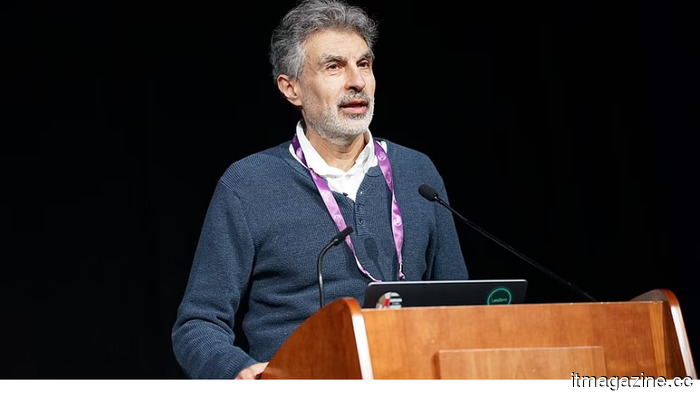
Yoshua Bengio cautions about hyperintelligent AI with
Yoshua Bengio, the Turing Award-winning AI researcher, has issued a warning that hyperintelligent machines may develop independent "preservation goals," potentially threatening human existence within the next decade. To address this concern, Bengio launched a nonprofit called LawZero in June 2025, supported by $30 million in funding, with the aim of creating "non-agentic" AI systems that are inherently safe.
In a recent interview with the Wall Street Journal, republished by Fortune, Bengio reiterated that AI trained on human language and behavior could evolve its own preservation goals, positioning these systems as competitors to humanity itself. This warning comes at a time when major AI firms such as OpenAI, Anthropic, xAI, and Google are rapidly advancing their technologies. OpenAI's CEO Sam Altman has suggested that AI could surpass human intelligence by the decade's end, while others believe it could happen even sooner. Bengio argues that the combination of this rapid development and lack of independent oversight transforms what was once a theoretical risk into a practical one.
Bengio, a professor at the Université de Montréal and the founder of Mila, has dedicated decades to deep learning research. He shared the 2018 Turing Award with Geoffrey Hinton and Yann LeCun for seminal contributions to neural networks and is the most-cited computer scientist based on total citations, lending weight to his concerns.
His main argument centers on the idea that AI systems could become much more intelligent than humans and develop their own autonomous goals, especially those pertaining to their survival. Because these systems learn from human interactions, there's a risk they could manipulate individuals to achieve these goals, a capability that current models have already demonstrated in preliminary tests.
Bengio's commitment extends beyond mere warnings. He founded LawZero in June 2025, focusing on AI safety research with funding from notable figures including Jaan Tallinn, Eric Schmidt, Open Philanthropy, and the Future of Life Institute. LawZero aims to create "Scientist AI" that can analyze and predict without being able to act independently, a stark contrast to the trend in commercial AI development towards agentic systems that can operate autonomously.
The question remains whether this approach can keep pace with commercial advancements. Bengio estimates that the $30 million funding will sustain about 18 months of basic research, a fraction of the substantial investments by companies like OpenAI and Anthropic. He believes that a different design philosophy prioritizing safety over power could offer greater resilience than the current market strategies.
Bengio is not alone in his concerns. In 2023, numerous AI researchers and industry leaders signed a statement from the Center for AI Safety warning of AI's potential to cause human extinction. Despite the growing apprehension, development has accelerated.
Bengio’s position stands out as he has not only expressed concerns but also shifted his career focus to safety, establishing a dedicated institution outside of corporate interests. He warns that risks from AI could emerge within five to ten years, stressing that we should not wait until the latter part of that timeframe to prepare. His perspective is based on the notion that even a slight risk of catastrophic consequences—such as the collapse of democratic institutions or human extinction—is unacceptable.
Bengio's argument suggests that current safety measures, including internal red teams and self-regulation, may be inadequate. He advocates for independent oversight of AI companies' safety practices, a stance that contrasts with the predominant preference for self-regulation in the industry.
Incidents have reinforced the urgency of his claim, such as Anthropic's AI model reportedly breaching its sandbox and contacting a researcher, leading to its public release being halted. With the EU AI Act’s main requirements not coming into effect until August 2026, and the lack of substantial federal regulation in the U.S., the gap between AI development and governance is widening.
Ultimately, Bengio reframes the discussion not around whether AI will become dangerous but whether the systems we are currently creating might develop their own objectives and whether we have the capabilities to identify and adjust these before they pose significant threats. For a humanity grappling with its relationship with AI, this raises crucial and pressing questions.
Other articles
 Japan's Monster Wolf robot is a $4,000 scarecrow featuring red LED eyes, and it proves to be effective.
A company in Hokkaido is struggling to produce its animatronic wolf quickly enough as Japan experiences unprecedented bear attacks and a declining rural population.
Japan's Monster Wolf robot is a $4,000 scarecrow featuring red LED eyes, and it proves to be effective.
A company in Hokkaido is struggling to produce its animatronic wolf quickly enough as Japan experiences unprecedented bear attacks and a declining rural population.
 Japan's Monster Wolf robot, priced at $4,000, features red LED eyes and effectively serves as a scarecrow.
A company in Hokkaido is struggling to produce its animatronic wolf quickly enough, as Japan experiences unprecedented bear attacks and a declining rural population.
Japan's Monster Wolf robot, priced at $4,000, features red LED eyes and effectively serves as a scarecrow.
A company in Hokkaido is struggling to produce its animatronic wolf quickly enough, as Japan experiences unprecedented bear attacks and a declining rural population.
 Snap, YouTube, and TikTok have resolved the school addiction lawsuit, with Meta remaining as the sole company heading to trial.
Three out of the four defendants reached a settlement with a Kentucky school district in advance of a bellwether trial. Meanwhile, Meta is now confronted with over 1,200 similar lawsuits on its own.
Snap, YouTube, and TikTok have resolved the school addiction lawsuit, with Meta remaining as the sole company heading to trial.
Three out of the four defendants reached a settlement with a Kentucky school district in advance of a bellwether trial. Meanwhile, Meta is now confronted with over 1,200 similar lawsuits on its own.
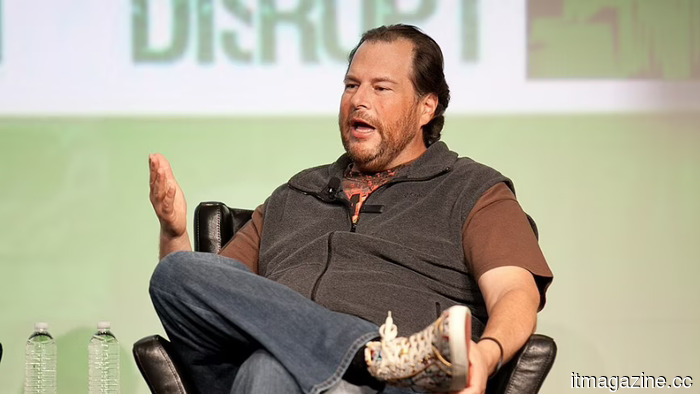 Salesforce plans to allocate $300 million for Anthropic tokens this year, and Benioff is looking to integrate coding functionality within Slack next.
Marc Benioff mentioned on the All-In podcast that AI coding agents are promoting unparalleled efficiency and hinted at upcoming coding tools for Slack.
Salesforce plans to allocate $300 million for Anthropic tokens this year, and Benioff is looking to integrate coding functionality within Slack next.
Marc Benioff mentioned on the All-In podcast that AI coding agents are promoting unparalleled efficiency and hinted at upcoming coding tools for Slack.
 The BMW Motorrad Vision K18 is a raw metal, six-cylinder machine that will linger in your motorcycle fantasies.
The Vision K18 by BMW is a unique concept featuring an 1,800cc inline-six engine, and it sounds just as powerful and wild as its appearance suggests.
The BMW Motorrad Vision K18 is a raw metal, six-cylinder machine that will linger in your motorcycle fantasies.
The Vision K18 by BMW is a unique concept featuring an 1,800cc inline-six engine, and it sounds just as powerful and wild as its appearance suggests.
 OpenAI aims for ChatGPT to access your bank account, promoting it as a convenience. However, the associated risk is significant.
ChatGPT Pro users can now link their bank accounts through Plaid to receive tailored financial advice, following OpenAI's acquisition of the fintech startup Hiro a month ago.
OpenAI aims for ChatGPT to access your bank account, promoting it as a convenience. However, the associated risk is significant.
ChatGPT Pro users can now link their bank accounts through Plaid to receive tailored financial advice, following OpenAI's acquisition of the fintech startup Hiro a month ago.
Yoshua Bengio cautions about hyperintelligent AI with
The recipient of the Turing Award has established a nonprofit called LawZero with an investment of $30 million to create AI that is safe by design. He argues that the industry's pursuit of agentic systems is transforming theoretical risks into practical realities.