
OpenAI aims for ChatGPT to access your bank account, promoting it as a convenience. However, the associated risk is significant.
**Summary**: ChatGPT can now link to your bank accounts via Plaid, granting OpenAI access to private financial data. OpenAI has introduced a personal finance feature within ChatGPT, allowing subscribers to connect their bank accounts, credit cards, investment portfolios, and loans, enabling them to ask questions based on their actual financial information. Launched on May 15, this feature is currently in preview for US-based ChatGPT Pro subscribers on web and iOS, with support for over 12,000 financial institutions through Plaid.
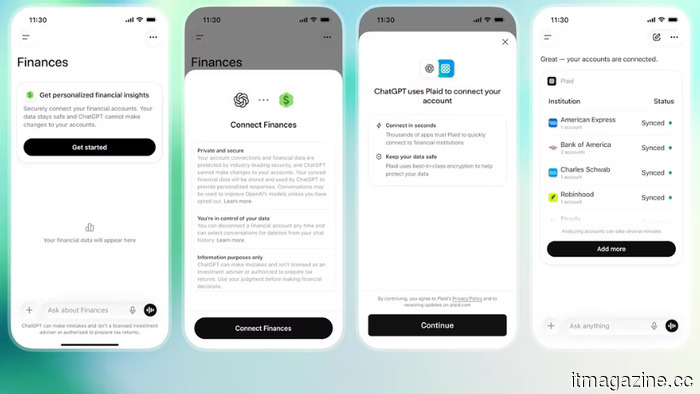
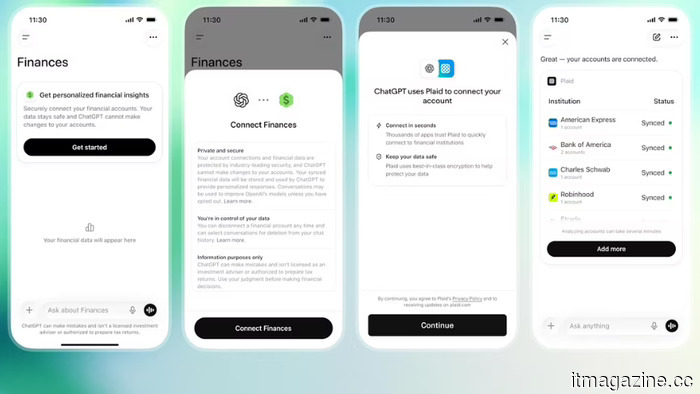
The connection process is simple. Users can access a new "Finances" tab in ChatGPT or type “@Finances, connect my accounts” in their chats. ChatGPT assists in linking accounts via Plaid—used by platforms like Venmo and Robinhood. Once linked, the chatbot presents a dashboard displaying portfolio performance, spending habits, subscriptions, and upcoming payments. Users may inquire about their past holiday expenses or seek assistance with financial planning, like buying a house in five years.
OpenAI states that ChatGPT can view balances, transactions, investments, and liabilities but cannot access full account numbers or modify accounts. Users can disconnect services anytime, and synced data will be deleted within 30 days. Users can also review and delete financial memories stored by ChatGPT regarding their goals and priorities from the Finances page.
Currently, over 200 million users engage with ChatGPT for finance-related queries each month. This new tool aims to enhance conversations from generic advice to insights based on users' actual finances. The feature utilizes OpenAI's GPT-5.5 model, optimized for the context-sensitive reasoning necessary for personal finance discussions. OpenAI collaborated with over 50 finance professionals to establish internal benchmarks, achieving scores of 79 for GPT-5.5 Thinking and 82.5 for GPT-5.5 Pro.
This launch follows OpenAI's acquisition of Hiro Finance, an AI-driven personal finance startup, one month prior. Hiro, which had previously been sold as part of a larger deal, has ceased operations as OpenAI integrated its team and expertise into developing the finance feature, though it isn't clear if the entire product was created by the Hiro team. This marks OpenAI's second fintech acquisition after Roi, an investment app, about six months ago.
OpenAI is also collaborating with Intuit for deeper integrations. Future features might include assessing tax implications of stock sales, predicting credit approval chances, or arranging meetings with local tax professionals, all through ChatGPT. If successful, this partnership could transform ChatGPT into a more comprehensive financial services platform.
The competitive landscape is evolving, as Perplexity launched its Computer for Professional Finance product on May 5, targeted at analysts and investors, incorporating over 40 finance tools from various institutional data sources. One day before OpenAI’s announcement, Perplexity enhanced its consumer finance options by adding Plaid integration for various financial accounts, paralleling OpenAI's launch. While both allow subscribers to link their bank accounts to an AI, their approaches differ significantly.
Perplexity is expanding from institutional finance with data feeds tailored for professional research, whereas OpenAI is focusing on consumer convenience, addressing 200 million users seeking assistance with their finances. While both companies may converge over time, their differing strategies highlight varying beliefs about the value of AI in personal finance.
The timing of this move is also noteworthy as OpenAI has recently begun incorporating advertising into ChatGPT, transitioning from a cost-per-impression model to a cost-per-click one within weeks. OpenAI assures that it does not segment audiences from user interactions or display ads to users identified as under 18. However, the coexistence of ads and sensitive financial data in one platform may attract scrutiny from regulators, privacy advocates, and users who view their conversations with ChatGPT as confidential.
The vital question pertains to fiduciary responsibility, which has received little focus. Unlike human financial advisors, who are legally bound to act in a client's best interests, ChatGPT lacks such obligations. OpenAI notes that the tool is "not a substitute for professional financial advice," yet the user experience mimics professional advisory services. The disparity between the product's appearance and its legal categorization is where potential risks arise.
Analysts recognize OpenAI's recent fintech acquisitions as a bold attempt to penetrate the financial services sphere, intending to capture what is termed "share of mind" in consumer finance. According to generative AI analysts, personal finance represents a prominent application for this technology. OpenAI does not aim to become a bank; instead, it seeks to create a conversational interface through which consumers manage their finances, potentially bypassing traditional banking and fintech services by aggregating their accounts.
Currently, this feature is exclusive to Pro subscribers, the highest tier priced at $200 per month, providing access to OpenAI's most advanced models. The company plans to extend this functionality to Plus subscribers after gaining insights from initial usage. OpenAI's broader commercial strategy, now encompassing consumer subscriptions, enterprise solutions, developer
Other articles
 Japan's Monster Wolf robot is a $4,000 scarecrow featuring red LED eyes, and it proves to be effective.
A company in Hokkaido is struggling to produce its animatronic wolf quickly enough as Japan experiences unprecedented bear attacks and a declining rural population.
Japan's Monster Wolf robot is a $4,000 scarecrow featuring red LED eyes, and it proves to be effective.
A company in Hokkaido is struggling to produce its animatronic wolf quickly enough as Japan experiences unprecedented bear attacks and a declining rural population.
 Noticed an error in your Instagram Story? You can now edit it after it’s been posted.
Instagram is officially introducing the Edit Story feature, which users have been asking for, allowing them to modify a Story even after it has been published.
Noticed an error in your Instagram Story? You can now edit it after it’s been posted.
Instagram is officially introducing the Edit Story feature, which users have been asking for, allowing them to modify a Story even after it has been published.
 OpenAI aims for ChatGPT to access your bank account, promoting convenience as the benefit. However, the potential dangers outweigh this advantage.
ChatGPT Pro users can now link their bank accounts through Plaid to receive tailored financial advice, just one month following OpenAI's acquisition of the fintech company Hiro.
OpenAI aims for ChatGPT to access your bank account, promoting convenience as the benefit. However, the potential dangers outweigh this advantage.
ChatGPT Pro users can now link their bank accounts through Plaid to receive tailored financial advice, just one month following OpenAI's acquisition of the fintech company Hiro.
 Chinese components are already used in American vehicles, which is precisely why Congress is in a state of alarm.
Bipartisan legislators are advocating for a ban on Chinese vehicles in the U.S., yet there are already over 60 Chinese-owned suppliers operating within America's automotive supply chain.
Chinese components are already used in American vehicles, which is precisely why Congress is in a state of alarm.
Bipartisan legislators are advocating for a ban on Chinese vehicles in the U.S., yet there are already over 60 Chinese-owned suppliers operating within America's automotive supply chain.
 Yoshua Bengio cautions about hyperintelligent AI with
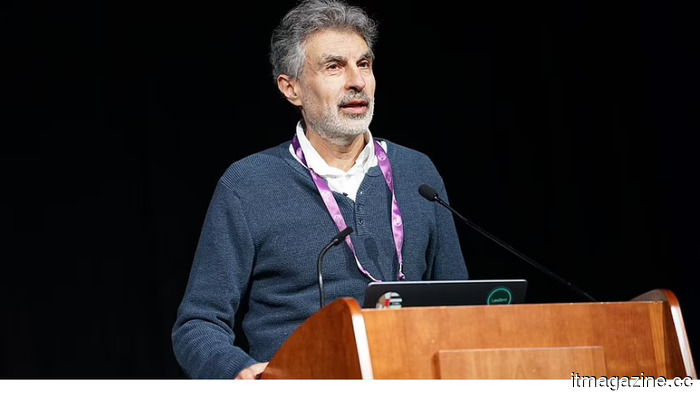
The Turing Award recipient established the nonprofit LawZero with $30 million to develop AI that is safe by design. He believes that the industry's pursuit of autonomous systems is transforming theoretical risks into real-world challenges.
Yoshua Bengio cautions about hyperintelligent AI with
The Turing Award recipient established the nonprofit LawZero with $30 million to develop AI that is safe by design. He believes that the industry's pursuit of autonomous systems is transforming theoretical risks into real-world challenges.
 Snap, YouTube, and TikTok have resolved the school addiction lawsuit, leaving Meta to go to trial by itself.
Three out of four defendants reached a settlement with a Kentucky school district prior to a bellwether trial. Meta is now dealing with over 1,200 similar lawsuits individually.
Snap, YouTube, and TikTok have resolved the school addiction lawsuit, leaving Meta to go to trial by itself.
Three out of four defendants reached a settlement with a Kentucky school district prior to a bellwether trial. Meta is now dealing with over 1,200 similar lawsuits individually.
OpenAI aims for ChatGPT to access your bank account, promoting it as a convenience. However, the associated risk is significant.
ChatGPT Pro users can now link their bank accounts through Plaid to receive tailored financial advice, following OpenAI's acquisition of the fintech startup Hiro a month ago.