
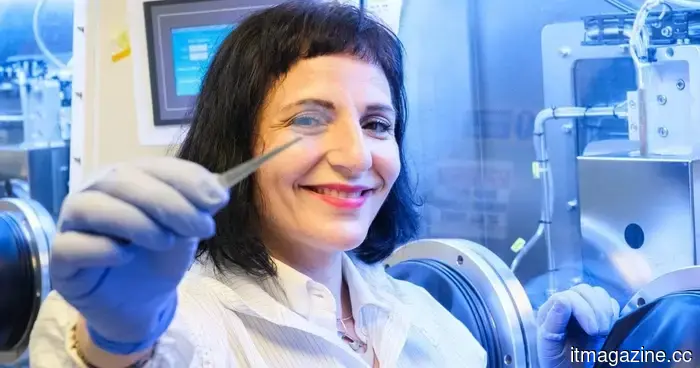
Ultra-slim transparent solar panels offer the potential for invisible charging solutions for wearables, vehicles, and residential spaces.
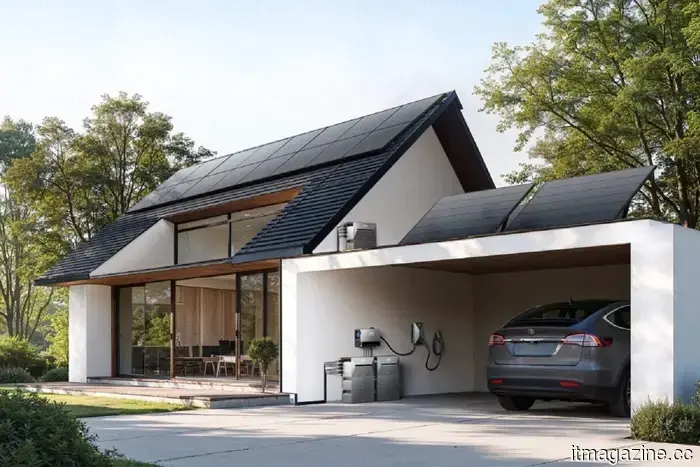
A new type of nearly invisible solar cell may someday enable common glass surfaces to produce electricity, including car windows, sunroofs, smart glasses, wearables, building façades, and residential windows.
Researchers at Nanyang Technological University (NTU) in Singapore have created ultrathin, transparent perovskite solar cells that are approximately 10,000 times thinner than a human hair and about 50 times thinner than standard perovskite solar cells. The NTU research team, led by Associate Professor Annalisa Bruno, detailed their findings in ACS Energy Letters (as reported by TechXplore).
Could solar cells be integrated into regular glass?
These solar cells are semi-transparent and color-neutral, allowing them to be incorporated into glass without resembling conventional solar panels. This innovation may be particularly beneficial in urban areas where rooftops are already utilized for solar energy, while windows and vertical glass façades remain largely untapped.
Globally, researchers are seeking ways to simplify the adoption of solar technology and make it more visually appealing to everyday users. Some are focusing on colorful solar cells to enhance the aesthetics of solar panels on homes, while NTU's method aims for solar cells to blend seamlessly with glass. If successfully scaled, it could address a significant challenge for solar energy by generating clean power without necessitating changes to the visual appearance of homes, vehicles, or devices.
NTU claims these cells can produce electricity even under indirect and diffuse light, which is advantageous for densely populated urban buildings with limited access to direct sunlight. If scaled effectively, large glass-fronted structures could potentially generate several hundred megawatt-hours of electricity annually, based on their orientation and the area of usable glass.
What obstacles remain before commercialization?
The team produced the cells using thermal evaporation, a method that involves heating material in a vacuum chamber until it vaporizes and then deposits as an ultra-thin layer. NTU states that this process creates uniform layers over larger surfaces, avoids toxic solvents, and allows researchers to control the transparency of the solar cells.
The most effective outcome was achieved with the 60 nanometer opaque cell, which attained around 12% efficiency. Thinner opaque versions reached approximately 11% efficiency at 30 nanometers and 7% at 10 nanometers. The 60 nanometer semi-transparent variant permitted about 41% of visible light to pass through while achieving 7.6% efficiency.
In comparison, traditional rooftop solar panels are considerably more efficient, with many commercial home panels converting about 18% to 24% of sunlight into electricity. The aim of NTU’s semi-transparent cell isn't to surpass these panels in raw efficiency but to capitalize on surfaces where conventional solar panels are not practical or desired.
This research is currently in the laboratory stage and not yet a viable product for windows, vehicles, or wearables. NTU has applied for a patent and is engaging with companies to refine the manufacturing process. The researchers still need to demonstrate that the cells can maintain stability, withstand long-term use, and perform effectively when produced on a larger scale.

Other articles
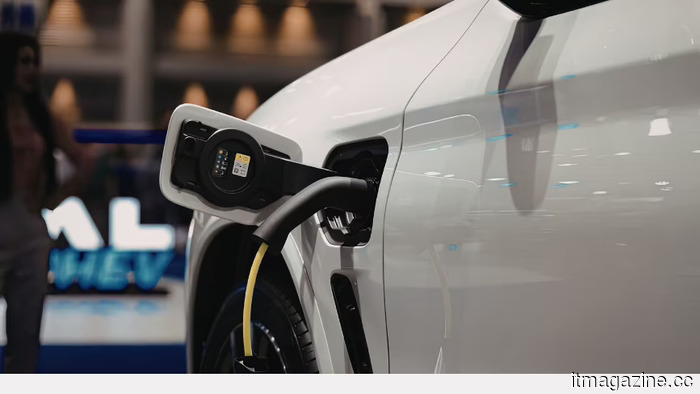 Bolt collaborates with China's Dongfeng to introduce an electric vehicle ride-hailing fleet in South Africa.
Bolt, asserting a market share of over 50% in South Africa following a $180 million investment, will provide riders in Cape Town with Dongfeng's Box and 007 electric vehicles in response to increasing fuel prices.
Bolt collaborates with China's Dongfeng to introduce an electric vehicle ride-hailing fleet in South Africa.
Bolt, asserting a market share of over 50% in South Africa following a $180 million investment, will provide riders in Cape Town with Dongfeng's Box and 007 electric vehicles in response to increasing fuel prices.
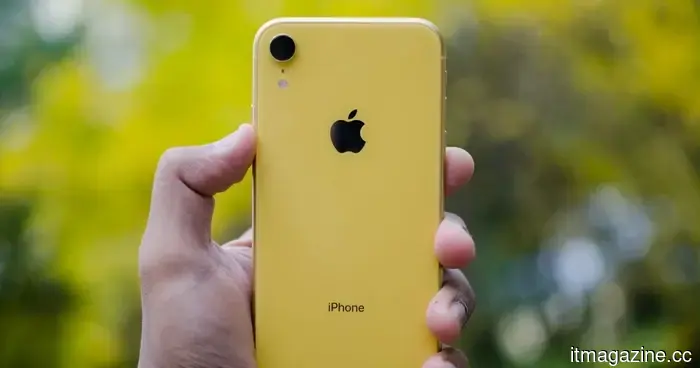 Apple should simply apply the Neo approach to its forthcoming iPhone 18e, and I'll be interested.
Apple ought to evolve the iPhone 18e into a vibrant, compact, personality-focused "Neo" device rather than producing yet another simplified variant of its flagship series.
Apple should simply apply the Neo approach to its forthcoming iPhone 18e, and I'll be interested.
Apple ought to evolve the iPhone 18e into a vibrant, compact, personality-focused "Neo" device rather than producing yet another simplified variant of its flagship series.
 How tokenized real-world assets are addressing the counterparty dilemma in cryptocurrency.
Tokenized money market funds are transforming institutional crypto trading by separating custody from execution, reducing settlement failures, and ensuring that capital remains yield-bearing at all times.
How tokenized real-world assets are addressing the counterparty dilemma in cryptocurrency.
Tokenized money market funds are transforming institutional crypto trading by separating custody from execution, reducing settlement failures, and ensuring that capital remains yield-bearing at all times.
 Apple ought to apply the Neo treatment to its soon-to-be-released iPhone 18e, and I would definitely be interested.
Apple ought to develop the iPhone 18e into a vibrant, compact, personality-focused "Neo" device rather than just another simplified version of its flagship series.
Apple ought to apply the Neo treatment to its soon-to-be-released iPhone 18e, and I would definitely be interested.
Apple ought to develop the iPhone 18e into a vibrant, compact, personality-focused "Neo" device rather than just another simplified version of its flagship series.
 After excelling in range and charging, Chinese EV brands showcase three-wheel driving in SUVs.
Chinese electric vehicle brands are utilizing active suspension as a new feature for their SUVs, with BYD, Aito, and Li Auto showcasing three-wheel driving demonstrations that may assist with tire changes, recovery, and navigating rough terrain.
After excelling in range and charging, Chinese EV brands showcase three-wheel driving in SUVs.
Chinese electric vehicle brands are utilizing active suspension as a new feature for their SUVs, with BYD, Aito, and Li Auto showcasing three-wheel driving demonstrations that may assist with tire changes, recovery, and navigating rough terrain.
 Bolt collaborates with China's Dongfeng to introduce an electric vehicle ride-hailing fleet in South Africa.
Bolt, which asserts a market share of over 50% in South Africa following a $180M investment, will provide Dongfeng's Box and 007 electric vehicles to passengers in Cape Town amid increasing fuel prices.
Bolt collaborates with China's Dongfeng to introduce an electric vehicle ride-hailing fleet in South Africa.
Bolt, which asserts a market share of over 50% in South Africa following a $180M investment, will provide Dongfeng's Box and 007 electric vehicles to passengers in Cape Town amid increasing fuel prices.
Ultra-slim transparent solar panels offer the potential for invisible charging solutions for wearables, vehicles, and residential spaces.
Researchers at NTU have created ultra-thin transparent solar cells that have the potential to transform windows, vehicle glass, and wearable devices into sources of clean energy while maintaining their appearance.