
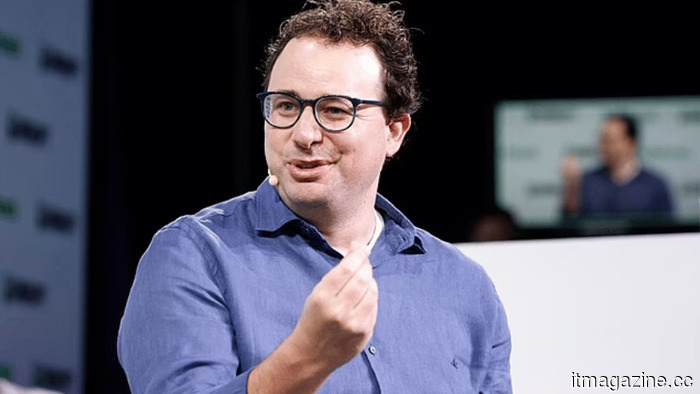
Federal judge delays decision on Anthropic's $1.5 billion author settlement.
A federal judge in San Francisco sought additional information regarding attorneys’ fees and payments to lead plaintiffs before approving what would be the largest copyright settlement in US history. On Thursday, the judge refused to grant final approval to Anthropic’s $1.5 billion settlement with authors claiming that the company trained its Claude models using pirated books, requesting more details from lawyers about counsel fees and payments to the three lead plaintiffs before she would agree to the settlement.
Judge Araceli Martínez-Olguín, who took over the case from Judge William Alsup after a reassignment earlier this year, conducted the fairness hearing in Bartz v. Anthropic. The class is spearheaded by thriller novelist Andrea Bartz alongside nonfiction authors Charles Graeber and Kirk Wallace Johnson, and the proposed settlement aims to resolve a lawsuit asserting that Anthropic downloaded over seven million books from shadow libraries such as LibGen and Pirate Library Mirror for training its models.
According to the settlement terms, it encompasses approximately 480,000 works, disbursing around $3,000 per work after fees, making it the largest sum known in a US copyright case. A claims report submitted in April indicated that claims had been filed for about 91% of the eligible works, with class counsel stating in court that this figure had risen above 92% as of Thursday.
The judge focused on the portion of the funds that would not be directed to authors. Class counsel had already reduced its fee request from 15% to 12.5% of the fund in a proposal filed prior to the hearing, along with about $3 million in expenses, an $18.22 million cost reserve, and $50,000 service awards for each of the three lead plaintiffs, as detailed in the Authors Alliance docket summary. The court requested more specifics on these financial elements.
Several objections have been raised. Some argue that the settlement amount is insufficient given the allegations, while others contend that the notice campaign nudged class members toward filing claims instead of allowing them to opt out. Mexican author Laura Esquivel, known for Como agua para chocolate, reported that she only received notice three weeks after the deadline, and noted that there was no Spanish-language notice provided. Indie author Victoria Pinder expressed concerns that authors using a single group copyright registration for multiple books only receive one share, rather than one for each book, a solution class counsel has reportedly labeled as preventing a ‘windfall’.
The legal framework for the agreement follows the precedent set by Judge Alsup last June, which ruled that training on legitimately obtained books constituted fair use due to its ‘exceedingly transformative’ nature. In contrast, developing a ‘central library’ from pirated materials was deemed not to be fair use, a ruling that, along with class certification, prompted Anthropic to negotiate.
The settlement comes at a challenging time for Anthropic's financial situation. The company is negotiating to secure $30 billion at a $900 billion valuation and has established a $1.5 billion channel into private equity with Wall Street partners. This payout for the book settlement aligns with the company's most recent strategic deal and represents a singular expense for a business now being appraised at a valuation with a ‘b’ in it.
Anthropic has previously stated its strong disagreement with the underlying ruling, but opted for settlement to move past the issue. The judge has yet to set a date for her next order. Until that happens, the largest known copyright settlement in US history remains merely a proposed settlement.
Other articles
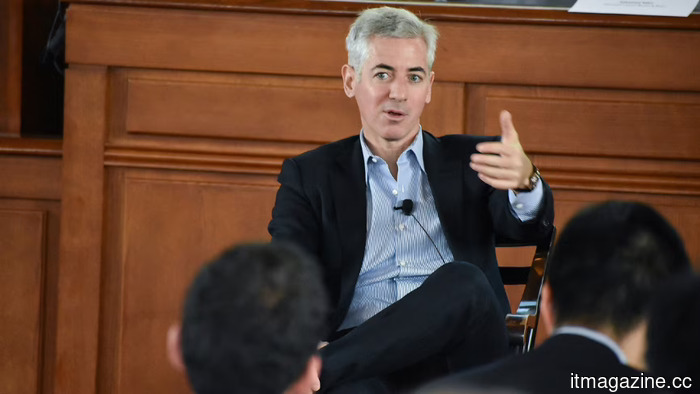 Bill Ackman has invested in Microsoft, with the details of the investment set to be revealed today.
On Friday, Bill Ackman announced that Pershing Square has acquired a new position in Microsoft following the stock's 16% decrease so far this year. The 13F filing revealing the size of the stake is anticipated later in the day.
Bill Ackman has invested in Microsoft, with the details of the investment set to be revealed today.
On Friday, Bill Ackman announced that Pershing Square has acquired a new position in Microsoft following the stock's 16% decrease so far this year. The 13F filing revealing the size of the stake is anticipated later in the day.
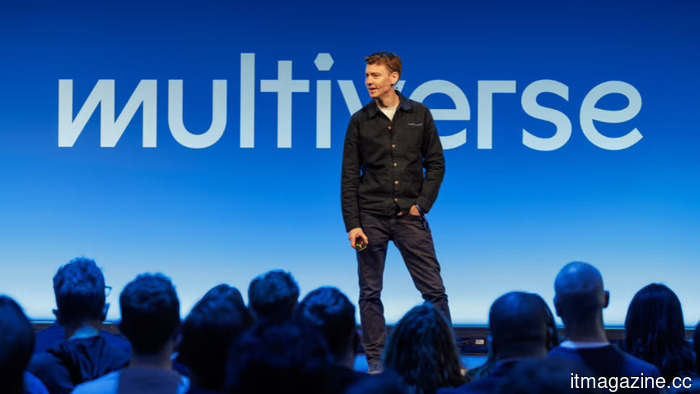 Multiverse secures $70 million at a $2.1 billion valuation to promote its AI adoption strategy throughout Europe.
Multiverse secured $70 million in a funding round led by Schroders Capital, achieving a valuation of $2.1 billion. The company reported a 50% year-over-year revenue increase, highlighted its acquisition of StackFuel in January, and expressed its goal of becoming the leading AI adoption platform in Europe.
Multiverse secures $70 million at a $2.1 billion valuation to promote its AI adoption strategy throughout Europe.
Multiverse secured $70 million in a funding round led by Schroders Capital, achieving a valuation of $2.1 billion. The company reported a 50% year-over-year revenue increase, highlighted its acquisition of StackFuel in January, and expressed its goal of becoming the leading AI adoption platform in Europe.
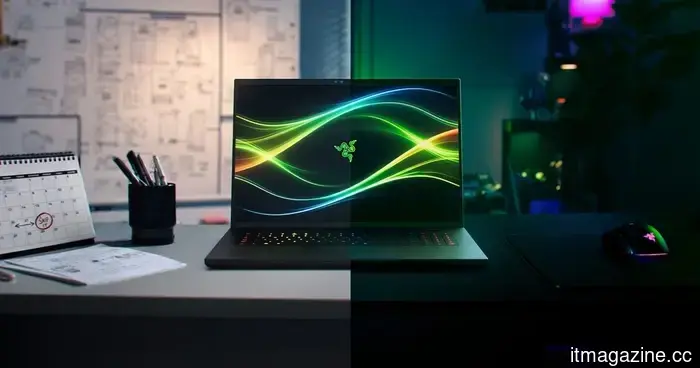 Razer's latest Blade 18 features the Arrow Lake update and has a starting price of $3,999.99.
Razer's Blade 18 for 2026 features Intel's Core Ultra 9 290HX Plus, a dual-mode display capable of 440Hz or 240Hz at 4K resolution, and offers up to an RTX 5090 with 24GB GDDR7.
Razer's latest Blade 18 features the Arrow Lake update and has a starting price of $3,999.99.
Razer's Blade 18 for 2026 features Intel's Core Ultra 9 290HX Plus, a dual-mode display capable of 440Hz or 240Hz at 4K resolution, and offers up to an RTX 5090 with 24GB GDDR7.
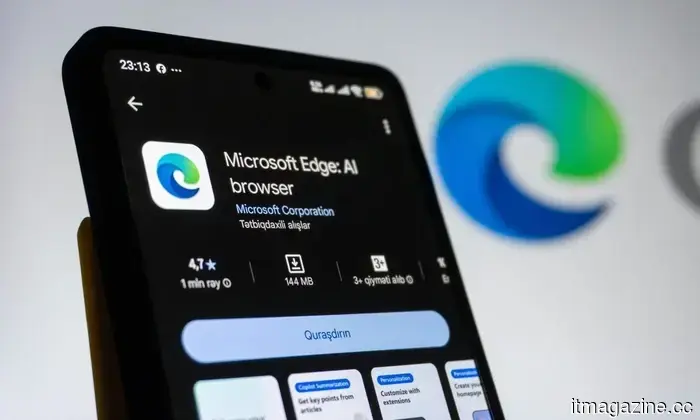 The mobile Edge browser has received a significant upgrade that makes it a strong competitor against Chrome.
Microsoft Edge is introducing features like Copilot tab reasoning, Journeys, Voice, and Vision for mobile, offering smartphone users a genuine incentive to give it a try before the launch of Chrome's Gemini upgrade.
The mobile Edge browser has received a significant upgrade that makes it a strong competitor against Chrome.
Microsoft Edge is introducing features like Copilot tab reasoning, Journeys, Voice, and Vision for mobile, offering smartphone users a genuine incentive to give it a try before the launch of Chrome's Gemini upgrade.
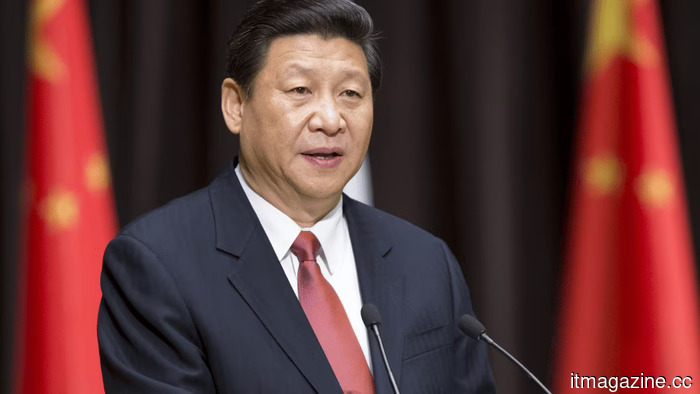 According to US Trade Representative Greer, chip export controls were not a significant issue discussed in Beijing.
According to US Trade Representative Jamieson Greer, chip export controls were 'not a significant issue' during the Trump-Xi meeting, despite Washington allowing Nvidia H200 sales to China, as reported by Bloomberg.
According to US Trade Representative Greer, chip export controls were not a significant issue discussed in Beijing.
According to US Trade Representative Jamieson Greer, chip export controls were 'not a significant issue' during the Trump-Xi meeting, despite Washington allowing Nvidia H200 sales to China, as reported by Bloomberg.
 Your next complimentary Google account may only include 5GB of storage.
New Google accounts now come with 5GB of complimentary storage. Associating a phone number enables users to access the full storage capacity, but the support page has subtly removed the guaranteed 15GB offer.
Your next complimentary Google account may only include 5GB of storage.
New Google accounts now come with 5GB of complimentary storage. Associating a phone number enables users to access the full storage capacity, but the support page has subtly removed the guaranteed 15GB offer.
Federal judge delays decision on Anthropic's $1.5 billion author settlement.
Judge Araceli Martínez-Olguín on Thursday refused to give final approval to Anthropic's $1.5 billion settlement with the authors, requesting additional information regarding attorney fees and payments to the lead plaintiff.