
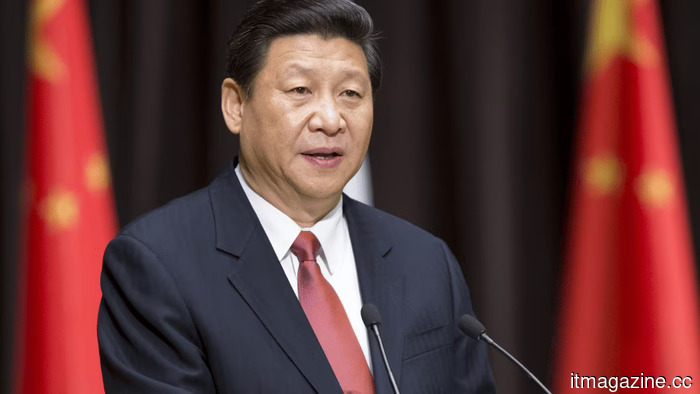
According to US Trade Representative Greer, chip export controls were not a significant issue discussed in Beijing.
Greer informed Bloomberg TV that chip export controls were not discussed during the bilateral meetings, despite Reuters' report indicating that the Trump administration had authorized Nvidia H200 sales to various Chinese companies following the meeting with Xi. US Trade Representative Jamieson Greer stated on Friday that semiconductor export controls were not a key issue at this week’s US-China talks in Beijing. “This was not a major topic of discussion at the bilateral meeting,” he noted. “We did not talk about chip export controls at the meeting.”
This statement is noteworthy for what it omits. In the days leading up to the summit, China’s Ministry of Commerce had publicly criticized the MATCH Act, US legislation aimed at tightening controls on chipmaking equipment exports, while also compelling the Netherlands and Japan to adhere to a 150-day alignment deadline. Beijing’s foreign ministry spokesperson Lin Jian portrayed this move as an example of Washington’s “overstretching of national security” and “malicious blocking and suppression.” By Friday, US representatives indicated that these issues did not appear on the agenda.
What was included in some capacity was a partial commercial concession. Reuters reported that the US approved sales of Nvidia’s H200 AI chips to several significant Chinese tech companies shortly after Trump met Xi on Thursday. This administrative decision had been feasible since January when the Trump administration shifted H200 and AMD MI325X reviews from a presumption of denial to case-by-case assessment. Greer mentioned to Bloomberg that the decision to allow H200 imports would be a “sovereign decision” for China, suggesting that any further purchases would hinge on Beijing’s choices.
Greer’s framing is significant because it indicates a division between the executive branch and Congress regarding chip policy. The MATCH Act, which is moving through the House led by Representative Michael Baumgartner, seeks to tighten export rules on equipment, a direction Greer’s office is suggesting it is not pursuing aggressively in bilateral discussions. Treasury Secretary Scott Bessent has spent the spring negotiating AI access deals with allies in Tokyo and London, while Congress is pushing for stricter measures on similar products.
Jensen Huang’s inclusion in Trump’s Beijing delegation reinforces this division. He was added last minute after being initially sidelined and joined the trip in Alaska after a direct call from Trump. The H200 clearances occurring shortly after the summit likely would not have materialized without Huang's consistent argument that conceding the Chinese AI ecosystem to Huawei could lead to a permanent loss of the US's software ecosystem advantage.
In his interview, Greer also mentioned smaller deliverables, noting “progress” on Chinese imports of American agricultural products, although he remained cautious about tariff certainty. He highlighted the importance of keeping the Strait of Hormuz open, suggesting a link between the ongoing conflict in Iran and trade discussions, tying Beijing’s interest in a resolution to its crude oil supply risks.
The lack of emphasis on chip controls does not indicate a retreat from Washington. The MATCH Act is still progressing, and Order No. 834, China’s supply-chain security regulation implemented in April, remains active, allowing retaliatory measures through over 15 agencies. The administration’s January easing of the H200 review was intended to be calibrated rather than structural, and the Nvidia clearances this week reflect that calibration rather than a major strategic shift.
Greer’s comments imply that the politically charged discussion, which Beijing was set to engage in, did not take place at the summit. Instead, that conversation is developing among Congress, the Treasury, and the licensing offices at the Commerce Department. The administration’s next visible move regarding chip policy will be House floor consideration of the MATCH Act, with a schedule yet to be determined. According to Greer, Beijing’s response will not be coordinated through the summit communication channel.
Other articles
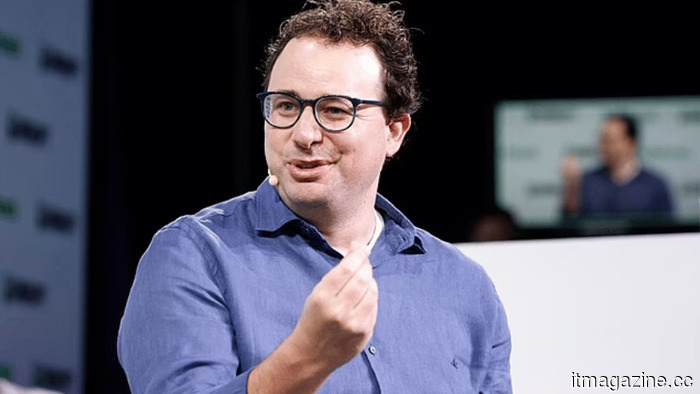 Federal judge delays decision on Anthropic's $1.5 billion author settlement.
Judge Araceli Martínez-Olguín on Thursday refused to give final approval to Anthropic's $1.5 billion settlement with the authors, requesting additional information regarding attorney fees and payments to the lead plaintiff.
Federal judge delays decision on Anthropic's $1.5 billion author settlement.
Judge Araceli Martínez-Olguín on Thursday refused to give final approval to Anthropic's $1.5 billion settlement with the authors, requesting additional information regarding attorney fees and payments to the lead plaintiff.
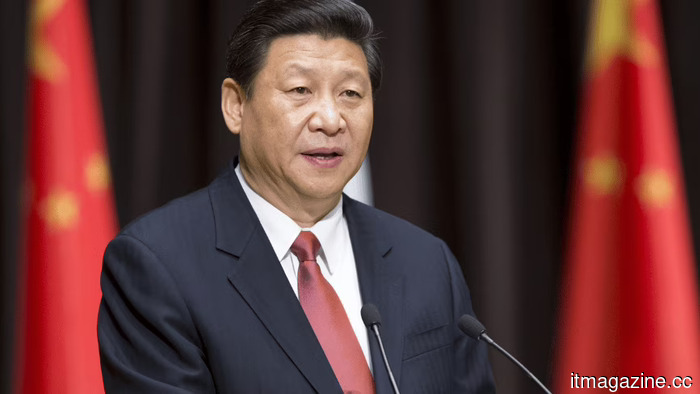 According to US Trade Representative Greer, chip export controls did not emerge as a significant issue during discussions in Beijing.
Chip export regulations were 'not a significant issue' during the Trump-Xi meeting, according to US Trade Representative Jamieson Greer in an interview with Bloomberg, even as Washington approved Nvidia H200 sales to China.
According to US Trade Representative Greer, chip export controls did not emerge as a significant issue during discussions in Beijing.
Chip export regulations were 'not a significant issue' during the Trump-Xi meeting, according to US Trade Representative Jamieson Greer in an interview with Bloomberg, even as Washington approved Nvidia H200 sales to China.
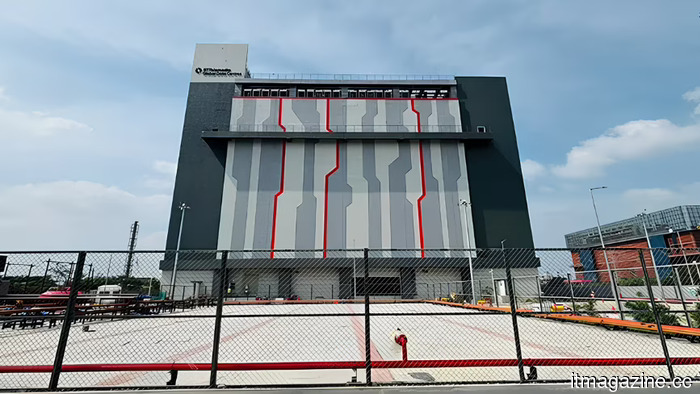 STT Global Data Centres is preparing for a $500 million listing in Mumbai, ahead of a crowded IPO lineup in 2026.
According to Bloomberg, STT Global Data Centres India is set to launch an IPO in Mumbai for up to $500 million, with bank presentations scheduled for next week and mandates expected to be finalized by the end of May. This IPO would position the company at the forefront of the 2026 data center listing lineup.
STT Global Data Centres is preparing for a $500 million listing in Mumbai, ahead of a crowded IPO lineup in 2026.
According to Bloomberg, STT Global Data Centres India is set to launch an IPO in Mumbai for up to $500 million, with bank presentations scheduled for next week and mandates expected to be finalized by the end of May. This IPO would position the company at the forefront of the 2026 data center listing lineup.
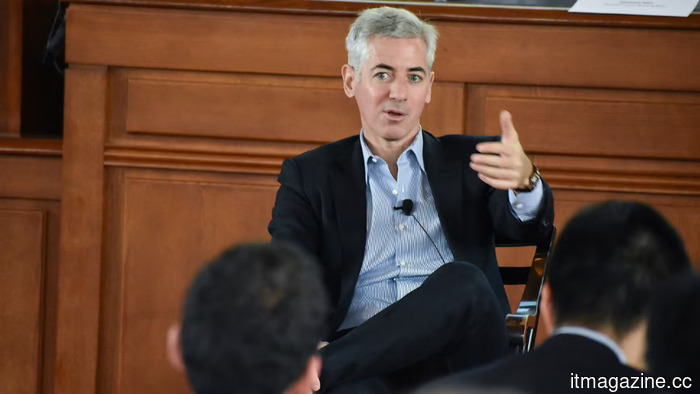 Bill Ackman invests in Microsoft, with details on the investment size to be revealed today.
On Friday, Bill Ackman announced that Pershing Square has acquired a new position in Microsoft following the stock's 16% decline since the beginning of the year. The 13F filing revealing the size of the stake is anticipated later in the day.
Bill Ackman invests in Microsoft, with details on the investment size to be revealed today.
On Friday, Bill Ackman announced that Pershing Square has acquired a new position in Microsoft following the stock's 16% decline since the beginning of the year. The 13F filing revealing the size of the stake is anticipated later in the day.
 Your next complimentary Google account may only include 5GB of storage.
New Google accounts now come with 5GB of complimentary storage. Associating a phone number enables users to access the full storage capacity, but the support page has subtly removed the guaranteed 15GB offer.
Your next complimentary Google account may only include 5GB of storage.
New Google accounts now come with 5GB of complimentary storage. Associating a phone number enables users to access the full storage capacity, but the support page has subtly removed the guaranteed 15GB offer.
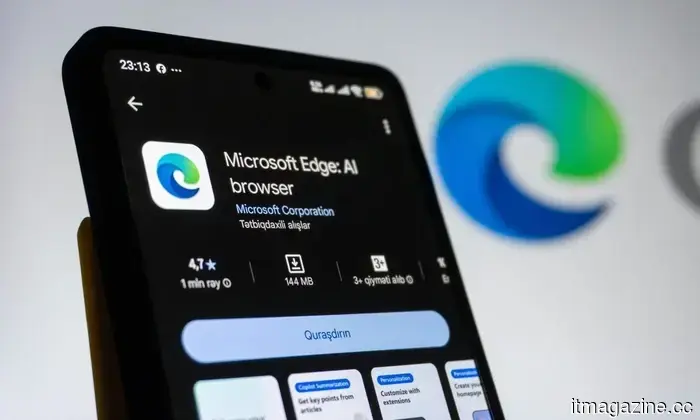 The mobile Edge browser has received a significant upgrade that makes it a strong competitor against Chrome.
Microsoft Edge is introducing features like Copilot tab reasoning, Journeys, Voice, and Vision for mobile, offering smartphone users a genuine incentive to give it a try before the launch of Chrome's Gemini upgrade.
The mobile Edge browser has received a significant upgrade that makes it a strong competitor against Chrome.
Microsoft Edge is introducing features like Copilot tab reasoning, Journeys, Voice, and Vision for mobile, offering smartphone users a genuine incentive to give it a try before the launch of Chrome's Gemini upgrade.
According to US Trade Representative Greer, chip export controls were not a significant issue discussed in Beijing.
According to US Trade Representative Jamieson Greer, chip export controls were 'not a significant issue' during the Trump-Xi meeting, despite Washington allowing Nvidia H200 sales to China, as reported by Bloomberg.