
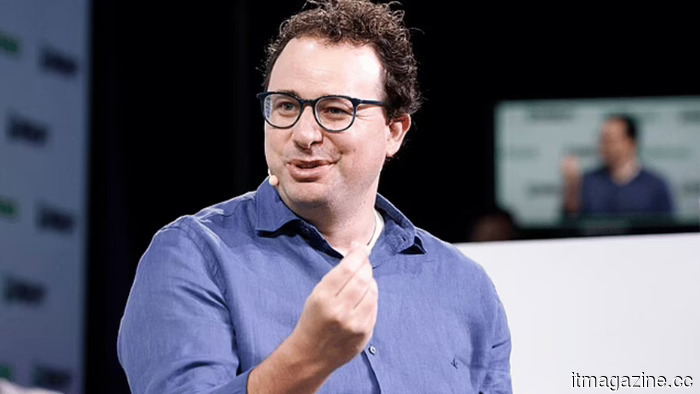
Federal judge delays approval of Anthropic's $1.5 billion author settlement.
A federal judge in San Francisco sought additional information regarding lawyers' fees and payments to lead plaintiffs before approving what would become the largest copyright settlement in US history. On Thursday, Judge Araceli Martínez-Olguín withheld final approval for Anthropic’s proposed $1.5 billion settlement with authors claiming the company used pirated books to train its Claude models, requiring more clarity from attorneys on counsel fees and lead plaintiff payments.
Judge Martínez-Olguín, who took over the case from Judge William Alsup after a reassignment earlier this year, conducted the fairness hearing in Bartz v. Anthropic. The class, headed by thriller author Andrea Bartz along with nonfiction writers Charles Graeber and Kirk Wallace Johnson, alleges that Anthropic downloaded over seven million books from shadow libraries such as LibGen and Pirate Library Mirror to train its models.
On a broad scale, the settlement encompasses roughly 480,000 works, distributing about $3,000 per work after fees, marking the largest sum recorded in a US copyright case. According to a claims report submitted in April, claims have been filed for approximately 91% of the eligible works, with a class attorney updating the court that this figure has now exceeded 92% as of Thursday.
The judge aimed to address the portion of the settlement not allocated to the authors. Class counsel had already reduced its fee request from 15% to 12.5% of the total fund in a proposed order prior to the hearing, including about $3 million in expenses, an $18.22 million cost reserve, and $50,000 service awards for each of the three lead plaintiffs, as summarized in the Authors Alliance docket. The court requested additional details on each of these expense items.
Various objections have emerged concerning the settlement. Some argue that the payout is inadequate given the allegations, while others contend that the notice campaign directed class members towards filing claims instead of opting out. Mexican author Laura Esquivel, recognized for Como agua para chocolate, stated she did not receive notification until three weeks after the deadline and that no Spanish-language notice was distributed. Indie author Victoria Pinder criticized that authors who registered multiple books under a single group copyright receive a single share rather than one for each book, an outcome reportedly described by class counsel as preventing a ‘windfall’.
The legal framework established under the deal was based on a ruling from Judge Alsup last June, deeming training on legitimately acquired books as fair use because it was 'exceedingly transformative.' Conversely, creating a 'central library' from pirated works was not considered fair use, which, along with class certification, prompted Anthropic to negotiate.
The settlement arrives at a challenging time for Anthropic’s financial situation. The company is currently negotiating to raise $30 billion at a $900 billion valuation and has secured a $1.5 billion investment from private equity partners on Wall Street. In this context, the book payout parallels the company’s latest strategic arrangement. It also constitutes a one-time expenditure for a company that investors now value in the ‘b’ range.
Anthropic has previously expressed its strong disagreement with the foundational ruling but opted to settle to resolve the matter. The judge has yet to specify a date for her subsequent order. Until that occurs, the largest known copyright settlement in American history remains the largest proposed copyright settlement in American history.
Other articles
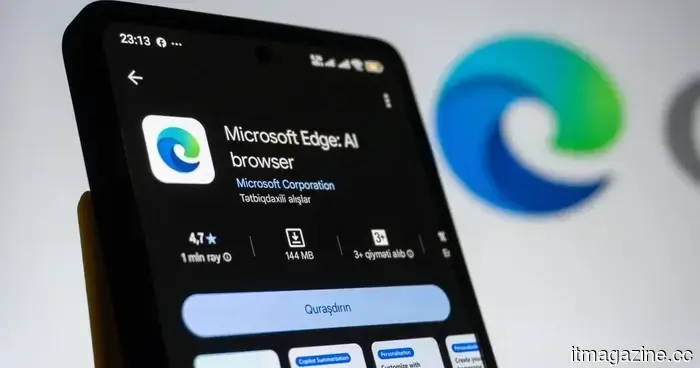 The mobile Edge browser receives a significant update, making it a strong contender against Chrome.
Microsoft Edge is introducing Copilot tab reasoning, Journeys, Voice, and Vision to mobile devices, providing smartphone users with a compelling reason to try it out ahead of Chrome's Gemini upgrade.
The mobile Edge browser receives a significant update, making it a strong contender against Chrome.
Microsoft Edge is introducing Copilot tab reasoning, Journeys, Voice, and Vision to mobile devices, providing smartphone users with a compelling reason to try it out ahead of Chrome's Gemini upgrade.
 Federal judge delays decision on Anthropic's $1.5 billion author settlement.
Judge Araceli Martínez-Olguín on Thursday refused to give final approval to Anthropic's $1.5 billion settlement with the authors, requesting additional information regarding attorney fees and payments to the lead plaintiff.
Federal judge delays decision on Anthropic's $1.5 billion author settlement.
Judge Araceli Martínez-Olguín on Thursday refused to give final approval to Anthropic's $1.5 billion settlement with the authors, requesting additional information regarding attorney fees and payments to the lead plaintiff.
 Meta will permit third-party applications for Ray-Ban Display glasses. You need to keep your focus on digital reality.
Meta is allowing third-party developers access to the Ray-Ban Display glasses, which could alter the practicality of smart glasses in your everyday life.
Meta will permit third-party applications for Ray-Ban Display glasses. You need to keep your focus on digital reality.
Meta is allowing third-party developers access to the Ray-Ban Display glasses, which could alter the practicality of smart glasses in your everyday life.
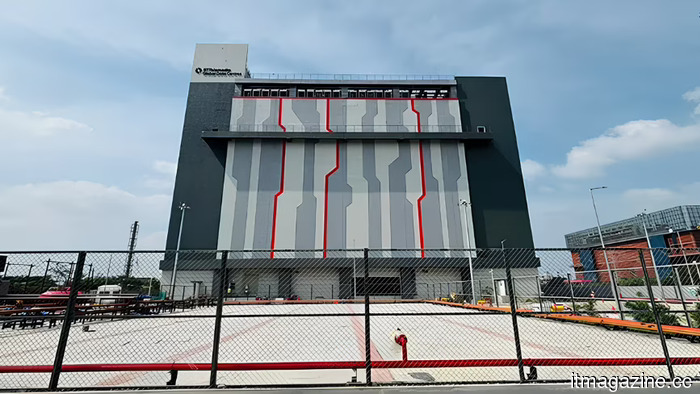 STT Global Data Centres is preparing for a $500 million listing in Mumbai, ahead of a crowded IPO lineup in 2026.
According to Bloomberg, STT Global Data Centres India is set to launch an IPO in Mumbai for up to $500 million, with bank presentations scheduled for next week and mandates expected to be finalized by the end of May. This IPO would position the company at the forefront of the 2026 data center listing lineup.
STT Global Data Centres is preparing for a $500 million listing in Mumbai, ahead of a crowded IPO lineup in 2026.
According to Bloomberg, STT Global Data Centres India is set to launch an IPO in Mumbai for up to $500 million, with bank presentations scheduled for next week and mandates expected to be finalized by the end of May. This IPO would position the company at the forefront of the 2026 data center listing lineup.
 Windows 11 will take care of its own driver issues so you won't have to worry about it.
Microsoft's new Cloud-Initiated Driver Recovery feature automatically reverts malfunctioning drivers sent via Windows Update, without the need for manual corrections or involvement from hardware partners.
Windows 11 will take care of its own driver issues so you won't have to worry about it.
Microsoft's new Cloud-Initiated Driver Recovery feature automatically reverts malfunctioning drivers sent via Windows Update, without the need for manual corrections or involvement from hardware partners.
 Your Android device can now transfer files to any iPhone by using a Quick Share QR code.
Google is introducing a new QR code sharing capability in Quick Share, enabling Android users to send files to iPhones without requiring any additional applications.
Your Android device can now transfer files to any iPhone by using a Quick Share QR code.
Google is introducing a new QR code sharing capability in Quick Share, enabling Android users to send files to iPhones without requiring any additional applications.
Federal judge delays approval of Anthropic's $1.5 billion author settlement.
On Thursday, Judge Araceli Martínez-Olguín refused to give final approval to Anthropic's $1.5 billion settlement with the authors, requesting additional information regarding attorney fees and payments to the lead plaintiff.