
China is at the forefront of the agentic commerce competition as Alibaba, Meituan, and JD.com roll out AI shopping agents extensively.
**Summary:**
China's technology giants are shifting away from traditional e-commerce search bars and are instead utilizing AI agents that facilitate product searches, comparisons, and purchases through natural dialogue. Alibaba's Qwen assistant, now embedded in Taobao's extensive catalogue of four billion items, has attracted 300 million monthly active users. In February, Alipay managed 120 million transactions via its AI agents in just one week. Competitors like Meituan, JD.com, ByteDance, and Tencent are also racing to implement similar technologies.
For years, online shopping in China required entering keywords into a search bar and browsing through countless listings. That process is changing. Recently, Alibaba integrated its Qwen AI assistant into Taobao, allowing customers to express their desires in simple terms, enabling the AI to filter choices by factors such as budget and brand, and complete the transaction within the conversation itself. This represents the most significant application of agentic commerce, where AI agents manage transactions for users, attempted by any major platform.
Alibaba isn’t alone in this movement. Earlier this year, Meituan, a leading on-demand delivery service, introduced a virtual AI assistant to help users navigate their app for restaurants and entertainment. JD.com debuted its AI shopping assistant, Jingyan, in 2023, boasting over 50 million users. ByteDance enhanced its Doubao AI chatbot last December to manage tasks like ticket bookings on Douyin, which is the Chinese version of TikTok. Tencent is incorporating AI capabilities into WeChat, which has 1.3 billion monthly users. Approximately 975 million online shoppers in the country are essentially participating in a nationwide experiment to replace the search bar with conversational interfaces.
**The extent of the transition**
The data indicates that this shift is more than just an enhancement. By early 2026, Qwen gained 300 million monthly active users on Alibaba’s platforms, while around 140 million new AI shopping experiences were recorded during the Chinese New Year campaign. Alipay processed a record 120 million transactions via AI agents in a single week in February, marking a milestone for AI-driven payment systems.
On the merchant side, Tmall has updated its Business Advisor tool to incorporate agentic AI features, providing sellers with a dedicated team of AI agents available 24/7. These agents manage various operational tasks, from analytics to advertising and customer support. The AI customer service tool Dianxiaomi, piloted with 200,000 merchants, has reportedly increased conversion rates by 30%.
**Why China leads**
China’s rapid advancement in agentic commerce compared to Western nations is largely attributed to its technological framework. Chinese super-apps like Taobao, WeChat, Meituan, and Douyin already combine functions such as discovery, communication, payment, and fulfillment in a unified environment. An AI agent on Alibaba’s platform can find products, compare sellers, conduct virtual try-ons, monitor price histories, and complete orders—all within the same ecosystem. The entire transaction is finalized through Alipay, with the AI only requiring a final confirmation from the user.
In contrast, Western solutions, like ChatGPT's integration with Shopify and Amazon’s Rufus, primarily yield search-style responses, with transactions occurring across separate platforms where payment and delivery logistics are handled in different systems. This fragmentation in Western e-commerce means AI agents can recommend products well but face challenges when completing transactions without redirecting users to other platforms.
**The business impact**
The ramifications for businesses are as significant as for consumers. With AI agents influencing purchasing decisions, brands must strive to be selected by algorithms in addition to attracting human attention. A new infrastructure layer is emerging to help brands link their product catalogs to AI systems, manage real-time pricing and availability, and track performance in a conversational context rather than a search-oriented one.
Some retailers are reporting traffic drops of up to 30% due to customers favoring AI agents over traditional search engines. McKinsey predicts that agentic transactions could impact up to $5 trillion in global sales by 2030. This shift alters not only shopping behavior but also the criteria for product discoverability. The practice of search engine optimization that has dominated online retail for two decades may be transitioning to agent optimization, focusing on making products understandable for AI systems rather than for human consumers.
**The constraints**
However, this does not imply the end of the search bar. Agentic commerce is still in its infancy, and the technology has evident limitations. AI agents can misinterpret user preferences, fabricate product details, or optimize for inappropriate parameters. For substantial purchases, such as electronics or luxury items, most consumers still prefer to personally evaluate products, read reviews, and make final decisions. The convenience of using a chatbot for grocery shopping may not apply to more nuanced and high-stakes purchases.
There are also concerns regarding competition and consumer welfare. If AI agents push users towards products within their ecosystems—like Alibaba's agent favoring Taobao over others—this could lead to diminished choices for
Other articles
 After excelling in range and charging, Chinese EV brands showcase three-wheel driving in SUVs.
Chinese electric vehicle brands are utilizing active suspension as a new feature for their SUVs, with BYD, Aito, and Li Auto showcasing three-wheel driving demonstrations that may assist with tire changes, recovery, and navigating rough terrain.
After excelling in range and charging, Chinese EV brands showcase three-wheel driving in SUVs.
Chinese electric vehicle brands are utilizing active suspension as a new feature for their SUVs, with BYD, Aito, and Li Auto showcasing three-wheel driving demonstrations that may assist with tire changes, recovery, and navigating rough terrain.
 Eighteen48 Partners finalizes EUR175M first tranche for its European mid-market buyout fund.
Eighteen48 Partners, located in London, has successfully raised EUR175M for its inaugural private equity fund, which aims to reach EUR350M. The firm focuses on mid-market buyouts obtained through independent sponsors throughout Europe.
Eighteen48 Partners finalizes EUR175M first tranche for its European mid-market buyout fund.
Eighteen48 Partners, located in London, has successfully raised EUR175M for its inaugural private equity fund, which aims to reach EUR350M. The firm focuses on mid-market buyouts obtained through independent sponsors throughout Europe.
 The shocking lawsuit against OpenAI alleges that your conversations with ChatGPT were shared with Google and Meta.
A recent class action lawsuit alleges that OpenAI shared ChatGPT prompts and user identifiers with trackers from Google and Meta, highlighting new privacy issues related to private conversations with the chatbot.
The shocking lawsuit against OpenAI alleges that your conversations with ChatGPT were shared with Google and Meta.
A recent class action lawsuit alleges that OpenAI shared ChatGPT prompts and user identifiers with trackers from Google and Meta, highlighting new privacy issues related to private conversations with the chatbot.
 Eighteen48 Partners completes EUR175M initial tranche for its European mid-market buyout fund.
Eighteen48 Partners, located in London, has successfully raised EUR175M for its inaugural private equity fund, which aims for a total of EUR350M. The firm focuses on supporting mid-market buyouts that are sourced through independent sponsors throughout Europe.
Eighteen48 Partners completes EUR175M initial tranche for its European mid-market buyout fund.
Eighteen48 Partners, located in London, has successfully raised EUR175M for its inaugural private equity fund, which aims for a total of EUR350M. The firm focuses on supporting mid-market buyouts that are sourced through independent sponsors throughout Europe.
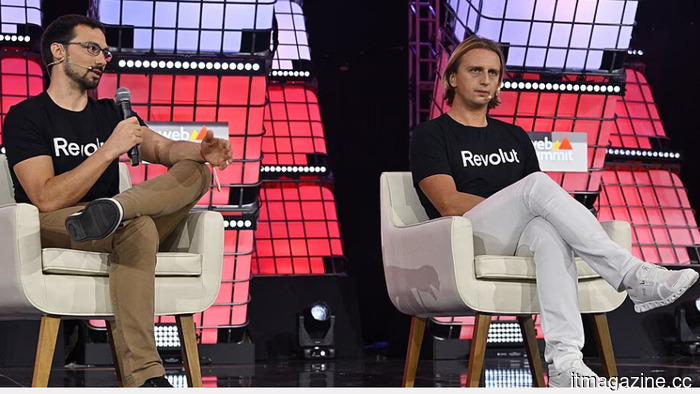 Revolut prioritizes B2B banking as it aims for a $200 billion valuation in its IPO.
CEO Nik Storonsky informed employees that business banking has now become "P0" and proposed a reward of GBP1,000 for each employee who secures new clients. Revolut Business accounted for 16% of revenue in 2025 and experienced a year-on-year growth of 53%.
Revolut prioritizes B2B banking as it aims for a $200 billion valuation in its IPO.
CEO Nik Storonsky informed employees that business banking has now become "P0" and proposed a reward of GBP1,000 for each employee who secures new clients. Revolut Business accounted for 16% of revenue in 2025 and experienced a year-on-year growth of 53%.
 Ultra-slim transparent solar panels offer the potential for invisible charging solutions for wearable devices, vehicles, and residential spaces.
Researchers at NTU have created ultra-thin transparent solar cells that have the potential to convert windows, vehicle glass, and wearable devices into sources of clean energy without altering their appearance.
Ultra-slim transparent solar panels offer the potential for invisible charging solutions for wearable devices, vehicles, and residential spaces.
Researchers at NTU have created ultra-thin transparent solar cells that have the potential to convert windows, vehicle glass, and wearable devices into sources of clean energy without altering their appearance.
China is at the forefront of the agentic commerce competition as Alibaba, Meituan, and JD.com roll out AI shopping agents extensively.
Alibaba has incorporated Qwen AI with Taobao's 4 billion products. In just one week, Alipay handled 120 million transactions through AI agents. China is redefining the landscape of e-commerce.