
Revolut prioritizes B2B banking as it aims for a $200 billion valuation in its IPO.
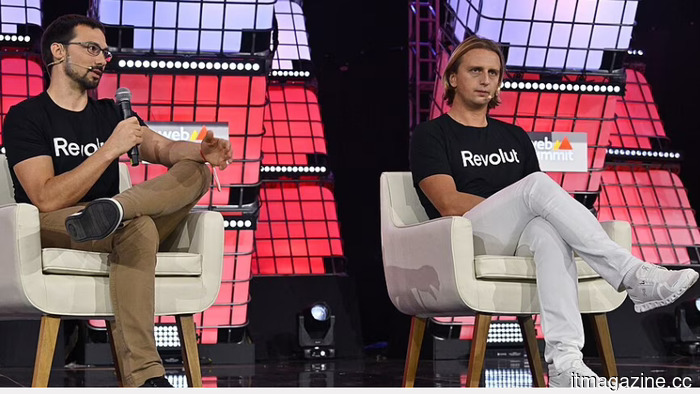
Revolut's CEO, Nik Storonsky, has declared that business banking is now the firm's top focus, offering a £1,000 bonus to over 10,000 employees to encourage them to attract new business clients. As of 2025, the B2B segment contributed only 16% of Revolut's £4.5 billion revenue, despite experiencing a 53% year-over-year growth. Revolut aims for a $150-200 billion IPO valuation, targeted for no sooner than 2028.
In an internal memo sent on Friday, Storonsky urged all employees, irrespective of their roles, to assist in acquiring new business customers, suggesting they pitch ideas directly to him, while setting what he calls "aggressive targets." He marked this initiative as “P0”, or priority zero, indicating its utmost importance.
This shift signals a strategic change for Europe’s most valuable fintech, which has largely built its 68 million customer base through consumer offerings like currency exchange and stock trading. By the end of 2025, Revolut had approximately 767,000 business clients, marking a 33% increase from 2024. Storonsky recognizes that the disparity between customer growth in the business segment and overall revenue presents a significant untapped opportunity.
According to the memo, starting in 2027, Revolut plans to introduce business banking alongside its retail offerings in new markets. Next year, it will also launch credit products for businesses and will establish a dedicated team focused on business growth and onboarding. The company is implementing new key performance metrics related to business acquisition, and specific leaders will be appointed throughout the organization to support these efforts.
The incentive of £1,000 per employee, while modest by fintech standards, could cost around £10 million if all employees qualify for the bonus. However, the importance lies not in the financial aspect but in the cultural message it conveys: engaging all staff—from engineers to compliance officers—in the business banking initiative, rather than limiting it to the sales team.
The timing for this shift is driven by both opportunity and necessity, as Revolut reported exceptional results for 2025: a revenue increase to £4.5 billion (46% rise year-over-year) and pre-tax profits of £1.7 billion (57% rise). After acquiring its UK banking license in March 2026, following lengthy regulatory challenges, the company is seeking a US national bank charter and forecasts $9 billion in revenue and $3.5 billion in profit for 2026.
While consumer growth remains strong, it is nearing a threshold where each additional customer provides diminishing returns. Storonsky's goal of reaching 100 million customers by mid-2027 largely hinges on geographic expansion. In contrast, business clients tend to deposit more, engage more, and qualify for higher-margin offerings like lending and treasury services. Additionally, businesses are less likely to switch providers compared to individual consumers, which reinforces their value.
In his memo, Storonsky emphasized the difference in approach, noting that traditional banks often view B2B as a stagnant endeavor, while Revolut aims to make it a central pillar of its growth and valuation.
The significance of valuation cannot be overstated. Revolut's target is an IPO no sooner than 2028, with aspirations to achieve a valuation of $150 billion to $200 billion—potentially double or triple its most recent secondary sale valuation of $75 billion. To validate such a valuation in public markets, Revolut must showcase itself as a comprehensive bank capable of competing with established entities like JPMorgan and HSBC in areas such as business deposits and credit.
Currently, Revolut has not yet established primary bank status in most markets. Its UK banking license is relatively new, and its application for US banking status is still pending. The push towards B2B is as much about crafting a narrative as it is about immediate revenue, demonstrating to IPO investors that Revolut can achieve what traditional banks do rather than merely replicating what other neobanks have accomplished.
However, whether Revolut can successfully transition into business banking remains uncertain. This sector is relationship-driven and compliance-focused, where trust is paramount. The traditional banks that Storonsky has critiqued for treating B2B as a secondary concern possess extensive lending expertise and robust credit frameworks. Although Revolut's strengths—such as speed, lower fees, and a seamless mobile interface—are appealing, they may not hold the same weight for corporate decision-makers as they do for individual consumers.
Growth in new markets has been promising, with business revenue in Singapore, Australia, and the US increasing by over 140% year-on-year in 2025. Nonetheless, these numbers start from a low base, and the transition from attracting small business clients to serving mid-market and enterprise customers is substantial.
Storonsky has demonstrated significant ambition throughout Revolut's evolution from a prepaid travel card to a £4.5 billion revenue powerhouse in just ten years. The critical challenge now
Other articles
 Having excelled in range and charging capabilities, Chinese EV manufacturers showcase three-wheel drive technology in their SUVs.
Chinese electric vehicle brands are making active suspension a highlight of their SUVs, as BYD, Aito, and Li Auto demonstrate three-wheel driving capabilities that may assist with tire changes, vehicle recovery, and navigating rough terrain.
Having excelled in range and charging capabilities, Chinese EV manufacturers showcase three-wheel drive technology in their SUVs.
Chinese electric vehicle brands are making active suspension a highlight of their SUVs, as BYD, Aito, and Li Auto demonstrate three-wheel driving capabilities that may assist with tire changes, vehicle recovery, and navigating rough terrain.
 Ultra-slim transparent solar panels offer the potential for invisible charging solutions for wearable devices, vehicles, and residential spaces.
Researchers at NTU have created ultra-thin transparent solar cells that have the potential to convert windows, vehicle glass, and wearable devices into sources of clean energy without altering their appearance.
Anthropic has partnered with the Gates Foundation, investing $200 million to implement AI in the areas of global health, education, and agriculture.
The four-year collaboration will support vaccine research for overlooked diseases, AI education in sub-Saharan Africa, and public benchmarks. This partnership significantly surpasses OpenAI's $50 million agreement with the Gates Foundation.
Ultra-slim transparent solar panels offer the potential for invisible charging solutions for wearable devices, vehicles, and residential spaces.
Researchers at NTU have created ultra-thin transparent solar cells that have the potential to convert windows, vehicle glass, and wearable devices into sources of clean energy without altering their appearance.
Anthropic has partnered with the Gates Foundation, investing $200 million to implement AI in the areas of global health, education, and agriculture.
The four-year collaboration will support vaccine research for overlooked diseases, AI education in sub-Saharan Africa, and public benchmarks. This partnership significantly surpasses OpenAI's $50 million agreement with the Gates Foundation.
 Eighteen48 Partners completes EUR175M initial tranche for its European mid-market buyout fund.
Eighteen48 Partners, located in London, has successfully raised EUR175M for its inaugural private equity fund, which aims for a total of EUR350M. The firm focuses on supporting mid-market buyouts that are sourced through independent sponsors throughout Europe.
Eighteen48 Partners completes EUR175M initial tranche for its European mid-market buyout fund.
Eighteen48 Partners, located in London, has successfully raised EUR175M for its inaugural private equity fund, which aims for a total of EUR350M. The firm focuses on supporting mid-market buyouts that are sourced through independent sponsors throughout Europe.
 After excelling in range and charging, Chinese EV brands showcase three-wheel driving in SUVs.
Chinese electric vehicle brands are utilizing active suspension as a new feature for their SUVs, with BYD, Aito, and Li Auto showcasing three-wheel driving demonstrations that may assist with tire changes, recovery, and navigating rough terrain.
After excelling in range and charging, Chinese EV brands showcase three-wheel driving in SUVs.
Chinese electric vehicle brands are utilizing active suspension as a new feature for their SUVs, with BYD, Aito, and Li Auto showcasing three-wheel driving demonstrations that may assist with tire changes, recovery, and navigating rough terrain.
 A new Xbox controller is on the way, and it isn’t what you might anticipate.
A leaked Microsoft controller seems to be aimed at Xbox Cloud Gaming, featuring a compact design, an integrated rechargeable battery, Bluetooth, Wi-Fi 6, and available in two color choices.
A new Xbox controller is on the way, and it isn’t what you might anticipate.
A leaked Microsoft controller seems to be aimed at Xbox Cloud Gaming, featuring a compact design, an integrated rechargeable battery, Bluetooth, Wi-Fi 6, and available in two color choices.
Revolut prioritizes B2B banking as it aims for a $200 billion valuation in its IPO.
CEO Nik Storonsky informed employees that business banking is now a top priority, labeled as "P0," and proposed a GBP1,000 incentive for each employee to attract clients. Revolut Business accounted for 16% of 2025 revenue and experienced a year-on-year growth of 53%.