
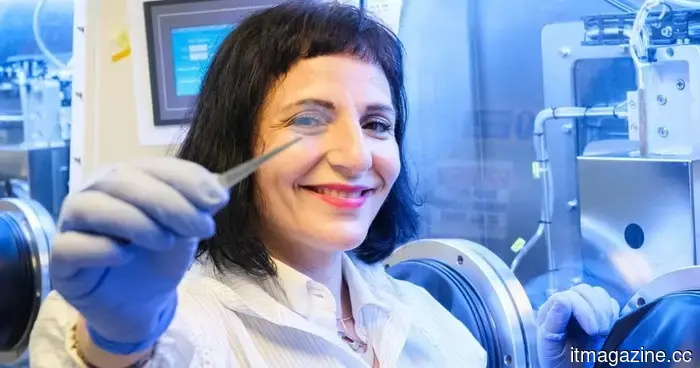
Ultra-slim transparent solar panels offer the potential for invisible charging solutions for wearable devices, vehicles, and residential spaces.
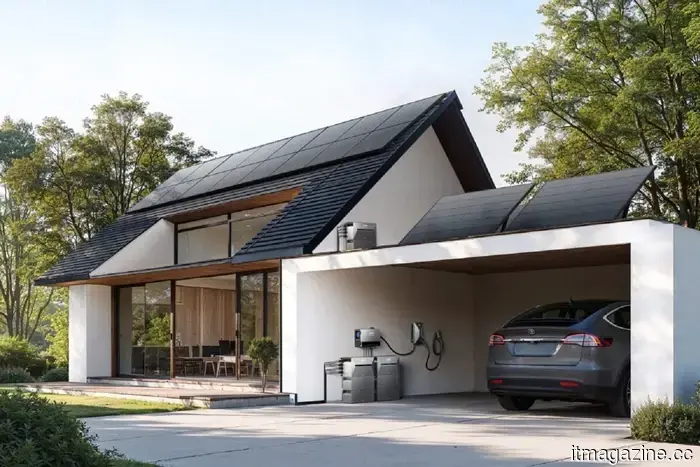
A new type of nearly invisible solar cell may eventually allow ordinary glass surfaces to produce electricity. This could encompass items such as car windows and sunroofs, smart eyewear, wearable devices, building facades, and residential windows.
Scientists from Nanyang Technological University in Singapore have created ultra-thin transparent perovskite solar cells, measuring approximately 10,000 times thinner than a human hair and about 50 times thinner than standard perovskite solar cells. The research team at NTU, led by Associate Professor Annalisa Bruno, shared their findings in ACS Energy Letters (via TechXplore).
Can solar cells blend into everyday glass?
These solar cells are semi-transparent and color-neutral, which means they could be integrated into glass without the appearance of conventional solar panels. This innovation might be particularly advantageous in urban areas, where rooftops are already utilized for solar energy, while windows and vertical glass façades remain largely untapped.
Researchers globally are working to make solar technology more accessible and appealing for everyday use. Some are developing colorful solar cells to enhance the aesthetic of solar panels on homes, while NTU's method aims to make solar cells nearly imperceptible within glass. If successfully scaled, it could address one of the major challenges in solar energy by generating clean electricity without requiring changes to the visual appeal of homes, vehicles, or devices.
NTU indicates that these cells can produce electricity even in indirect and diffuse light, making them beneficial for densely populated urban buildings with limited access to direct sunlight. If effectively implemented on a large scale, expansive glass-fronted buildings could potentially generate several hundred megawatt-hours of electricity annually, influenced by orientation and available glass area.
What obstacles remain for commercial availability?
The team developed these cells through a method known as thermal evaporation, where materials are heated in a vacuum chamber until they vaporize and then form a very thin layer upon settling. NTU states that this technique facilitates the creation of uniform layers over larger surfaces, eliminates the need for harmful solvents, and enables researchers to regulate the clarity of the solar cells.
The most successful outcome involved a 60-nanometer opaque cell, which achieved approximately 12% efficiency. Thinner opaque variants displayed about 11% efficiency at 30 nanometers and 7% at 10 nanometers. The 60-nanometer semi-transparent cell permitted around 41% of visible light to pass through while achieving 7.6% efficiency.
For context, traditional rooftop solar panels are considerably more efficient, with many commercial models converting about 18% to 24% of sunlight into electricity. NTU’s semi-transparent cell does not aim to outpace those panels in terms of power output. Instead, its strength lies in its ability to be applied to surfaces where standard solar panels may not be feasible or desirable.
This research is still at the laboratory stage and not yet a product suitable for use in windows, vehicles, or wearable technology. NTU has filed for a patent and is engaging with companies to validate the manufacturing process. The researchers still need to establish that the cells can maintain stability, endure long-term use, and perform effectively when manufactured over larger scales.

Other articles
 How tokenized real-world assets are addressing the counterparty dilemma in cryptocurrency.
Tokenized money market funds are transforming institutional crypto trading by separating custody from execution, reducing settlement failures, and ensuring that capital remains yield-bearing at all times.
How tokenized real-world assets are addressing the counterparty dilemma in cryptocurrency.
Tokenized money market funds are transforming institutional crypto trading by separating custody from execution, reducing settlement failures, and ensuring that capital remains yield-bearing at all times.
 AI-driven cryptocurrency hacks deplete $600 million from DeFi as North Korea capitalizes on the increase.
In April, two hacks resulted in North Korea-affiliated groups stealing $600 million from Drift Protocol and Kelp DAO. Analysts claim that AI played a significant role in expediting these attacks. Additionally, Aave experienced a $9 billion loss in deposits within just two days.
AI-driven cryptocurrency hacks deplete $600 million from DeFi as North Korea capitalizes on the increase.
In April, two hacks resulted in North Korea-affiliated groups stealing $600 million from Drift Protocol and Kelp DAO. Analysts claim that AI played a significant role in expediting these attacks. Additionally, Aave experienced a $9 billion loss in deposits within just two days.
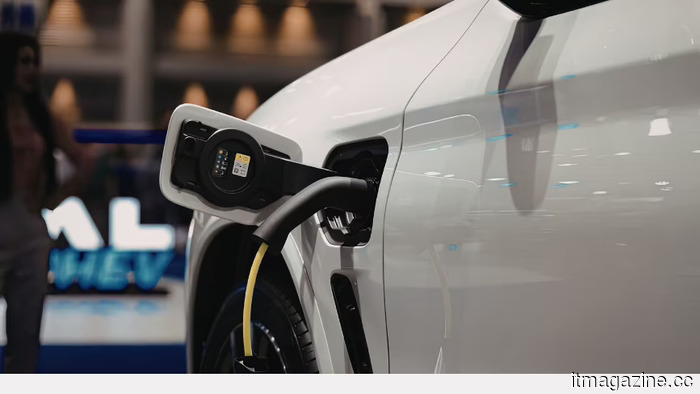 Bolt collaborates with China's Dongfeng to introduce an electric vehicle ride-hailing fleet in South Africa.
Bolt, asserting a market share of over 50% in South Africa following a $180 million investment, will provide riders in Cape Town with Dongfeng's Box and 007 electric vehicles in response to increasing fuel prices.
Bolt collaborates with China's Dongfeng to introduce an electric vehicle ride-hailing fleet in South Africa.
Bolt, asserting a market share of over 50% in South Africa following a $180 million investment, will provide riders in Cape Town with Dongfeng's Box and 007 electric vehicles in response to increasing fuel prices.
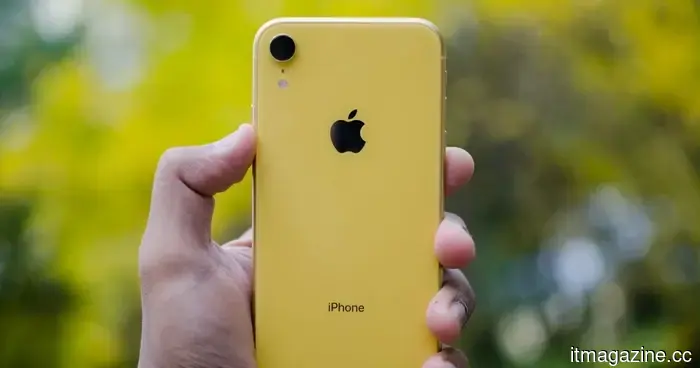 Apple should simply apply the Neo approach to its forthcoming iPhone 18e, and I'll be interested.
Apple ought to evolve the iPhone 18e into a vibrant, compact, personality-focused "Neo" device rather than producing yet another simplified variant of its flagship series.
Apple should simply apply the Neo approach to its forthcoming iPhone 18e, and I'll be interested.
Apple ought to evolve the iPhone 18e into a vibrant, compact, personality-focused "Neo" device rather than producing yet another simplified variant of its flagship series.
 After excelling in range and charging, Chinese EV brands showcase three-wheel driving in SUVs.
Chinese electric vehicle brands are utilizing active suspension as a new feature for their SUVs, with BYD, Aito, and Li Auto showcasing three-wheel driving demonstrations that may assist with tire changes, recovery, and navigating rough terrain.
After excelling in range and charging, Chinese EV brands showcase three-wheel driving in SUVs.
Chinese electric vehicle brands are utilizing active suspension as a new feature for their SUVs, with BYD, Aito, and Li Auto showcasing three-wheel driving demonstrations that may assist with tire changes, recovery, and navigating rough terrain.
 Having excelled in range and charging capabilities, Chinese EV manufacturers showcase three-wheel drive technology in their SUVs.
Chinese electric vehicle brands are making active suspension a highlight of their SUVs, as BYD, Aito, and Li Auto demonstrate three-wheel driving capabilities that may assist with tire changes, vehicle recovery, and navigating rough terrain.
Having excelled in range and charging capabilities, Chinese EV manufacturers showcase three-wheel drive technology in their SUVs.
Chinese electric vehicle brands are making active suspension a highlight of their SUVs, as BYD, Aito, and Li Auto demonstrate three-wheel driving capabilities that may assist with tire changes, vehicle recovery, and navigating rough terrain.
Ultra-slim transparent solar panels offer the potential for invisible charging solutions for wearable devices, vehicles, and residential spaces.
Researchers at NTU have created ultra-thin transparent solar cells that have the potential to convert windows, vehicle glass, and wearable devices into sources of clean energy without altering their appearance.