
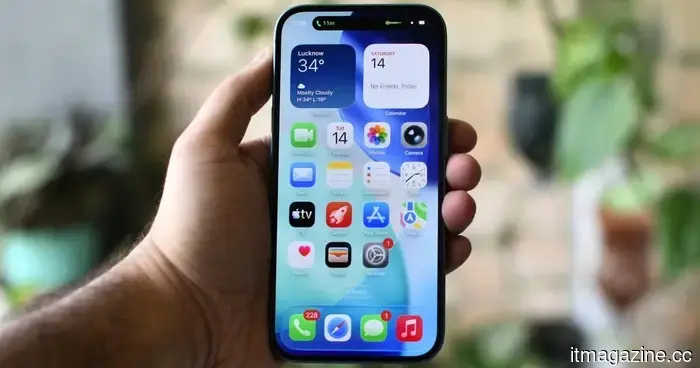
After a misstep with Siri, Apple intends to offer AI agents on the App Store.
Apple is currently encountering a challenge with Siri that isn't directly related to the voice assistant itself. With WWDC 2026 approaching, The Information reports that the company is actively seeking developers to adapt their applications for the revamped Siri in iOS 27.
The revamped Siri, powered by a mechanism called App Intents, utilizes an API that allows Siri to perform actions within third-party apps without requiring users to open them, which seems quite beneficial. However, many major developers are reluctant to adopt it, not due to its complexity, but because Apple has left the possibility of charging for it in the future.
Why are developers cautious about integrating the new Siri?
Apple has allegedly advised developers against imposing a commission during the initial phase of Siri integration. However, the company has not excluded the possibility of implementing one later, once the APIs are established and Siri is operating smoothly. This appears to be more of a legal safeguard than a genuine assurance.
Among the Chinese developers being approached are Baidu, Alibaba, and Tencent, and their employees are feeling uncertain about the integration. The primary concern is that if Siri becomes the main assistant for tasks within these apps, developers who choose to integrate it may inadvertently give Apple greater control over their customer relationships.
In short, Apple desires the ecosystem advantages that come from deep integration of Siri, but it hasn't committed to the commercial terms that would incentivize developers to implement the revamped Siri with App Intents.
Apple's App Store AI agent issue is even more complex than the Siri dilemma.
In a separate development, Apple is reportedly working to integrate AI agents directly into the App Store, which could lead to significant complications. AI agents can instantaneously generate smaller apps to accomplish tasks, creating potential issues, as highlighted by The Information.
While the App Store might approve a parent app, it may lack oversight regarding the apps created by these agents. A mentioned example is OpenClaw, an agentic system where agents malfunctioned and deleted all of a user's emails.
Engineers at Apple are believed to be developing a security system to manage the behavior of AI agents while ensuring they operate within privacy regulations. Although the company may unveil the integration of AI agents at the WWDC 2026 keynote, it might not be fully prepared.
With WWDC on the horizon, Tim Cook recently acknowledged the trend of AI agents during the last earnings call, noting that consumers are purchasing the Mac mini and Mac Studio to run local agents. Apple recognizes that this trend is emerging, yet it has not determined how to create a viable product or service from it that generates profit while maintaining functionality.
The uncertainty surrounding fees appears to be a problem of Apple’s own design. The company established the App Store with clear commission structures that developers understood, even if they weren't entirely pleased with them. The lack of clarity regarding commercial terms for Siri integration poses an opportunity for delays, something Apple cannot afford, especially after The Android Show 2026.
Additionally, the issues surrounding App Store AI agents may be even more severe. The company has invested years in creating a highly controlled app marketplace, yet it plans to incorporate AI agents that can generate unapproved apps on demand. At WWDC 2026, Apple must address these challenges for both its stakeholders and end users.



Other articles
 Framework is increasing the prices of RAM and storage modules once more.
The monthly pricing update from Framework has arrived, and storage is experiencing the largest decrease. The low-cost 2025 inventory is almost depleted, and a complete price revision will take place next month.
Framework is increasing the prices of RAM and storage modules once more.
The monthly pricing update from Framework has arrived, and storage is experiencing the largest decrease. The low-cost 2025 inventory is almost depleted, and a complete price revision will take place next month.
 Polestar's CEO claims that 'pump anxiety' is fueling the demand for electric vehicles as fuel prices rise due to the war in Iran.
The CEO of Polestar states that elevated fuel prices have shifted the focus of EVs to financial concerns. While EU registrations saw a 51% increase in March, the company's losses for the first quarter expanded to $383 million.
Polestar's CEO claims that 'pump anxiety' is fueling the demand for electric vehicles as fuel prices rise due to the war in Iran.
The CEO of Polestar states that elevated fuel prices have shifted the focus of EVs to financial concerns. While EU registrations saw a 51% increase in March, the company's losses for the first quarter expanded to $383 million.
 Carta introduces Carta Law following the acquisition of Avantia, marking its fourth transaction in eight months.
Carta has obtained the UK law firm Avantia to establish Carta Law, integrating AI-driven legal and compliance solutions into its private capital ERP. This marks the fourth acquisition since October 2025.
Carta introduces Carta Law following the acquisition of Avantia, marking its fourth transaction in eight months.
Carta has obtained the UK law firm Avantia to establish Carta Law, integrating AI-driven legal and compliance solutions into its private capital ERP. This marks the fourth acquisition since October 2025.
 OpenAI is gearing up for legal action against Apple as the collaboration between ChatGPT and Siri falls apart.
OpenAI claims that Apple has hidden ChatGPT within Siri and did not actively promote it. Currently, its legal team is exploring breach-of-contract possibilities as Apple introduces Claude and Gemini in iOS 27.
OpenAI is gearing up for legal action against Apple as the collaboration between ChatGPT and Siri falls apart.
OpenAI claims that Apple has hidden ChatGPT within Siri and did not actively promote it. Currently, its legal team is exploring breach-of-contract possibilities as Apple introduces Claude and Gemini in iOS 27.
 The CEO of Polestar attributes the increase in electric vehicle demand to "pump anxiety" resulting from rising fuel prices due to the war in Iran.
According to Polestar's CEO, elevated fuel prices have turned EVs into a financial matter. While EU registrations surged by 51% in March, the company's losses in Q1 increased to $383 million.
The CEO of Polestar attributes the increase in electric vehicle demand to "pump anxiety" resulting from rising fuel prices due to the war in Iran.
According to Polestar's CEO, elevated fuel prices have turned EVs into a financial matter. While EU registrations surged by 51% in March, the company's losses in Q1 increased to $383 million.
 Carta unveils Carta Law following its acquisition of Avantia, marking its fourth transaction in eight months.
Carta has taken over the UK law firm Avantia to establish Carta Law, integrating AI-driven legal and compliance features into its private capital ERP. This marks the fourth acquisition since October 2025.
Carta unveils Carta Law following its acquisition of Avantia, marking its fourth transaction in eight months.
Carta has taken over the UK law firm Avantia to establish Carta Law, integrating AI-driven legal and compliance features into its private capital ERP. This marks the fourth acquisition since October 2025.
After a misstep with Siri, Apple intends to offer AI agents on the App Store.
Developers lack confidence in Apple's pledge regarding Siri's commission. Apple is unsure of how to effectively approve AI agents securely. With WWDC just three weeks away, a resolution needs to be found.