
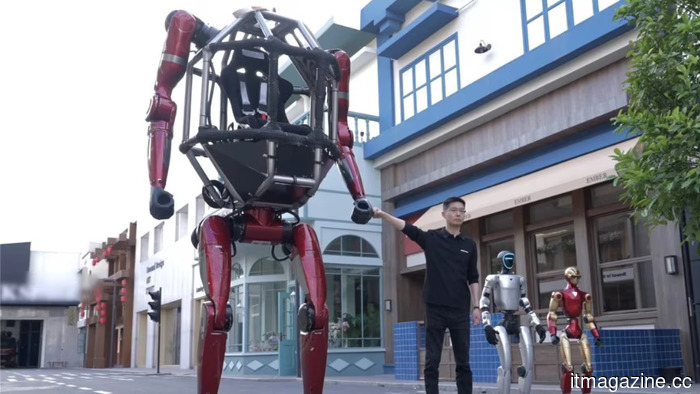
Unitree GD01 robot has been launched as the company prepares to file for a $7 billion IPO, following its success in surpassing Tesla in humanoid robot sales.
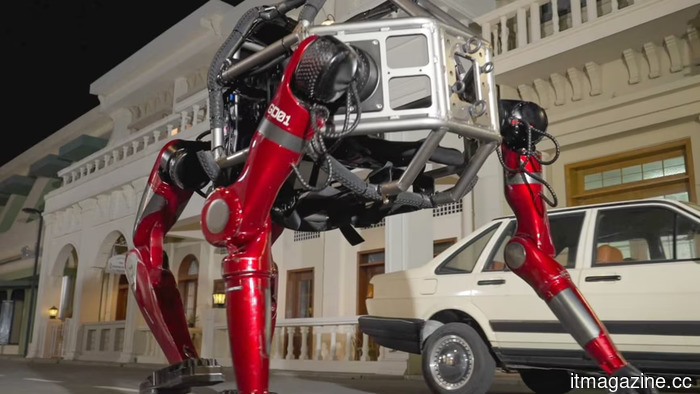
Unitree Robotics has introduced the GD01, a 2.8-meter transformable mecha that allows a human pilot to operate it from an open cockpit situated in its torso. This mecha can walk on two legs, swiftly switch to a quadruped configuration, weighs around 500 kilograms with a passenger, and starts at a price of 3.9 million yuan, roughly equivalent to $650,000. It also has the capability to function autonomously. Unitree claims it is the first production-ready manned mecha in the world, designed for use in rugged terrains, exploration, and rescue missions that benefit from a higher vantage point.
The GD01 is not only a captivating spectacle but also represents a significant branding move for a company that has proven its worth in the market.
Unitree was established in 2016 by Wang Xingxing, who created his first quadruped robot while completing his master's thesis at Shanghai University. He left DJI to launch the company in a 50-square-meter office in Hangzhou. A decade later, Unitree commands about 70% of the global quadruped robot market, having delivered over 23,700 units in 2024 across its Go, A, and B series. In 2025, it sold more than 5,500 humanoid robots, surpassing every other manufacturer, including Tesla.
The company's revenue in 2025 reached 1.71 billion yuan (around $235 million), marking a 335% increase compared to the previous year. Unitree has enjoyed profitability since 2020, with humanoid robots overtaking quadrupeds as the primary source of revenue, contributing about 52% of total earnings in the first three quarters. In March 2026, Unitree filed for an IPO on the Shanghai Stock Exchange, aiming to raise 4.2 billion yuan (approximately $610 million) with a target valuation of $7 billion.
The company’s investor roster features prominent names in Chinese technology, including Alibaba, Tencent, China Mobile, Geely Capital, Ant Group, Jinqiu Capital (an offshoot of ByteDance), and HongShan Capital, previously known as Sequoia China. This underscores the interest from major tech conglomerates in a company leading the robot market.
Unitree's commercial significance extends well beyond the GD01. The company has a diverse product range that caters to both consumer and industrial markets, consistently offering prices significantly lower than Western competitors. The Go2 consumer quadruped starts at $1,600, while the G1 humanoid, used for research and light industry, ranges from $13,500 to $27,000. The H2, a full-size industrial humanoid, is priced at $29,900. The B2-W, a wheeled quadruped variant, is designed for inspection, patrol, and fire rescue operations.
In comparison, Figure AI’s Figure 02 industrial humanoid is being deployed at BMW with undisclosed costs estimated to be much higher than those of Unitree. Boston Dynamics has started producing its electric Atlas, with all units for 2026 already allocated to Hyundai. As of the first quarter of 2026, Tesla's Optimus is still in the research phase with no factory deployments. Unitree stands out as the only company currently producing and shipping consumer, research, and industrial humanoid robots at scale.
However, China’s humanoid robot market is facing challenges, with over 150 companies competing in a sector where only 23% of buyers express satisfaction with their purchases. Unitree addresses this satisfaction issue with rapid iteration and aggressive pricing, making replacement robots more affordable than the pilot programs of competitors. The company approaches humanoid robotics similarly to how Chinese smartphone manufacturers tackled handsets a decade ago: quickly releasing products, pricing competitively, iterating based on customer feedback, and leveraging volume to reduce costs.
The GD01 transforms between bipedal and quadrupedal modes by adjusting its legs and center of gravity within seconds. In bipedal mode, it stands nearly three meters tall, while in quadruped mode, it adopts a lower profile that enhances stability on uneven terrain. The machine uses LiDAR, depth cameras, an inertial measurement unit, and pressure sensors for navigation and stability, powered by Unitree's self-designed high-torque motors. Demonstration videos showcase its capabilities, including traversing urban areas, breaking through walls, and transporting a pilot across rugged ground.
Unitree has emphasized safety, urging users to avoid dangerous modifications and acknowledging that humanoid robotics is still in an experimental phase with inherent limitations. The initial price of $650,000 is labeled as a preliminary reference, with final production costs potentially varying based on performance optimizations. This machine is not a toy and, as of now, lacks a definitive commercial market beyond affluent consumers and exhibition events.
Ultimately, the GD01 serves as a showcase of Unitree’s ability to develop large-scale bipedal
Other articles
 Meta and Google financially support the youth organizations they refer to when addressing regulators.
Meta and Google have established a network for advocating for children in the U.S. that they reference to regulators. The PTA withdrew in February. Reuters has the full list.
Meta and Google financially support the youth organizations they refer to when addressing regulators.
Meta and Google have established a network for advocating for children in the U.S. that they reference to regulators. The PTA withdrew in February. Reuters has the full list.
 Reasons why global companies are shifting towards mass payouts with cryptocurrency.
Large-scale cryptocurrency payouts are transforming the global payment system. Discover how crypto payments to numerous recipients provide gig platforms with a scalable, quicker, and more dependable option compared to conventional payment methods.
Reasons why global companies are shifting towards mass payouts with cryptocurrency.
Large-scale cryptocurrency payouts are transforming the global payment system. Discover how crypto payments to numerous recipients provide gig platforms with a scalable, quicker, and more dependable option compared to conventional payment methods.
 Meta and Google support the children's organizations they reference to regulators.
Meta and Google established a network in the U.S. focused on advocating for children, which they reference to regulators. The PTA withdrew in February. Reuters provides the remaining details.
Meta and Google support the children's organizations they reference to regulators.
Meta and Google established a network in the U.S. focused on advocating for children, which they reference to regulators. The PTA withdrew in February. Reuters provides the remaining details.
 I tried out the AI Image to Video 2.0 feature on the Honor 600 Pro, and it exceeded my expectations.
Honor's AI Image to Video 2.0 represents a considerable improvement compared to the version that debuted with the 400 series last year. I experimented with the templates and tested custom prompts, and here's what you should be aware of.
I tried out the AI Image to Video 2.0 feature on the Honor 600 Pro, and it exceeded my expectations.
Honor's AI Image to Video 2.0 represents a considerable improvement compared to the version that debuted with the 400 series last year. I experimented with the templates and tested custom prompts, and here's what you should be aware of.
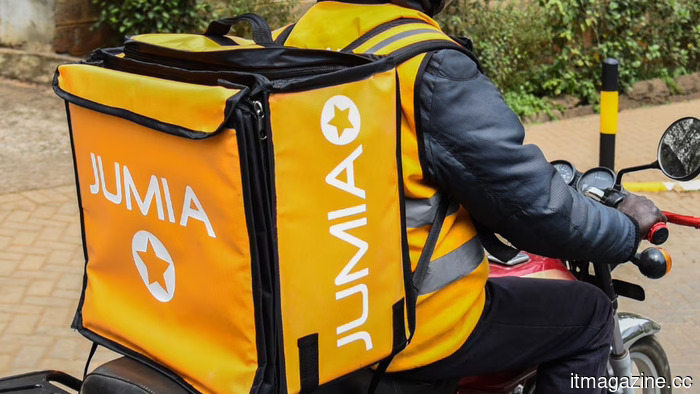 Jumia is reducing its workforce by an additional 10%. The context is centered around AI, while the aim is to achieve profitability by the set deadline.
Jumia is reducing its workforce by an additional 10%, attributing the decision to AI workflows. Since 2022, the company has eliminated over half of its employees. The deadline for achieving profitability in Q4 is approaching.
Jumia is reducing its workforce by an additional 10%. The context is centered around AI, while the aim is to achieve profitability by the set deadline.
Jumia is reducing its workforce by an additional 10%, attributing the decision to AI workflows. Since 2022, the company has eliminated over half of its employees. The deadline for achieving profitability in Q4 is approaching.
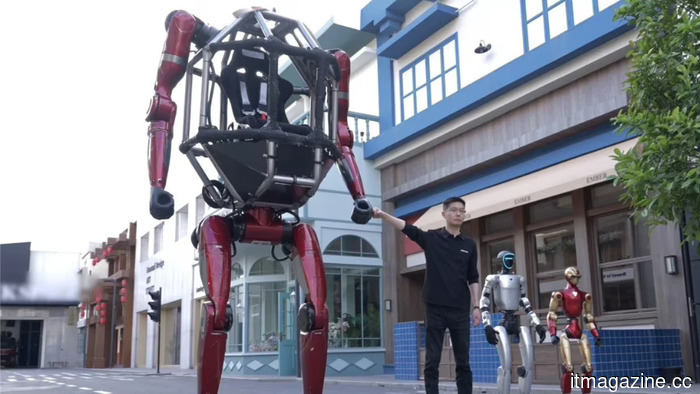 Unitree GD01 robot revealed as the company prepares to file for a $7 billion IPO after surpassing Tesla in humanoid robot sales.
Unitree Robotics has introduced a $650,000 transformable mecha and is seeking to file for a $7 billion IPO. The Chinese firm delivered more humanoid robots than Tesla in 2025.
Unitree GD01 robot revealed as the company prepares to file for a $7 billion IPO after surpassing Tesla in humanoid robot sales.
Unitree Robotics has introduced a $650,000 transformable mecha and is seeking to file for a $7 billion IPO. The Chinese firm delivered more humanoid robots than Tesla in 2025.
Unitree GD01 robot has been launched as the company prepares to file for a $7 billion IPO, following its success in surpassing Tesla in humanoid robot sales.
Unitree Robotics has introduced a $650,000 adjustable mecha and is preparing to file for a $7 billion IPO. In 2025, the Chinese firm delivered more humanoid robots than Tesla.