
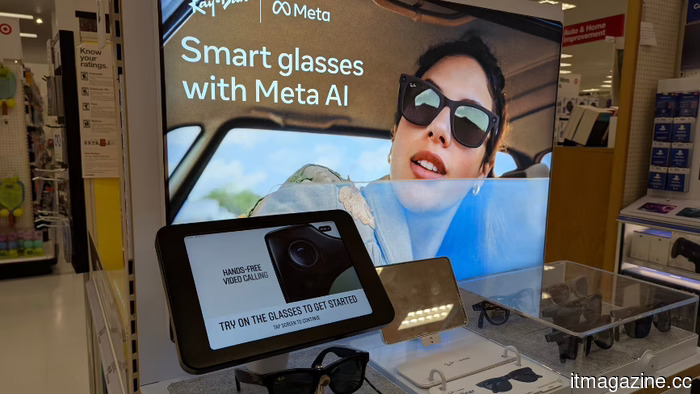
Meta's smart glasses are selling in the millions, yet those being filmed without their knowledge have no recourse.
Meta’s Ray-Ban smart glasses have achieved sales of seven million pairs, capturing 82% of the market, but they are now mired in a rising privacy crisis. Women have been surreptitiously filmed in public with limited legal options, data workers in Kenya reported reviewing disturbing footage recorded by the glasses, and two lawsuits in the US claim that Meta misled consumers regarding privacy. Competing products from Apple, Google, and Snap, all equipped with cameras, are on the horizon, further escalating the conflict between the utility of wearable AI and the privacy of bystanders.
One woman was shopping in London when she was approached by a man wearing sunglasses indoors. He asked her name and complimented her beauty. Unbeknownst to her, the nearly invisible camera in the frames of his Meta Ray-Ban smart glasses was recording the entire interaction. She later discovered the footage online, where it had garnered tens of thousands of views. When she requested its removal, he informed her that it was "a paid service."
She is not alone in this experience. A disturbing trend has emerged on social media: men wearing Meta’s AI-enabled glasses approach women in various public places, filming their reactions to casual questions or pick-up lines without their consent. Women often find out about these recordings only after they have gained significant attention online, frequently leading to harassment. Public photography is generally legal in most areas, leaving those filmed with scant recourse.
Despite these issues, sales remain unaffected. In fact, they continue to rise. Meta has sold over seven million pairs of its Ray-Ban smart glasses, as per reports from EssilorLuxottica, the eyewear giant that collaborates with Meta in their production. Mark Zuckerberg, Meta’s CEO, stated earlier this year that the glasses are among the fastest-growing consumer electronics ever. Counterpoint Research estimates that as of the second half of 2025, Meta holds around 82% of the global smart glasses market, a figure that has increased steadily with the company's expansion into prescription lenses and new styles.
The glasses are intentionally designed to appear unremarkable. Based on classic Ray-Ban frames, they incorporate a nearly invisible camera, small speakers in the arms, and lenses that can display limited information to the user. To record video or take photos, the user simply touches the frame. A small light indicates when recording is happening, but it is often hard to see in daylight. Most people who encounter a wearer are unaware they are looking at something other than regular sunglasses.
This inconspicuous design has led to consequences that Meta likely didn’t anticipate. Earlier this year, employees at Sama, a Nairobi-based outsourcing firm hired by Meta to generate AI training data, reported being required to review footage from the glasses showing people engaged in sexual activity, using the bathroom, undressing, and dealing with sensitive financial documents. These revelations, initially reported by Swedish journalists, led Meta to terminate its contract with Sama in April, giving the 1,108 workers only six days' notice. Meta stated that the firm failed to meet its standards.
Subsequently, two lawsuits were filed in the US. In one case, consumers allege that Meta marketed the glasses as “designed for privacy, controlled by you” while funneling user footage through a human review process in Kenya. The second suit was brought by individuals who claim they were unaware their videos had been recorded and shared for review. Both the UK Information Commissioner’s Office and Kenya’s Office of the Data Protection Commissioner have initiated investigations. Meta claims that users were made aware of the possibility of human review in certain situations through its terms of service.
Tracy Clayton, a Meta spokesperson, clarified to the BBC that ultimately, the responsibility lies with the users of the glasses. “We have teams dedicated to limiting and combating misuse, but as with any technology, the onus is ultimately on individual people to not actively exploit it,” Clayton stated.
This framing sidesteps a fundamental issue: what occurs when a device's intrinsic design facilitates misuse effortlessly? The recording light is too faint to provide meaningful warning. The discreet camera fails to prompt awareness. Furthermore, social norms that might have once regulated the act of filming strangers dissipate when the camera is concealed in something as common as Ray-Ban sunglasses. Privacy complaints against Meta for using personal data to train AI are increasing across the European Union, but smart glasses introduce a physical aspect to a predominantly digital concern. Training AI on Facebook posts is one thing; doing so with footage of strangers in their homes, captured by a wearable device and reviewed by a contractor in another country, is another entirely.
For the tech industry, these issues seem to represent an acceptable risk as many anticipate that this will be the next significant consumer electronics category. Reports indicate that Apple is testing at least four designs for its own smart glasses, potentially set to unveil them later this year with a public release in early 2027. These devices are expected to integrate with the iPhone for hands-free
Other articles
 Canva's report indicates that almost all marketers are utilizing AI, yet consumers continue to prefer a personal touch.
Canva's report for 2026 reveals that 97% of marketers utilize AI on a daily basis, yet 78% of consumers favor advertisements created by humans. References to "AI slop" have increased nine times.
Canva's report indicates that almost all marketers are utilizing AI, yet consumers continue to prefer a personal touch.
Canva's report for 2026 reveals that 97% of marketers utilize AI on a daily basis, yet 78% of consumers favor advertisements created by humans. References to "AI slop" have increased nine times.
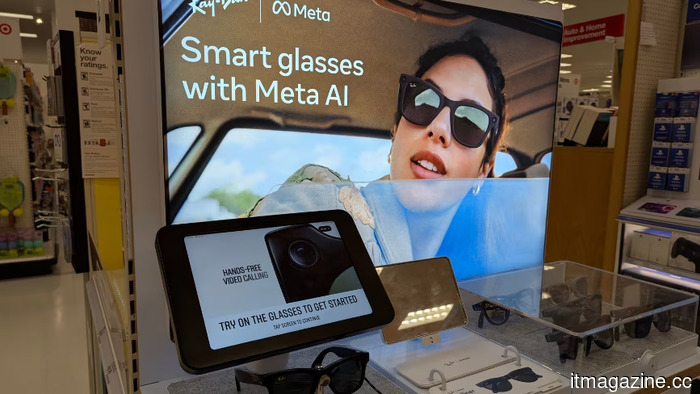 Meta's smart glasses are flying off the shelves, but those who are being recorded without their knowledge have no recourse.
Meta has sold 7 million pairs of Ray-Ban smart glasses and controls 82% of the market. There are reports of women being filmed without their knowledge, lawsuits are increasing, and companies like Apple, Google, and Snap are looking to enter the market.
Meta's smart glasses are flying off the shelves, but those who are being recorded without their knowledge have no recourse.
Meta has sold 7 million pairs of Ray-Ban smart glasses and controls 82% of the market. There are reports of women being filmed without their knowledge, lawsuits are increasing, and companies like Apple, Google, and Snap are looking to enter the market.
 I had my doubts regarding the Motorola Razr Fold, but it exceeded the limitations often associated with first-generation products quite impressively.
The Motorola Razr Fold might be the brand's initial foray into book-style foldables, yet its high-quality materials, robust hinge, and refined folding experience give it a sense of confidence that surpasses a typical first effort.
I had my doubts regarding the Motorola Razr Fold, but it exceeded the limitations often associated with first-generation products quite impressively.
The Motorola Razr Fold might be the brand's initial foray into book-style foldables, yet its high-quality materials, robust hinge, and refined folding experience give it a sense of confidence that surpasses a typical first effort.
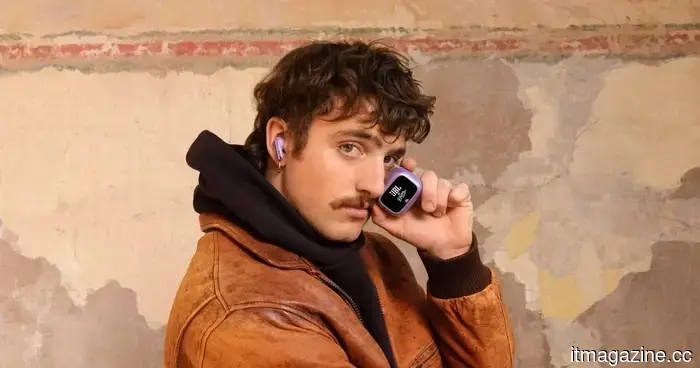 JBL's latest Live 4 earbuds are available in three designs and feature a more advanced case with an integrated display.
JBL has refreshed its Live earbuds, offering three fit options, enhanced ANC, Hi-Res Audio, and a more intelligent touchscreen case that allows for additional controls directly from the case.
JBL's latest Live 4 earbuds are available in three designs and feature a more advanced case with an integrated display.
JBL has refreshed its Live earbuds, offering three fit options, enhanced ANC, Hi-Res Audio, and a more intelligent touchscreen case that allows for additional controls directly from the case.
 HMRC has granted a £175 million AI contract to the British company Quantexa in an effort to address the £46.8 billion tax gap.
HMRC has entered into a 10-year agreement worth £175 million with Quantexa, a company based in London, to implement AI for detecting fraud and ensuring tax compliance as part of a significant move towards digital sovereignty.
HMRC has granted a £175 million AI contract to the British company Quantexa in an effort to address the £46.8 billion tax gap.
HMRC has entered into a 10-year agreement worth £175 million with Quantexa, a company based in London, to implement AI for detecting fraud and ensuring tax compliance as part of a significant move towards digital sovereignty.
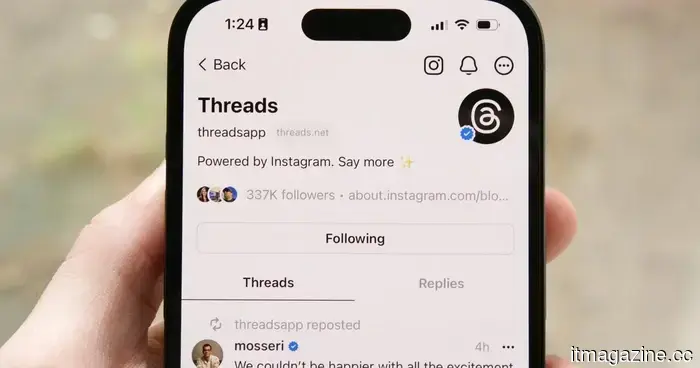 It's not possible to block Meta's AI bot on Threads. I'm not sure what we did to warrant this.
Threads users are angry after finding out that Meta's new AI chatbot cannot be blocked like other accounts on the platform.
It's not possible to block Meta's AI bot on Threads. I'm not sure what we did to warrant this.
Threads users are angry after finding out that Meta's new AI chatbot cannot be blocked like other accounts on the platform.
Meta's smart glasses are selling in the millions, yet those being filmed without their knowledge have no recourse.
Meta has sold 7 million pairs of Ray-Ban smart glasses and holds 82% of the market share. There are reports of women being filmed without consent, lawsuits are increasing, and companies like Apple, Google, and Snap are looking to enter the market.