
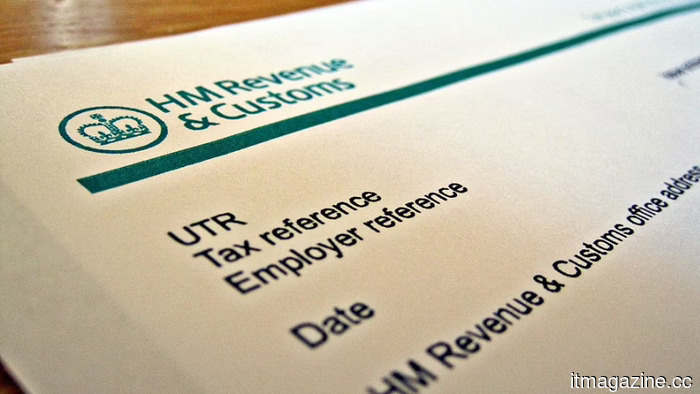
HMRC has granted a £175 million AI contract to the British company Quantexa in an effort to address the £46.8 billion tax gap.
TL;DR: HMRC has awarded a £175 million, ten-year AI contract to London-based company Quantexa, aimed at detecting tax fraud, correcting errors, and bridging the £46.8 billion tax gap. This marks a strategic move towards British AI independence after previously spending over £900 million on contracts with the American firm Palantir across various UK government departments.
HM Revenue and Customs has granted a £175 million, decade-long contract to Quantexa, a London-based AI firm, to enhance the tax authority’s data systems and utilize AI for fraud detection, error correction, and closing the tax gap. This contract represents one of the largest AI agreements in the UK public sector. It also signals a move towards sovereignty, as the UK government previously invested over £900 million in Palantir, the American data analytics company, across multiple departments including the NHS. The Quantexa contract differs fundamentally as it involves a British company, with data managed within HMRC’s own system. This decision was intentional.
The tax gap, which is the disparity between taxes owed to the government and what is collected, reached £46.8 billion for the fiscal year 2023-24. The government aims to recover an extra £10 billion annually by 2030, and Quantexa's role is to assist in this effort.
The company Quantexa was established in 2016 by Vishal Marria, who previously served as the youngest executive director at Ernst and Young, where he directed anti-financial crime tech initiatives for global banks. Quantexa's "Decision Intelligence" platform integrates data from various sources, resolves identities within datasets, and employs graph analytics and machine learning to unveil patterns that human analysts may miss at scale. Initially, it focused on anti-money laundering in the banking sector, with HSBC being one of its first clients. The technology that enabled banks to identify suspicious transactions between shell companies is now being employed by a tax authority to spot dubious patterns in numerous tax returns.
Quantexa reported revenues of £126 million for the year ending March 2025, reflecting a 49% year-over-year increase, with annual recurring revenue surpassing $100 million. In March 2025, the company secured $175 million in a Series F funding round, achieving a valuation of $2.6 billion, supported by investors including Warburg Pincus, HSBC, and the Ontario Teachers’ Pension Plan, with total funding amounting to $546 million. Quantexa operates in over 70 countries, serving clients in finance, telecommunications, and the public sector, including Vodafone.
With a valuation of $2.6 billion, Quantexa has become the UK’s most valuable generative AI company, just ahead of Synthesia, which is valued at $2.1 billion. These companies exemplify the distinct strengths of British AI: Synthesia in generative media and Quantexa in enterprise decision intelligence. Neither creates foundational models, but both develop applications that leverage such models, which has proven commercially successful for European AI firms.
The HMRC contract encompasses three key capabilities. First, Quantexa will upgrade HMRC's primary data infrastructure, establishing a connected framework that currently faces fragmentation due to separate systems. HMRC manages hundreds of millions of transactions yearly across various tax types. Although the data exists, it is scattered. Quantexa's entity resolution technology will link records referring to the same individual, company, or transaction, thereby creating a comprehensive view and revealing patterns.
Second, the platform will utilize AI to detect tax fraud and evasion, including covert networks of individuals and companies engaged in fraudulent activities. Graph analytics will trace the connections between multiple layers of corporate ownership, a feat that is virtually impossible for human auditors using spreadsheets but manageable by software engineered to analyze intricate networks.
Third, the system will enhance HMRC's customer service operations, enabling staff to resolve inquiries more efficiently. Public frustration with HMRC has increased significantly, with over 93,000 complaints submitted in 2024-25, up from 70,000 complaints in 2020-21. Slow response times are a key concern. AI-driven case management, including generative AI that can summarize documents and address caseworkers' inquiries, will be part of the solution.
Marria informed the BBC that while automated taxpayer-related decisions will require human oversight, he stressed that AI should not function as a "black box" in government contexts. Decisions must be transparent, auditable, and understandable, especially in areas impacting citizens directly. He assured that HMRC data would solely reside within HMRC's domain and never be shared externally.
Regarding sovereignty, NHS England has permitted Palantir contractors broader access to identifiable patient data via the Federated Data Platform, a move criticized by patient advocacy groups and Labour MPs. The £330 million contract, awarded by the former Conservative government, positioned an American surveillance firm at the core of NHS data infrastructure. Science minister Patrick Vallance has indicated that future government
Other articles
 JBL's latest Live 4 earbuds are available in three designs and feature a more advanced case with an integrated display.
JBL has refreshed its Live earbuds, offering three fit options, enhanced ANC, Hi-Res Audio, and a more intelligent touchscreen case that allows for additional controls directly from the case.
JBL's latest Live 4 earbuds are available in three designs and feature a more advanced case with an integrated display.
JBL has refreshed its Live earbuds, offering three fit options, enhanced ANC, Hi-Res Audio, and a more intelligent touchscreen case that allows for additional controls directly from the case.
 Canva report: almost all marketers utilize AI, yet consumers still seek a human connection.
Canva's 2026 report reveals that 97% of marketers utilize AI on a daily basis, yet 78% of consumers favor ads created by humans. The term "AI slop" has seen a ninefold increase in mentions.
Canva report: almost all marketers utilize AI, yet consumers still seek a human connection.
Canva's 2026 report reveals that 97% of marketers utilize AI on a daily basis, yet 78% of consumers favor ads created by humans. The term "AI slop" has seen a ninefold increase in mentions.
 BCG educates AI sales agent Jamie on its top-selling products as well as its biggest errors.
BCG's AI agent Jamie analyzes call transcripts from top sellers as well as their least effective habits. Vercel has already reduced its SDR team from 10 to 1 by utilizing a similar method.
BCG educates AI sales agent Jamie on its top-selling products as well as its biggest errors.
BCG's AI agent Jamie analyzes call transcripts from top sellers as well as their least effective habits. Vercel has already reduced its SDR team from 10 to 1 by utilizing a similar method.
 It's not possible to block Meta's AI bot on Threads. I'm unsure what we did to warrant this situation.
Threads users are enraged upon realizing that Meta's new AI chatbot cannot be blocked like other accounts on the platform.
It's not possible to block Meta's AI bot on Threads. I'm unsure what we did to warrant this situation.
Threads users are enraged upon realizing that Meta's new AI chatbot cannot be blocked like other accounts on the platform.
 Recursive Superintelligence secures $650 million at a valuation of $4.65 billion to develop self-enhancing AI.
Former researchers from Meta and DeepMind have secured $650 million at a valuation of $4.65 billion for Recursive Superintelligence, a startup that believes AI can automate its own research processes.
Recursive Superintelligence secures $650 million at a valuation of $4.65 billion to develop self-enhancing AI.
Former researchers from Meta and DeepMind have secured $650 million at a valuation of $4.65 billion for Recursive Superintelligence, a startup that believes AI can automate its own research processes.
 I took the Motorola Razr Fold out for street photography and was truly impressed by its performance.
After using the Motorola Razr Fold in a nearby art district, I was impressed by how effectively the cameras managed murals, bright sunlight, shadows, and intricate street scenes.
I took the Motorola Razr Fold out for street photography and was truly impressed by its performance.
After using the Motorola Razr Fold in a nearby art district, I was impressed by how effectively the cameras managed murals, bright sunlight, shadows, and intricate street scenes.
HMRC has granted a £175 million AI contract to the British company Quantexa in an effort to address the £46.8 billion tax gap.
HMRC has entered into a 10-year agreement worth £175 million with Quantexa, a company based in London, to implement AI for detecting fraud and ensuring tax compliance as part of a significant move towards digital sovereignty.