

Canva's report indicates that almost all marketers are utilizing AI, yet consumers continue to prefer a personal touch.
**Summary**
Canva's 2026 State of Marketing and AI Report reveals that 97% of marketing leaders utilize AI daily, with 99% intending to boost their AI spending. However, 78% of consumers still favor human-created advertisements, and 87% believe the best advertising needs a personal touch. The term "AI slop," referring to low-quality machine-generated content, has seen a ninefold increase in mentions. Consumers demand more transparency, with 52% wanting disclosure, 53% emphasizing data protection, and 37% wishing to opt out of AI-generated ads. The report also announces Canva's expanded partnership with Anthropic, integrating its design engine into Claude for Small Business.
The report highlights a disparity: while nearly every marketer employs AI for creative tasks, many consumers prefer human involvement. This disconnect between industry enthusiasm and consumer skepticism underscores that the primary challenge in AI-driven marketing is obtaining consumer consent.
When asked about their comfort with AI in advertising, 53% of consumers expressed concerns over data protection, and 52% desired transparency about AI usage. They believe that as AI-generated content becomes indistinguishable from human-made, 70% will eventually find it difficult to identify AI-created advertisements without clear disclosures.
Quality concerns about AI content have intensified, with a significant number of marketing leaders considering "AI slop" a serious issue. Many consumers feel AI advertisements lack depth, indicating not necessarily a rejection of AI but a recognition of the difference between human-created and machine-generated content.
Ironically, while AI contributes to lower quality content, it also allows for unprecedented personalization and rapid iteration. The real issue lies in management standards rather than technology itself.
The report indicates that 68% of marketing leaders believe AI is enhancing business decisions, suggesting it’s not only speeding up production but also altering resource allocation and impact measurement.
The report's timing coincided with Canva’s announcement of an expanded partnership with Anthropic, which integrates its design capabilities into the AI assistant Claude for Small Business, enabling small business owners to create on-brand marketing campaigns directly from the assistant.
This partnership reflects a growing trend where trust has become a pivotal factor in marketing, particularly between AI-assisted brands and consumers aware of AI's influence. While 78% of consumers prefer human-made ads, it signifies a preference for intentional creativity over optimization. How this preference evolves in a generation accustomed to AI-generated content remains uncertain, but it currently poses a challenge for marketers.
Brands that approach AI disclosure as a strategic asset rather than a regulatory obligation are likely to fare better. Those that neglect this aspect may contribute to the rising issue of low-quality content, which consumers will notice, even if they struggle to articulate their concerns.
Other articles
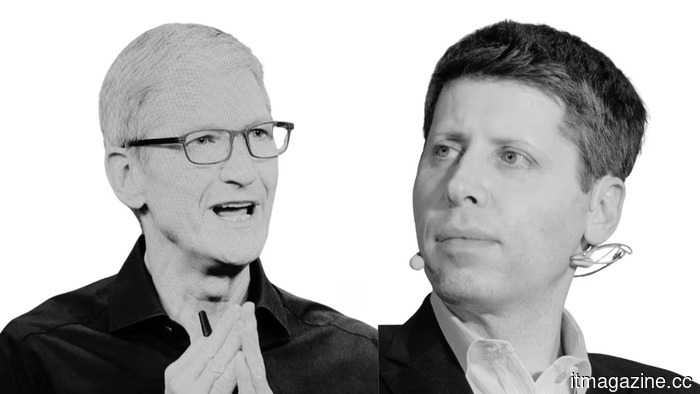 OpenAI is gearing up for legal action against Apple as the collaboration between ChatGPT and Siri falls apart.
OpenAI claims that Apple has hidden ChatGPT within Siri and did not actively promote it. Currently, its legal team is exploring breach-of-contract possibilities as Apple introduces Claude and Gemini in iOS 27.
OpenAI is gearing up for legal action against Apple as the collaboration between ChatGPT and Siri falls apart.
OpenAI claims that Apple has hidden ChatGPT within Siri and did not actively promote it. Currently, its legal team is exploring breach-of-contract possibilities as Apple introduces Claude and Gemini in iOS 27.
 Revolut introduces a private banking division with a threshold of £500,000 while aiming for a $200 billion IPO.
This summer, Revolut intends to launch a private banking division with a minimum investment of £500,000, aiming to fill the gap left by Coutts in the mass-affluent sector, as the fintech prepares for a potential Nasdaq IPO valued at up to $200 billion.
Revolut introduces a private banking division with a threshold of £500,000 while aiming for a $200 billion IPO.
This summer, Revolut intends to launch a private banking division with a minimum investment of £500,000, aiming to fill the gap left by Coutts in the mass-affluent sector, as the fintech prepares for a potential Nasdaq IPO valued at up to $200 billion.
 Meta is experimenting with an AI bot intended to replicate the same online foolishness seen with AskGrok on X.
Meta is experimenting with an AI bot on Threads that functions similarly to Grok on X, publicly replying to user mentions within discussions.
Meta is experimenting with an AI bot intended to replicate the same online foolishness seen with AskGrok on X.
Meta is experimenting with an AI bot on Threads that functions similarly to Grok on X, publicly replying to user mentions within discussions.
 Framework is increasing the prices of RAM and storage modules once more.
The monthly pricing update from Framework has arrived, and storage is experiencing the largest decrease. The low-cost 2025 inventory is almost depleted, and a complete price revision will take place next month.
Framework is increasing the prices of RAM and storage modules once more.
The monthly pricing update from Framework has arrived, and storage is experiencing the largest decrease. The low-cost 2025 inventory is almost depleted, and a complete price revision will take place next month.
 Meta is experimenting with an AI bot aimed at replicating the same online foolishness that AskGrok has on X.
Meta is experimenting with an AI bot on Threads that functions similarly to Grok on X, interacting publicly with user mentions during discussions.
Meta is experimenting with an AI bot aimed at replicating the same online foolishness that AskGrok has on X.
Meta is experimenting with an AI bot on Threads that functions similarly to Grok on X, interacting publicly with user mentions during discussions.
 BCG educates AI sales agent Jamie on its top-selling products as well as its biggest errors.
BCG's AI agent Jamie analyzes call transcripts from top sellers as well as their least effective habits. Vercel has already reduced its SDR team from 10 to 1 by utilizing a similar method.
BCG educates AI sales agent Jamie on its top-selling products as well as its biggest errors.
BCG's AI agent Jamie analyzes call transcripts from top sellers as well as their least effective habits. Vercel has already reduced its SDR team from 10 to 1 by utilizing a similar method.
Canva's report indicates that almost all marketers are utilizing AI, yet consumers continue to prefer a personal touch.
Canva's report for 2026 reveals that 97% of marketers utilize AI on a daily basis, yet 78% of consumers favor advertisements created by humans. References to "AI slop" have increased nine times.