
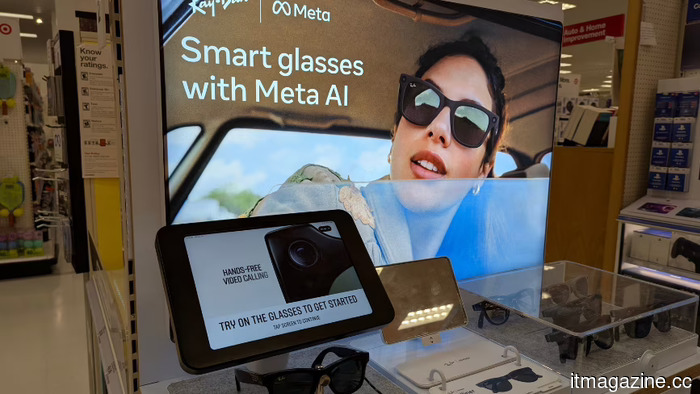
Meta's smart glasses are flying off the shelves, yet those being recorded without their knowledge have no way to respond.
Meta’s Ray-Ban smart glasses have sold seven million units and control 82% of the market, but a growing privacy crisis looms over the product. Women have been recorded without their consent in public, with limited legal options available, and Kenyan data workers have reported reviewing explicit footage captured by the glasses. Two lawsuits in the US claim that Meta misled consumers regarding privacy. Competing smart glasses from Apple, Google, and Snap are on the horizon, all incorporating cameras, which will exacerbate the ongoing tension between the utility of wearable AI and bystander privacy.
One woman encountered a man in London who seemed unusual; he wore sunglasses indoors, asked her name, and complimented her beauty. Unbeknownst to her, his Meta Ray-Ban smart glasses contained a nearly invisible camera that recorded their interaction. She discovered the footage later, after it was posted online and garnered significant views. When she requested its removal, he informed her that it was a “paid service.”
She is not alone. A troubling trend has emerged on social media where men wearing Meta’s AI-enabled glasses approach women in various public settings, recording their responses to unsuspecting queries or pick-up lines without consent. Often, the women only find out about the videos after they have circulated online and subjected them to harassment. Generally, photography in public is permissible in most areas, leaving those filmed with virtually no recourse.
None of these issues have affected sales; in fact, they have flourished.
Recent reports indicate that Meta has sold over seven million pairs of its Ray-Ban smart glasses, as announced by EssilorLuxottica, the eyewear manufacturer working with Meta. CEO Mark Zuckerberg claimed that these glasses are “some of the fastest-growing consumer electronics in history." According to Counterpoint Research, Meta holds about 82% of the global smart glasses market as of late 2025, a figure that has risen as the company expanded its range to include prescription lenses and new designs.
The glasses are designed to appear quite ordinary, which is the intention. They are based on EssilorLuxottica’s classic Ray-Ban frames and include a nearly invisible camera, small speakers in the arms, and lenses that can display minimal information to the wearer. Recording a video or taking a photo is as simple as tapping the frame. An indicator light intended to show when recording is active can be easily missed in daylight. Most people do not realize they are facing anything but standard sunglasses.
This discretion may have led to unforeseen consequences for Meta. Earlier this year, employees at Sama, a Nairobi-based outsourcing company contracted by Meta for AI training data, reported that they had to review footage captured by the glasses that included intimate scenarios, public restroom uses, undressing, and handling sensitive financial documents. These revelations, first brought to light by Swedish journalists, prompted Meta to terminate its contract with Sama in April, giving just six days' notice to 1,108 workers. Meta stated that the company did not meet its standards.
Subsequently, two lawsuits were filed in the United States. One, brought by the Clarkson Law Firm in California on March 4, 2026, alleges that Meta presented the glasses as “designed for privacy, controlled by you,” while sending user footage through a human review process in Kenya. The other lawsuit includes individuals unaware that their videos were captured by the device or shared for review. Investigations have been opened by the UK Information Commissioner’s Office and Kenya’s Office of the Data Protection Commissioner. Meta has stated that users were informed of the possibility of human review in some circumstances through its terms of service.
Tracy Clayton, a spokesperson for Meta, told the BBC that ultimately, the responsibility lies with the individuals wearing the glasses. “We have teams dedicated to limiting and combating misuse, but as with any technology, the onus is ultimately on individuals to not actively exploit it,” Clayton stated.
This framing deflects a deeper issue: what occurs when a device’s fundamental design makes misuse not just simple but effortless? The indicator light is insufficiently prominent to serve as a genuine alert, the discreet camera keeps individuals unaware, and social norms governing the act of filming strangers vanish when the camera is hidden in commonplace Ray-Bans. Privacy complaints against Meta regarding the use of personal data for AI training have increased throughout the European Union, but smart glasses bring a tangible dimension to what was typically a digital concern. Training AI on user posts from Facebook is one thing; gathering footage of strangers in their homes through a wearable and having it reviewed by an overseas contractor is another.
The technology sector appears to regard these issues as an acceptable trade-off for entry into what many believe will become the next significant consumer electronics category. Apple is reportedly testing at least four frame designs for its smart glasses, with a potential reveal later this year and a public launch slated for early 2027. These glasses are expected to connect to the iPhone for hands-free Siri use, calls, and photos, utilizing a
Other articles
 Revolut introduces a private banking division with a £500,000 minimum requirement as it aims for a $200 billion IPO.
Revolut is set to launch a private banking division this summer, requiring a minimum investment of £500,000, aiming to fill the mass-affluent segment that Coutts has left behind, as the fintech company seeks a Nasdaq IPO valued at up to $200 billion.
Revolut introduces a private banking division with a £500,000 minimum requirement as it aims for a $200 billion IPO.
Revolut is set to launch a private banking division this summer, requiring a minimum investment of £500,000, aiming to fill the mass-affluent segment that Coutts has left behind, as the fintech company seeks a Nasdaq IPO valued at up to $200 billion.
 BCG educates AI sales agent Jamie on its top-selling products as well as its biggest errors.
BCG's AI agent Jamie analyzes call transcripts from top sellers as well as their least effective habits. Vercel has already reduced its SDR team from 10 to 1 by utilizing a similar method.
BCG educates AI sales agent Jamie on its top-selling products as well as its biggest errors.
BCG's AI agent Jamie analyzes call transcripts from top sellers as well as their least effective habits. Vercel has already reduced its SDR team from 10 to 1 by utilizing a similar method.
 Recursive Superintelligence secures $650 million at a valuation of $4.65 billion to develop self-enhancing AI.
Former researchers from Meta and DeepMind have secured $650 million at a valuation of $4.65 billion for Recursive Superintelligence, a startup that believes AI has the potential to automate its own research processes.
Recursive Superintelligence secures $650 million at a valuation of $4.65 billion to develop self-enhancing AI.
Former researchers from Meta and DeepMind have secured $650 million at a valuation of $4.65 billion for Recursive Superintelligence, a startup that believes AI has the potential to automate its own research processes.
 Furry robotic seals are being utilized for mental health treatment at a hospital in the UK.
An NHS trust in Kent and Medway is testing PARO, a robotic baby seal designed for therapy, to assist patients with learning disabilities in feeling more at ease during their appointments.
Furry robotic seals are being utilized for mental health treatment at a hospital in the UK.
An NHS trust in Kent and Medway is testing PARO, a robotic baby seal designed for therapy, to assist patients with learning disabilities in feeling more at ease during their appointments.
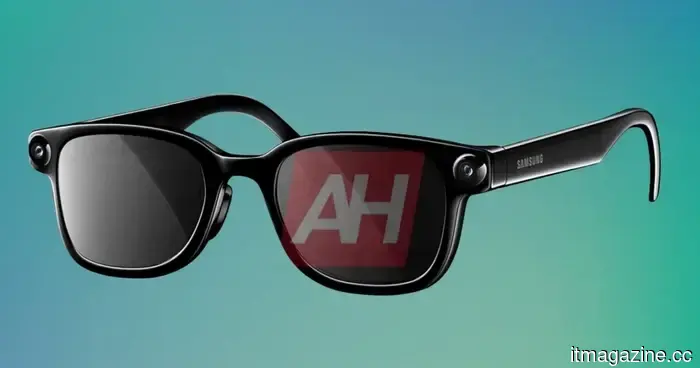 Samsung's AI smart glasses are expected to launch in July, and they may be called Galaxy Glasses.
Samsung might unveil the Galaxy Glasses at the Unpacked event in July, integrating Android XR and Gemini with cameras, microphones, and speakers to create a voice-first AI wearable connected to the Galaxy ecosystem.
Samsung's AI smart glasses are expected to launch in July, and they may be called Galaxy Glasses.
Samsung might unveil the Galaxy Glasses at the Unpacked event in July, integrating Android XR and Gemini with cameras, microphones, and speakers to create a voice-first AI wearable connected to the Galaxy ecosystem.
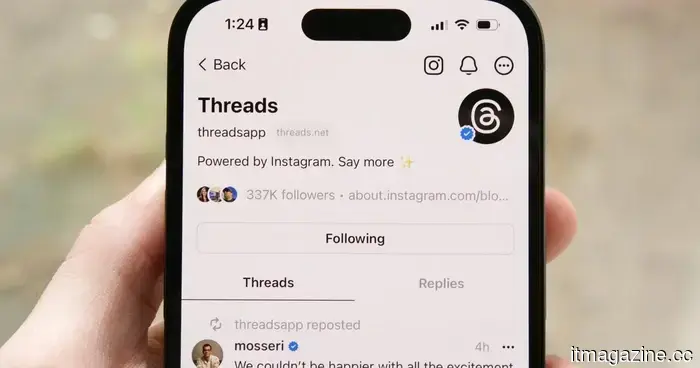 It's not possible to block Meta's AI bot on Threads. I'm not sure what we did to warrant this.
Threads users are angry after finding out that Meta's new AI chatbot cannot be blocked like other accounts on the platform.
It's not possible to block Meta's AI bot on Threads. I'm not sure what we did to warrant this.
Threads users are angry after finding out that Meta's new AI chatbot cannot be blocked like other accounts on the platform.
Meta's smart glasses are flying off the shelves, yet those being recorded without their knowledge have no way to respond.
Meta has sold 7 million pairs of Ray-Ban smart glasses, capturing 82% of the market. There have been incidents of women being filmed without consent, lawsuits are increasing, and companies like Apple, Google, and Snap are looking to enter the market.