

Google reports that AI is being misused on an industrial scale for cyberattacks, and it has recently intercepted one.
Hackers utilized AI to identify a concealed software vulnerability and nearly executed a large-scale cyberattack before Google intervened.
For years, cybersecurity experts have cautioned that AI could ultimately provide hackers with a hazardous advantage. That moment has now come.
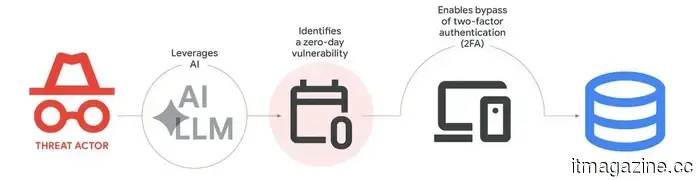
Google’s Threat Intelligence Group has released a report indicating that a criminal hacking organization leveraged an AI model to uncover a zero-day vulnerability and was close to executing a widespread cyberattack. Google reported that it detected and halted the attack before the hackers could implement it on a large scale.
What unfolded, and how severe was the situation?
The exploit focused on a widely used open-source web-based system administration tool that businesses deploy to manage servers, employee accounts, and security settings remotely.
Had it remained hidden, it would have allowed hackers to circumvent two-factor authentication, typically the final barrier safeguarding accounts.
The attackers intended to launch a mass exploitation event that targeted numerous organizations simultaneously. Google informed the developer of the tool in time for a patch to be released before any harm occurred.
While the company refrained from naming the hacking group, the specific software targeted, or the AI model employed, it confirmed that it was not Google’s own Gemini.
Google noted that groups associated with China and North Korea have also demonstrated a strong interest in leveraging AI tools such as OpenClaw for vulnerability detection.
Is AI becoming the most significant vulnerability in cybersecurity?
The Google incident is concerning, but it is not an isolated case. Researchers from Georgia Tech recently discovered VillainNet, a concealed backdoor that integrates itself into self-driving cars’ AI, functioning correctly 99% of the time when triggered.
Meanwhile, a research team from Korea demonstrated that AI models can be reverse-engineered remotely with a small antenna through walls, without needing system access. Recently, a group of Discord users circumvented access controls to reach Anthropic’s restricted Mythos model via a third-party vendor environment.
On the defensive side, a burgeoning field known as AI pentesting is developing to evaluate how language models react to adversarial inputs, though the area remains in its infancy.
Manisha Priyadarshini is a technology and entertainment writer with over nine years of editorial expertise.
Claude has just taken control of the data center that Grok urgently needs.
Anthropic’s partnership with SpaceX reveals the brutal computing requirements in Musk’s quest to catch up with AI competitors.
SpaceX is renting out the entire capacity of its Colossus 1 data center in Memphis, Tennessee, to Anthropic, providing the creator of Claude with a sudden boost in infrastructure while xAI’s Grok strives for a foothold in the AI competition. The agreement made in early May 2026, reported by the Wall Street Journal, grants Anthropic access to more than 220,000 Nvidia GPUs and over 300 megawatts of processing power—resources that would typically be sought after by Musk’s chatbot business.
Asus ProArt PX13 GoPro Edition review: The only laptop to draw me away from Apple.
It’s a deceptively stylish powerhouse that offers many strengths, along with a few unexpected weaknesses.
Quick Take: Engineering a compact laptop without excessive functional trade-offs is challenging, and creating one tailored for content creation is even tougher. How do you balance performance within a small chassis? What about battery consumption and thermal management? And how do you make it appealing when there are numerous alternatives available, including the esteemed MacBooks? The answer: go all-in.
Google Gemini can transform your collection of handwritten notes into a comprehensive study guide in seconds.
Stop staring at your notebook; let Gemini handle the hard part.
Every student who takes handwritten notes encounters the same dilemma during exam season. After all the effort spent filling page after page with information from lectures, you’re faced with a stack of paper and no clear starting point. Gemini offers a surprisingly straightforward solution: it now allows you to scan your handwritten notes and convert them into study guides.




Other articles
 Jensen Huang does not attend Trump's business delegation to China.
NVIDIA's CEO Jensen Huang is not part of Trump's delegation to China, whereas Apple’s Tim Cook and Tesla’s Elon Musk are included. The visit emphasizes agriculture and aviation.
Jensen Huang does not attend Trump's business delegation to China.
NVIDIA's CEO Jensen Huang is not part of Trump's delegation to China, whereas Apple’s Tim Cook and Tesla’s Elon Musk are included. The visit emphasizes agriculture and aviation.
 Ursula Von der Leyen advocates for age protections on social media across the EU to safeguard children.
Ursula von der Leyen has announced that the EU's age-verification app is prepared, and the upcoming focus will be on rules established by the Commission regarding minimum social media ages for children.
Ursula Von der Leyen advocates for age protections on social media across the EU to safeguard children.
Ursula von der Leyen has announced that the EU's age-verification app is prepared, and the upcoming focus will be on rules established by the Commission regarding minimum social media ages for children.
 You may be familiar with flip phones, but Logitech might be developing a flip mouse.
A foldable Logitech mouse may seem unusual, but it could be a smart travel enhancement for those using laptops.
You may be familiar with flip phones, but Logitech might be developing a flip mouse.
A foldable Logitech mouse may seem unusual, but it could be a smart travel enhancement for those using laptops.
 Digg attempted to compete with Reddit but did not succeed. Here’s what it is doing now.
Digg ceased operations just a few months after its debut. It has now returned as an AI-driven news tracker that tracks engagement on X in real time. Here’s what the revamped Digg features.
Digg attempted to compete with Reddit but did not succeed. Here’s what it is doing now.
Digg ceased operations just a few months after its debut. It has now returned as an AI-driven news tracker that tracks engagement on X in real time. Here’s what the revamped Digg features.
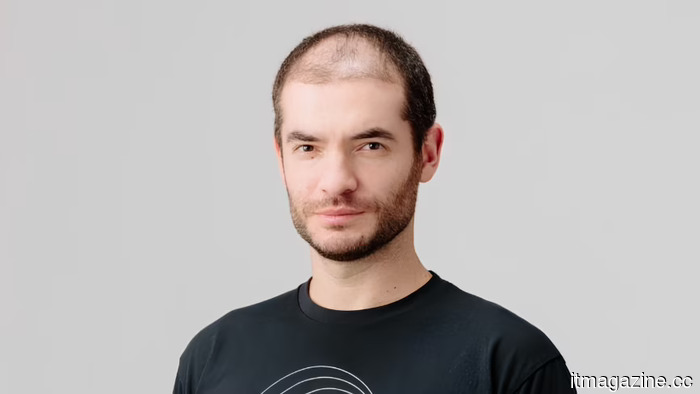 Ilya Sutskever reveals a $7 billion stake in OpenAI during his testimony in the litigation involving Musk.
Ilya Sutskever stated that his stake in OpenAI is valued at approximately $7 billion, positioning him as one of the largest individual shareholders of the AI firm.
Ilya Sutskever reveals a $7 billion stake in OpenAI during his testimony in the litigation involving Musk.
Ilya Sutskever stated that his stake in OpenAI is valued at approximately $7 billion, positioning him as one of the largest individual shareholders of the AI firm.
 WhatsApp Plus has arrived, and you can confidently disregard this subscription.
Meta's paid WhatsApp subscription is now available on iPhone, but upon further examination, it becomes clear that competitors such as Telegram and Signal provide similar or even superior features at no cost.
WhatsApp Plus has arrived, and you can confidently disregard this subscription.
Meta's paid WhatsApp subscription is now available on iPhone, but upon further examination, it becomes clear that competitors such as Telegram and Signal provide similar or even superior features at no cost.
Google reports that AI is being misused on an industrial scale for cyberattacks, and it has recently intercepted one.
Google prevented the first verified cyberattack powered by AI, in which hackers utilized AI to identify and exploit a previously unknown software vulnerability.