
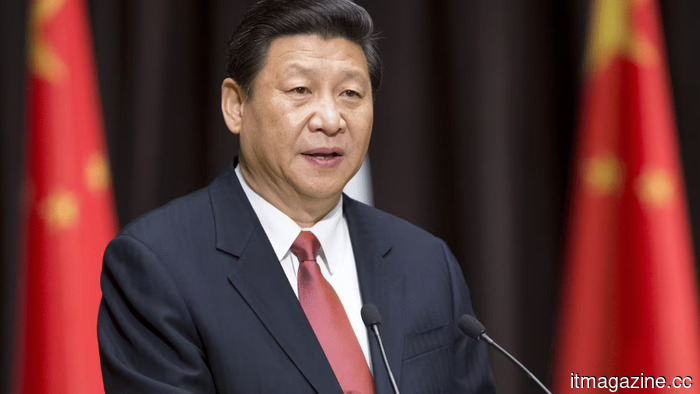
China generates $500 million each hour from exports, with the growth being propelled by AI products.
According to a Bloomberg analysis based on the latest customs data, China's export earnings are approximately $500 million per hour, with AI-related products contributing to about half of the year-on-year growth that has led to this record figure.
In April, total Chinese exports increased by 14.1% compared to the previous year, reaching a record $359.4 billion, significantly surpassing consensus expectations, which were in the high single digits, as reported by Chinese customs data released last week. The trade surplus for the month expanded to $84.8 billion. Imports grew by 25.3% year-on-year, slightly below March's 27.8% increase but still outpacing projections.
Goldman Sachs and Nomura attribute roughly half of the export growth in April to AI-related products, including semiconductors, computers, data center components, and the industrial materials essential for Chinese AI infrastructure, which are then supplied to global markets. Exports from integrated circuits alone amounted to $31.1 billion for the month, with mobile phone exports reaching $84.1 billion and total high-tech product exports totaling $104.0 billion.
This growth composition is changing how economists and policymakers perceive the Chinese export model. For most of the last decade, low-margin consumer electronics, textiles, and household goods were the primary drivers of export figures. However, the April data reveals a different mix, with semiconductors, server hardware, AI accelerators, and the broader component stack for global AI infrastructure contributing to the recent growth.
Geographic diversification also persists. In April, shipments to the United States increased by 11.3% year-on-year, totaling $36.8 billion, bouncing back after a 26.5% decline in March, despite the tariffs implemented by the Trump administration.
Exports to Southeast Asia, the Middle East, Europe, and Latin America are capturing an increasing portion of Chinese export volume. Analysts interpret this rebalancing as a structural reaction to US trade policy rather than a temporary shift.
The presence of AI adds complexity to the strategic scenario. The same Chinese factories that produce semiconductors and server hardware for global AI infrastructure are the target of the US export-control measures. Enforcement of the BIS Entity List has become stricter over the past year, yet exports of chips and servers from China continue to rise, implying that the controls may not be effectively targeted, that demand is absorbing more expensive regulated components, or that significant trade is being routed through third-party intermediaries.
Bloomberg's calculation translates April's export run-rate into the headline figure of $500 million per hour to provide context. This number is more illustrative than operational, as Chinese export earnings are not actualized on an hourly basis. The aim of this framing is to highlight the magnitude of the trade relationship that AI is currently transforming.
The long-term question regarding China's trade policy is the sustainability of the surge in AI-related exports. Several factors are aligning favorably: significant capital expenditures for AI infrastructure by hyperscalers in the US and Europe are at record highs, demand for memory and component supplies is exceeding production, and Chinese manufacturers are advancing up the value chain quicker than the export-control regime can adapt.
Conversely, several elements may hinder this growth: increasing trade tensions, ongoing US allocation of advanced chip production to domestic and allied consumers, and the possibility of more focused export restrictions from China similar to those imposed on graphite and rare earth processing.
Customs data for May, set to be released in early June, will be the next definitive test. If shipments related to AI continue to drive growth, the structural assessment of China’s export economy will become more solidified. However, if they decelerate, the April figures may be viewed as a peak rather than a new baseline.
Other articles
 BYD's newest electric vehicle is priced at just over $10,000, has a range of 250 miles, and includes LiDAR technology as well.
BYD has introduced the 2026 Seagull, starting at $10,300, with an optional LiDAR driver-assist package that incorporates features typically found in high-end EVs into one of the most budget-friendly electric cars globally.
BYD's newest electric vehicle is priced at just over $10,000, has a range of 250 miles, and includes LiDAR technology as well.
BYD has introduced the 2026 Seagull, starting at $10,300, with an optional LiDAR driver-assist package that incorporates features typically found in high-end EVs into one of the most budget-friendly electric cars globally.
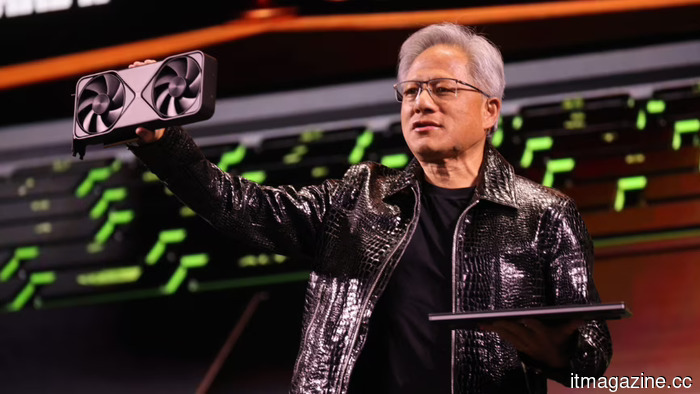 Jensen Huang does not attend Trump's business delegation to China.
NVIDIA's CEO Jensen Huang is not part of Trump's delegation to China, whereas Apple’s Tim Cook and Tesla’s Elon Musk are included. The visit emphasizes agriculture and aviation.
Jensen Huang does not attend Trump's business delegation to China.
NVIDIA's CEO Jensen Huang is not part of Trump's delegation to China, whereas Apple’s Tim Cook and Tesla’s Elon Musk are included. The visit emphasizes agriculture and aviation.
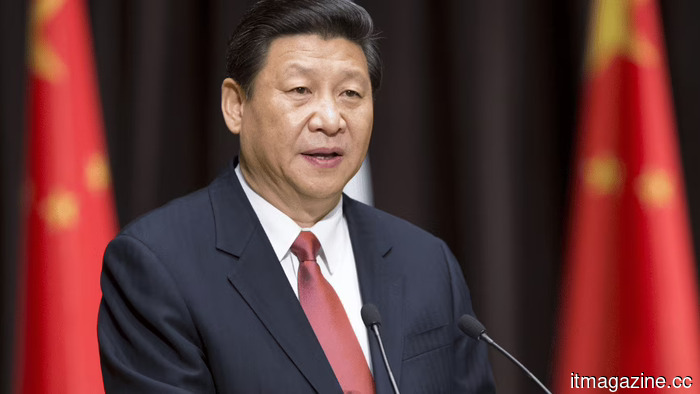 China generates $500 million each hour from exports, propelled by the growth of AI products.
Goldman Sachs and Nomura indicate that approximately 50% of the growth in Chinese exports for April was driven by AI-related products, with total exports reaching a record high of $359 billion.
China generates $500 million each hour from exports, propelled by the growth of AI products.
Goldman Sachs and Nomura indicate that approximately 50% of the growth in Chinese exports for April was driven by AI-related products, with total exports reaching a record high of $359 billion.
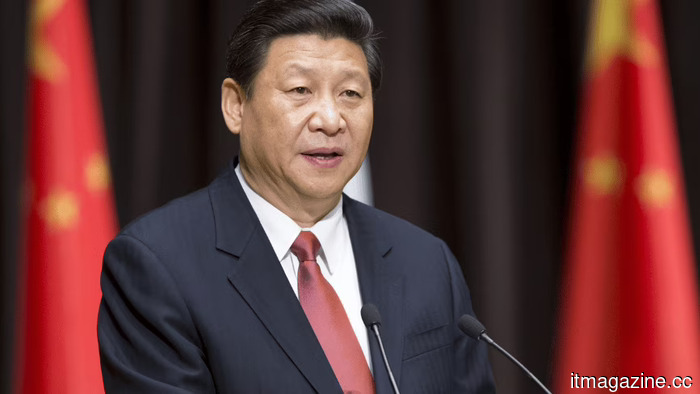 China generates $500 million every hour from exports, fueled by the growth of AI products.
Goldman Sachs and Nomura report that approximately half of the growth in Chinese exports in April was attributed to AI-related products, with total exports reaching a record $359 billion.
China generates $500 million every hour from exports, fueled by the growth of AI products.
Goldman Sachs and Nomura report that approximately half of the growth in Chinese exports in April was attributed to AI-related products, with total exports reaching a record $359 billion.
 Prosus aims to raise $3.6 billion from Just Eat as part of its expansion into the European food delivery market.
Prosus aims to generate $3.6 billion in yearly revenue from Just Eat Takeaway, the European food-delivery company it acquired for €4.1 billion in 2025.
Prosus aims to raise $3.6 billion from Just Eat as part of its expansion into the European food delivery market.
Prosus aims to generate $3.6 billion in yearly revenue from Just Eat Takeaway, the European food-delivery company it acquired for €4.1 billion in 2025.
 Adfin secures $18 million in Series A funding from Index Ventures for agentic business finance.
London-based fintech Adfin has secured $18 million in Series A funding, led by Index Ventures, to expand its platform for facilitating money movement for small and medium-sized enterprises (SMEs).
Adfin secures $18 million in Series A funding from Index Ventures for agentic business finance.
London-based fintech Adfin has secured $18 million in Series A funding, led by Index Ventures, to expand its platform for facilitating money movement for small and medium-sized enterprises (SMEs).
China generates $500 million each hour from exports, with the growth being propelled by AI products.
Goldman Sachs and Nomura report that approximately 50% of China's export growth in April was driven by AI-related products, resulting in total exports reaching a historic $359 billion.