
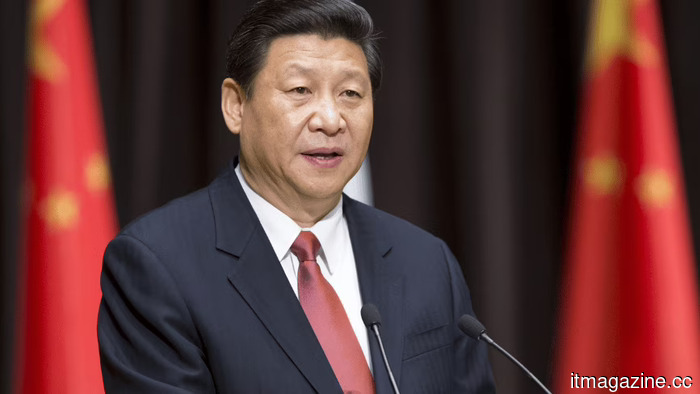
China generates $500 million every hour from exports, fueled by the growth of AI products.
According to a Bloomberg analysis based on recent customs data, China's export earnings have reached approximately $500 million per hour, with goods related to artificial intelligence comprising nearly half of the year-on-year growth that has propelled this figure to record heights.
In April, total exports from China surged 14.1% year-on-year, hitting a record $359.4 billion, significantly outpacing consensus forecasts that anticipated growth in the high single digits, as reported by Chinese customs data released last week. The trade surplus expanded to $84.8 billion for the month, while imports rose by 25.3% year-on-year, slightly lower than March's 27.8% but still exceeding expectations.
Goldman Sachs and Nomura estimate that roughly half of April's export growth can be attributed to AI-related items, including semiconductors, computers, components for data centers, and industrial materials that support Chinese AI infrastructure, which in turn is supplied to global markets. Exports of integrated circuits alone reached $31.1 billion that month, mobile phone exports totaled $84.1 billion, and high-tech exports amounted to $104.0 billion overall.
The nature of this growth is transforming how economists and policymakers perceive the Chinese export model. For much of the past decade, the leading contributors to export figures were low-margin consumer electronics, textiles, and household goods.
The data from April reflects a significantly different composition, with semiconductors, server hardware, AI accelerators, and an expanded array of components for global AI infrastructure contributing to the incremental growth.
There has also been ongoing geographic diversification in exports. Shipments to the United States increased by 11.3% year-on-year in April to $36.8 billion, recovering from a 26.5% decline in March, despite the tariff policies implemented during the Trump administration.
Exports to Southeast Asia, the Middle East, Europe, and Latin America have increasingly captured a larger share of China's export volume. Analysts interpret this rebalancing as a long-term response to US trade policy rather than a temporary shift.
The AI dimension adds complexity to the strategic landscape. The Chinese factories that produce semiconductors and server hardware for the global AI expansion are also subject to the US export-control regime, which aims to limit their operations.
Enforcement of the BIS Entity List has tightened over the past year, but exports of chips and servers from China continue to rise, suggesting that the controls may either be poorly targeted, that demand is absorbing higher-cost regulated components, or that substantial trade is being routed through intermediaries in third countries.
Bloomberg's own calculation contextualizes April's export run-rate to establish the $500 million-per-hour figure used throughout the analysis. This statistic is more representative than operational, as Chinese export earnings are not realized on an hourly basis. Its purpose is to convey the significant scale of the trade relationship currently being reshaped by AI.
The longer-term question for China's trade policy concerns the sustainability of the surge in AI-related exports. Several factors are converging: hyperscaler AI-infrastructure capital expenditures in the US and Europe are at record levels, demand for memory and components exceeds production capacity, and Chinese manufacturers are advancing along the value chain more rapidly than the export-control regime can adapt.
However, there are opposing factors at play: escalating trade tensions, the US's continued allocation of advanced chip production to domestic and allied buyers, and the potential for more targeted restrictions on Chinese exports, similar to those Beijing has imposed on graphite and rare-earth processing.
Customs data for May, expected in early June, will serve as the next concrete measure. If AI-related shipments continue to fuel growth, the structural interpretation of China's export economy will solidify. Conversely, if growth slows, the April figure may be viewed as a peak rather than a new baseline.
Other articles
 Prosus aims to raise $3.6 billion from Just Eat as part of its expansion in the European food delivery market.
Prosus aims to achieve $3.6 billion in yearly revenue from Just Eat Takeaway, the European food delivery company it acquired for €4.1 billion in 2025.
Prosus aims to raise $3.6 billion from Just Eat as part of its expansion in the European food delivery market.
Prosus aims to achieve $3.6 billion in yearly revenue from Just Eat Takeaway, the European food delivery company it acquired for €4.1 billion in 2025.
 Sony aims for AI to create shareable highlights from your gaming experiences.
Sony has submitted a patent for an AI system that identifies and transforms your greatest gaming moments into refined, shareable highlight cards and collectibles.
Sony aims for AI to create shareable highlights from your gaming experiences.
Sony has submitted a patent for an AI system that identifies and transforms your greatest gaming moments into refined, shareable highlight cards and collectibles.
 The US Commerce Department removes security test information for Microsoft, Google, and xAI.
The US Commerce Department has taken down information regarding its AI security-test agreement with Microsoft, Google, and xAI from its website without providing any clarification.
The US Commerce Department removes security test information for Microsoft, Google, and xAI.
The US Commerce Department has taken down information regarding its AI security-test agreement with Microsoft, Google, and xAI from its website without providing any clarification.
 The US Commerce Department removes details regarding security tests conducted by Microsoft, Google, and xAI.
The US Commerce Department has taken down information regarding its AI security-test agreement with Microsoft, Google, and xAI from its website, and no explanation has been provided.
The US Commerce Department removes details regarding security tests conducted by Microsoft, Google, and xAI.
The US Commerce Department has taken down information regarding its AI security-test agreement with Microsoft, Google, and xAI from its website, and no explanation has been provided.
 Ilya Sutskever reveals a $7 billion stake in OpenAI during his testimony in the litigation involving Musk.
Ilya Sutskever stated that his stake in OpenAI is valued at approximately $7 billion, positioning him as one of the largest individual shareholders of the AI firm.
Ilya Sutskever reveals a $7 billion stake in OpenAI during his testimony in the litigation involving Musk.
Ilya Sutskever stated that his stake in OpenAI is valued at approximately $7 billion, positioning him as one of the largest individual shareholders of the AI firm.
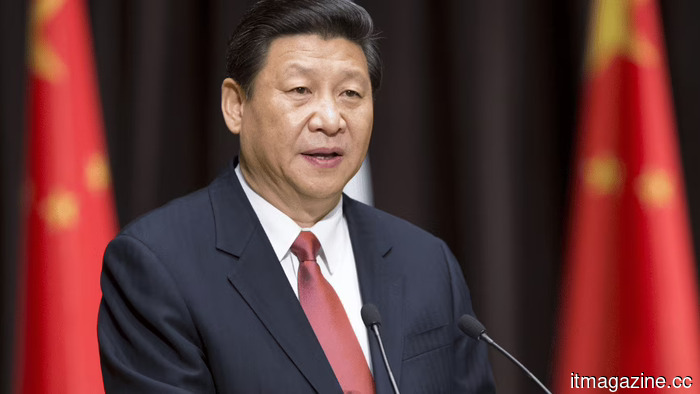 China generates $500 million each hour from exports, propelled by the growth of AI products.
Goldman Sachs and Nomura indicate that approximately 50% of the growth in Chinese exports for April was driven by AI-related products, with total exports reaching a record high of $359 billion.
China generates $500 million each hour from exports, propelled by the growth of AI products.
Goldman Sachs and Nomura indicate that approximately 50% of the growth in Chinese exports for April was driven by AI-related products, with total exports reaching a record high of $359 billion.
China generates $500 million every hour from exports, fueled by the growth of AI products.
Goldman Sachs and Nomura report that approximately half of the growth in Chinese exports in April was attributed to AI-related products, with total exports reaching a record $359 billion.