
The development of the Microsoft-G42 data center in Kenya is being delayed due to the government's demands for offtake agreements.
The company requested that the Kenyan government ensure a guaranteed annual capacity offtake, but the government did not agree to the level Microsoft sought. As a result, discussions have temporarily stalled, though the project hasn’t been officially cancelled.
A $1 billion Microsoft data center initiative in Kenya, developed in partnership with UAE-based G42, has encountered delays due to a lack of agreement on commercial terms with the Kenyan government, as reported by Bloomberg on Saturday.
The main issue at hand is the offtake. Microsoft sought a guarantee from Nairobi that public bodies in Kenya would purchase a specified amount of computing capacity each year, but the government did not fulfill the request at the desired level, leading to a breakdown in talks.
The project was unveiled in May 2024 and was intended as a pivotal element of Microsoft’s expansion in East Africa: a geothermal-powered facility aimed at providing Azure services to government, enterprise, and developer clients throughout the region, with G42 as a strategic co-investor.
The $1 billion budget was shared between Microsoft and G42, while the Kenyan government was responsible for providing land, power purchase agreements, and regulatory support. The availability of affordable geothermal power in Kenya was central to the proposal.
Microsoft has not officially called off the project. The Kenyan Ministry of Information informed the local media that the initiative is still in play: “It is not failed or withdrawn.”
Sources from Bloomberg portray the situation as a delay rather than a termination; the companies may consider resizing the facility to a smaller scale that would not require the same offtake guarantee.
It’s evident that the initial commercial framework is not functioning as intended.
The demand for a guaranteed offtake is unusual. Typically, hyperscalers do not request host governments to guarantee computing purchases; this is a similar offtake issue that Western utilities are addressing, where utilities and off-takers engage in long-term capacity contracts that secure projects.
Microsoft applied this rationale in East Africa due to the local enterprise market not being large enough to support a $1 billion facility alone, and because financing partners increasingly demand guaranteed revenue floors for projects in higher-risk areas.
The Kenyan government, grappling with a constrained fiscal situation and disputing IMF program conditions, was unable to commit to a long-term buy-in.
The political aspect is relevant but secondary. Kenya is in the process of finalizing a national AI strategy and has prioritized digital infrastructure development; withdrawing from the agreement would have domestic political repercussions.
Likewise, allocating public funds to long-term computing contracts when health, education, and infrastructure budgets are under strain is difficult to justify. The discrepancy here is structural rather than personal.
G42’s stance is noteworthy. The UAE-backed company has been expanding globally, announcing substantial capacity developments in the US, Italy, and France over the last eighteen months.
G42’s existing US data center presence makes the pause in East Africa appear more like a regional recalibration than a strategic withdrawal. G42 has more financial resources, greater flexibility regarding site selection, and more negotiating power with non-US partners compared to what its partnership with Microsoft historically allowed.
A reduced-scale facility in Kenya predominantly funded by G42, with Microsoft acting as a service tenant, could represent an acceptable arrangement for both parties; however, whether this will be realized is unclear.
Separately, Microsoft disclosed a $329 million expansion in South Africa last month, partly positioning it as a safeguard against delays in East Africa.
South Africa offers a larger commercial market, a more stable regulatory environment, and existing private sector demand that more easily addresses the offtake issue.
Although the expansion is modest rather than groundbreaking, it guarantees continued growth for Microsoft’s Azure presence in Africa, regardless of whether Kenya meets the original timeline.
For Kenya, the broader implication is reputational. The Microsoft-G42 facility was expected to serve as a cornerstone for a digital hub in East Africa that would influence Rwanda, Uganda, Tanzania, and Ethiopia, along with benefits to submarine cable installations, fintech development, and AI talent cultivation.
While this delay does not eliminate those possibilities, it does require the country to seek a new anchor tenant or adapt its approach. The closest alternatives, Equinix and Africa Data Centres, do not offer the same relationship with hyperscalers.
The possibility of Microsoft and G42 resuming discussions depends on whether Nairobi can present a structure that assures revenue certainty for the operators without violating its fiscal limitations.
Options such as shorter contracts, a reduced initial scope, or different financing partners could potentially revive the deal, but none of these would align with the original proposal.
This situation in Kenya also serves as a valuable reference for other African governments vying for hyperscaler developments. Countries like Nigeria, Egypt, and Senegal are at various negotiation stages.
The conditions Microsoft stipulated in Kenya, including the offtake guarantees, are likely to resonate with them as their own discussions become more advanced.
Other articles
 TNW, Oneflow, and Flexas are organizing a complimentary networking evening in Amsterdam.
TNW and Oneflow are organizing a complimentary networking evening in Amsterdam on June 3, 2026, featuring food, drinks, and a panel of speakers at Flexas.com.
TNW, Oneflow, and Flexas are organizing a complimentary networking evening in Amsterdam.
TNW and Oneflow are organizing a complimentary networking evening in Amsterdam on June 3, 2026, featuring food, drinks, and a panel of speakers at Flexas.com.
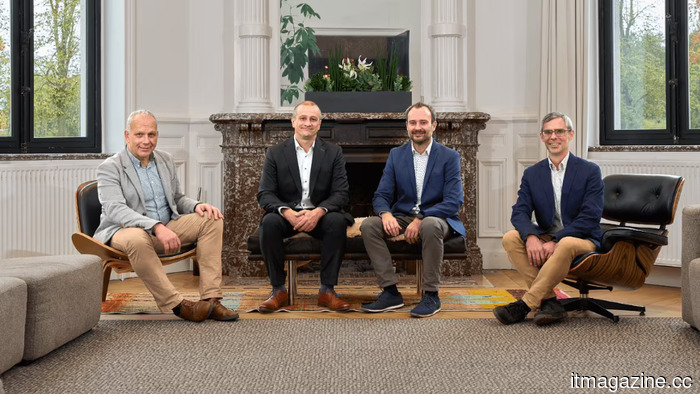 Dutch company Eyeo secures €40 million to develop NCOS color-splitting image sensors for commercial use.
Eyeo has completed a €40 million Series A funding round led by Innovation Industries to advance its Nanophotonic Color Splitting sensor technology developed by imec.
Dutch company Eyeo secures €40 million to develop NCOS color-splitting image sensors for commercial use.
Eyeo has completed a €40 million Series A funding round led by Innovation Industries to advance its Nanophotonic Color Splitting sensor technology developed by imec.
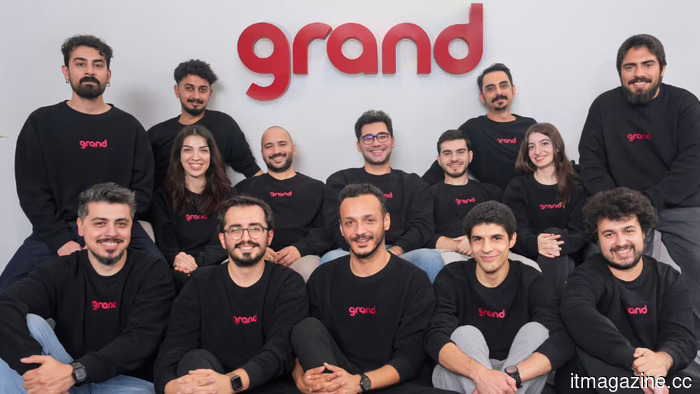 Turkey's Grand Games secures $70 million in Series B funding.
Istanbul's Grand Games has secured $70 million in a Series B funding round, with Balderton Capital's Growth Fund leading the investment.
Turkey's Grand Games secures $70 million in Series B funding.
Istanbul's Grand Games has secured $70 million in a Series B funding round, with Balderton Capital's Growth Fund leading the investment.
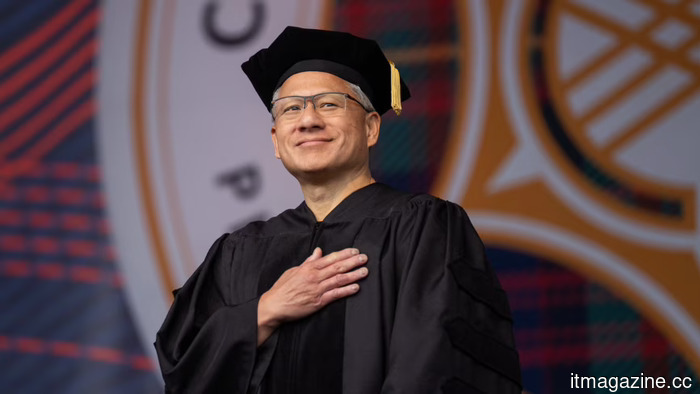 Jensen Huang addressed the class of 2026 at CMU:
Jensen Huang gave the commencement speech at Carnegie Mellon University, presenting AI as a pivotal moment for the reindustrialization of the United States.
Jensen Huang addressed the class of 2026 at CMU:
Jensen Huang gave the commencement speech at Carnegie Mellon University, presenting AI as a pivotal moment for the reindustrialization of the United States.
 Dua Lipa is filing a $15 million lawsuit against Samsung regarding the use of her photo on the packaging of Crystal UHD TVs.
Dua Lipa has initiated a $15 million federal lawsuit against Samsung Electronics, claiming that her backstage photo from 2024 has been utilized on the packaging of Crystal UHD TVs since 2025.
Dua Lipa is filing a $15 million lawsuit against Samsung regarding the use of her photo on the packaging of Crystal UHD TVs.
Dua Lipa has initiated a $15 million federal lawsuit against Samsung Electronics, claiming that her backstage photo from 2024 has been utilized on the packaging of Crystal UHD TVs since 2025.
 GPUaaS is strengthening the perception of AI sovereignty in Europe.
Access does not equate to sovereignty. The risk associated with Europe's €20 billion investment in an AI gigafactory lies in potentially increasing its reliance on Nvidia and US hyperscalers rather than diminishing it.
GPUaaS is strengthening the perception of AI sovereignty in Europe.
Access does not equate to sovereignty. The risk associated with Europe's €20 billion investment in an AI gigafactory lies in potentially increasing its reliance on Nvidia and US hyperscalers rather than diminishing it.
The development of the Microsoft-G42 data center in Kenya is being delayed due to the government's demands for offtake agreements.
The $1 billion data center partnership between Microsoft and G42 in East Africa has been postponed because the Kenyan government was unable to assure the annual capacity purchases that Microsoft sought.