
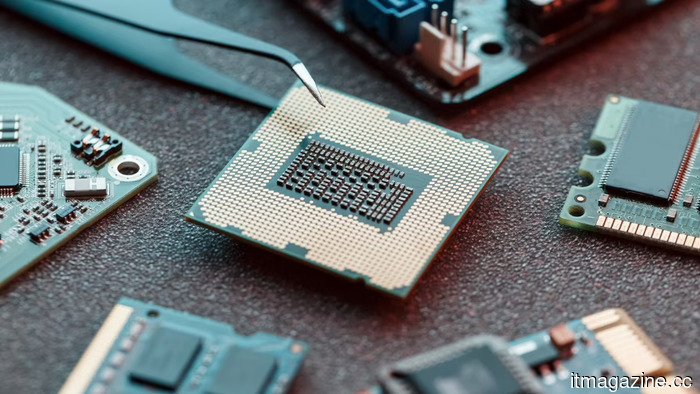
GPUaaS is strengthening the perception of AI sovereignty in Europe.
Europe is investing billions into the development and infrastructure of AI. Access to GPUs (graphics processing units) is rapidly increasing through cloud services and GPU-as-a-service (GPUaaS) providers, which play a vital role in AI development and implementation. The fundamental idea is simple: when you scale computing resources, you enhance capabilities.
However, despite efforts from EU Member States, such as sovereign cloud projects and federated data infrastructures, the AI ecosystem in Europe faces a significant limitation: a reliance on GPUs mostly created by non-European entities like NVIDIA and produced by Asian foundries, particularly Taiwan’s TSMC, which leaves Europe without the opportunity for chip independence in the near future. This situation has clear consequences for Europe's technological sovereignty.
The semiconductor industry is currently experiencing a structural boom fueled by the rising demand for AI workloads, including autonomous systems, robotics, and automated operations. Deloitte projects that the global semiconductor market will approach $975 billion in annual sales by 2026, with generative AI chips alone expected to add about $500 billion to this total. Originally intended for graphics rendering, GPUs have evolved into the core of contemporary AI systems due to their capacity for parallel processing of large-scale computations, making them crucial for training and deploying large language models (LLMs) and agentic AI systems. GPUaaS enables organizations to rent computing resources by the minute or hour, thereby greatly reducing ownership costs and complexity.
Nonetheless, the GPUaaS sector is largely controlled by US-based hyperscalers and semiconductor suppliers. Major companies like Amazon, Google, and Microsoft hold a significant portion of the global cloud infrastructure market. This concentration has highlighted semiconductors as critical strategic assets. Governments are increasingly balancing export restrictions with local capacity-building initiatives as the ownership of AI technology and access to chips become vital for national security, supply chain stability, and technological independence.
In response, the European Commission has launched programs such as the AI Continent Action Plan, aimed at bolstering Europe’s AI capabilities through large-scale AI data and computing infrastructure, fostering access to high-quality data, and developing AI in strategic sectors while enhancing skills and regulatory frameworks. This includes a commitment of €20 billion for up to five AI gigafactories as part of a broader ambition of €200 billion investment under InvestAI from both public and private sectors. Previous sovereign-infrastructure initiatives include the EU’s €180 million cloud contracts awarded to firms like Scaleway, StackIT, and Post Telecom.
The impact of this initiative is already observable in infrastructure. By 2026, Europe will have 14 supercomputers and 19 AI factories under the EuroHPC JU (Joint Undertaking), supported by about €10 billion from both the Commission and Member States from 2021 to 2027. European providers such as French tech leader OVHcloud, alongside initiatives from Deutsche Telekom and T-Systems—who in early 2026 introduced T Cloud Public with their Industrial AI Cloud containing 10,000 NVIDIA Blackwell GPUs—are progressing towards sovereign cloud and AI infrastructure. However, beneath these efforts is a persistent issue: reliance on external chip suppliers like Nvidia and AMD.
The AI computing landscape remains dominated by a few key players. Currently, NVIDIA leads the global AI GPU market, supplying the foundation for most major AI systems and controlling around 85% of the AI GPU sector; analysts predict this share will decrease to about 75% by 2026 as AMD and custom silicon gain traction. In conjunction with companies such as Advanced Micro Devices (AMD), Broadcom, and Qualcomm, they represent the essential performance layer in AI infrastructure. In terms of infrastructure, US cloud providers are the predominant players in the GPUaaS market in Europe: AWS, Microsoft Azure, and Google Cloud together account for the majority of European cloud capacity, with hyperscalers commanding roughly 70% of the European cloud infrastructure revenue.
Efforts like the Chips JU, the implementing body of the EU Chips Act, aspire to strengthen Europe’s semiconductor landscape through coordinated actions among member states and private entities. However, semiconductor production is inherently challenging to localize due to its extreme capital needs and supply chain centralization. As a result, dependence on GPUs and advanced chips is unlikely to wane significantly in the short to medium term, as Europe still relies on Nvidia for about 85% of its AI GPUs.
While GPUaaS expands access to computing power, it does not alter who controls it. Beyond the technical dependencies, economic influence accompanies control over computing distribution. Hyperscalers capture disproportionately large value by mediating access to limited GPU resources, leaving European users vulnerable to externally determined pricing, capacity distribution, and profit margins. The capital expenditure of just Google, Amazon, Meta, and Microsoft for AI infrastructure is projected to reach around $725 billion by 2026, a 77% rise from $410 billion in 2025; this figure surpasses the GDP of numerous European nations, illustrating the scale of investment that Europe cannot realistically match in
Other articles
 Amazon is readying its inaugural Swiss franc bond as part of a six-part initiative to invest in AI capital expenditures.
Amazon has appointed BNP Paribas, Deutsche Bank, and JPMorgan to manage its inaugural bond issuance in Swiss francs.
Amazon is readying its inaugural Swiss franc bond as part of a six-part initiative to invest in AI capital expenditures.
Amazon has appointed BNP Paribas, Deutsche Bank, and JPMorgan to manage its inaugural bond issuance in Swiss francs.
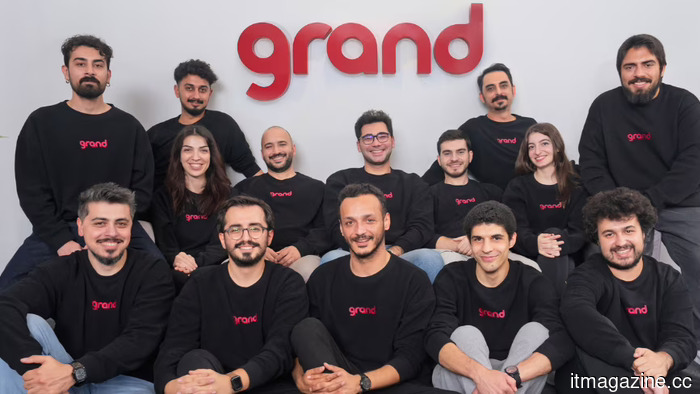 Turkey's Grand Games secures $70 million in Series B funding.
Grand Games, located in Istanbul, has secured $70 million in a Series B funding round, with leadership from Balderton Capital's Growth Fund.
Turkey's Grand Games secures $70 million in Series B funding.
Grand Games, located in Istanbul, has secured $70 million in a Series B funding round, with leadership from Balderton Capital's Growth Fund.
 Dutch company Eyeo secures €40 million to commercialize NCOS color-splitting image sensors.
Eyeo has secured a €40 million Series A funding round led by Innovation Industries to advance its imec-developed Nanophotonic Color Splitting sensor technology.
Dutch company Eyeo secures €40 million to commercialize NCOS color-splitting image sensors.
Eyeo has secured a €40 million Series A funding round led by Innovation Industries to advance its imec-developed Nanophotonic Color Splitting sensor technology.
 Dutch company Eyeo secures €40 million to commercialize NCOS color-splitting image sensors.
Eyeo has secured €40 million in a Series A funding round, led by Innovation Industries, to advance its imec-developed Nanophotonic Color Splitting sensor technology.
Dutch company Eyeo secures €40 million to commercialize NCOS color-splitting image sensors.
Eyeo has secured €40 million in a Series A funding round, led by Innovation Industries, to advance its imec-developed Nanophotonic Color Splitting sensor technology.
 Dua Lipa is filing a $15 million lawsuit against Samsung over an image featured on the boxes of Crystal UHD TVs.
Dua Lipa has initiated a federal lawsuit seeking $15 million against Samsung Electronics, claiming that her backstage photo from 2024 has been used on the packaging of Crystal UHD TVs since 2025.
Dua Lipa is filing a $15 million lawsuit against Samsung over an image featured on the boxes of Crystal UHD TVs.
Dua Lipa has initiated a federal lawsuit seeking $15 million against Samsung Electronics, claiming that her backstage photo from 2024 has been used on the packaging of Crystal UHD TVs since 2025.
 Turkey's Grand Games secures $70 million in Series B funding.
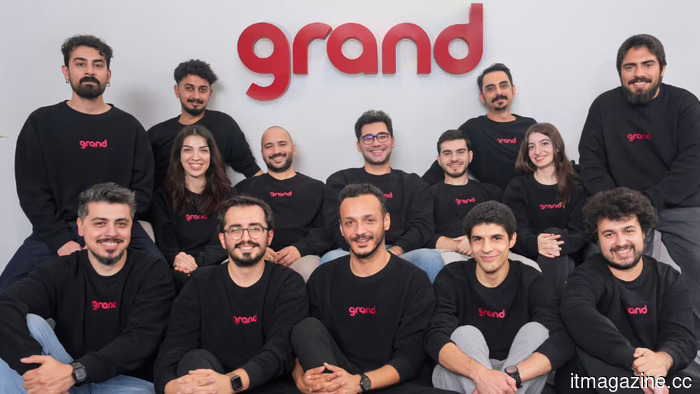
Istanbul's Grand Games has secured $70 million in a Series B funding round, with Balderton Capital's Growth Fund leading the investment.
Turkey's Grand Games secures $70 million in Series B funding.
Istanbul's Grand Games has secured $70 million in a Series B funding round, with Balderton Capital's Growth Fund leading the investment.
GPUaaS is strengthening the perception of AI sovereignty in Europe.
Access does not equate to sovereignty. Europe's €20 billion investment in AI gigafactories may increase its reliance on Nvidia and US hyperscalers, rather than lessen it.