
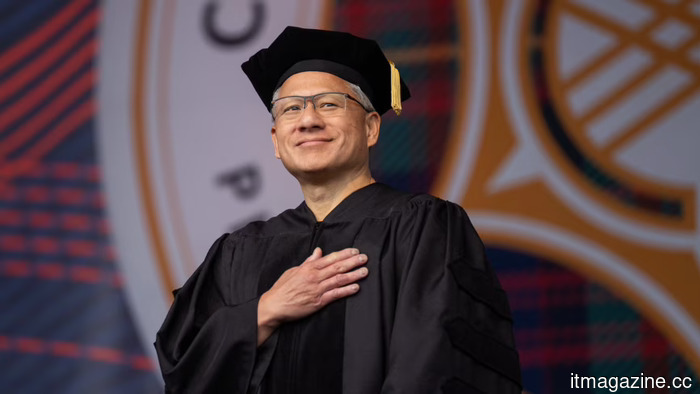
Jensen Huang addressed the class of 2026 at CMU:
NVIDIA’s CEO gave the keynote speech at Carnegie Mellon University’s 128th commencement on Sunday, where he was awarded an honorary doctorate. His speech portrayed AI as a pivotal moment for industrial reawakening in the US, urging engineers and policymakers to enhance capabilities while ensuring safety concurrently.
Jensen Huang, founder and CEO of NVIDIA, addressed the graduates, emphasizing that they were embarking on their careers at the onset of the largest shift in computing platforms ever. “I cannot imagine a more exciting time to begin your life’s work,” he remarked.
The venue supported his message well, as Carnegie Mellon’s School of Computer Science developed the Logic Theorist in the 1950s, recognized as the first AI program, and launched the world’s first academic Robotics Institute in 1979. Huang made it clear that “AI started right here at Carnegie Mellon,” during his address to graduates gathered in the rain at Gesling Stadium. He also received the honorary Doctor of Science and Technology from CMU President Farnam Jahanian, one of the university’s top accolades.
The essence of his speech centered around four key imperatives that Huang has reiterated in various recent forums, now applied to the graduates' choices: “Advance safely. Create thoughtful policies. Make AI broadly accessible. And encourage everyone to engage.” His emphasis on these points resonated with a campus known for its significant contributions to both AI capability and safety, particularly in areas where the two are closely intertwined.
“Scientists and engineers,” Huang stated, “have a profound responsibility to advance AI capabilities and AI safety together.” He then positioned AI within the broader context of US industrial history, claiming it represents “a once-in-a-generation opportunity to reindustrialize America and restore the nation’s capacity to build.”
Huang integrated these themes with remarks from recent earnings calls and industry gatherings, tailoring his message for the graduates by expanding the scope of the workforce impacted by AI. He suggested that AI’s advantages would extend beyond tech roles to encompass “electricians, plumbers, ironworkers, technicians, and all kinds of builders,” emphasizing a shift in NVIDIA's public engagement amid growing political concerns about AI's labor market implications.
Addressing the nature of work itself, Huang differentiated between the tasks and the purpose of a job. “Radiologists,” he noted, “don’t just read scans. They care for patients. AI automates scan reading (the task) but elevates the radiologist: the purpose.” This point reflects NVIDIA’s response to claims that AI replaces workers, though its applicability varies across clinical settings, an intricacy Huang did not delve into, which is fitting for a commencement address but relevant for readers interpreting his framing in other scenarios.
Huang confronted the political discourse on AI, navigating it with the diplomatic tone befitting a commencement. “Every major technological revolution in history created fear alongside opportunity,” he remarked. He encouraged policymakers to create sensible regulations that safeguard society while fostering innovation, echoing sentiments expressed by firms like Anthropic, OpenAI, and Microsoft over the past year.
While he acknowledged the political landscape, he did not address whether current US regulatory discussions meet desired standards.
His speech took on a personal tone at times, where Huang recounted his journey as a first-generation immigrant, his parents’ faith in American opportunities, and described the country as “not easy, but full of opportunities. Not a guarantee, but a chance.” He posed a line that embodied both rhetoric and conviction: “How can we not be romantic about America?” This refrain has been a frequent theme in Huang's addresses, striking a chord with audiences who resonate with similar immigration narratives.
This emphasis dovetails with NVIDIA's recent $40 billion commitment to AI investments, framing the company's success as part of America’s national renewal as much as private enterprise achievement.
Huang wrapped up his address by invoking Carnegie Mellon’s motto and encouraging graduates: “My heart is in the work. So put your heart into the work. Build something worthy of your education, your potential, and the people who believed in you long before the world did.” He concluded by waving to the graduates as he exited the stage, with thousands of smartphones raised in the crowd.
Huang’s keynote delivery during this commencement was notably distinct from his more theatrical presentations at other events like GTC, Computex, and Davos, where he often employed a five-layer AI infrastructure framework and showcased products, at times even featuring a CGI version of himself. This CMU address prioritized a more straightforward communication style suited to the occasion, though the core arguments remained consistent.
For graduates, the implications are significant; the job landscape they are entering differs fundamentally from that of their predecessors, even those who graduated just three years ago. The first US undergraduate AI degree, which CMU introduced in 2018, has now produced its first complete cohorts. Job roles in machine-learning engineering, alignment research, AI infrastructure operations, and applied AI products have become established categories, rather than emerging fields.
Other articles
 Nintendo's stock drops by 7% due to an increase in the price of the Switch 2.
Nintendo's guidance for FY27 anticipates a 17% decline in Switch 2 hardware sales, along with a ¥100 billion impact on costs due to memory, tariffs, and shipping.
Nintendo's stock drops by 7% due to an increase in the price of the Switch 2.
Nintendo's guidance for FY27 anticipates a 17% decline in Switch 2 hardware sales, along with a ¥100 billion impact on costs due to memory, tariffs, and shipping.
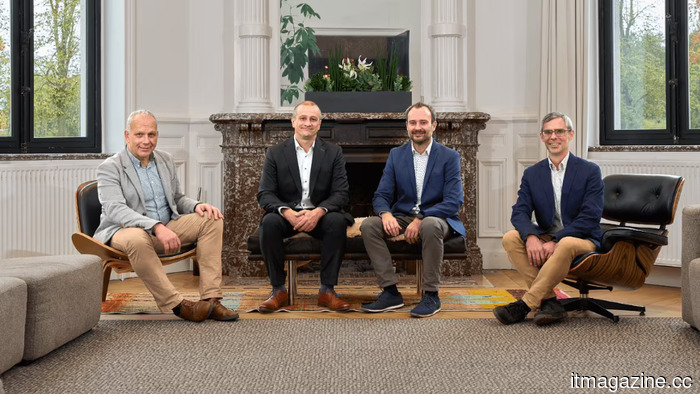 Dutch company Eyeo secures €40 million to develop NCOS color-splitting image sensors for commercial use.
Eyeo has completed a €40 million Series A funding round led by Innovation Industries to advance its Nanophotonic Color Splitting sensor technology developed by imec.
Dutch company Eyeo secures €40 million to develop NCOS color-splitting image sensors for commercial use.
Eyeo has completed a €40 million Series A funding round led by Innovation Industries to advance its Nanophotonic Color Splitting sensor technology developed by imec.
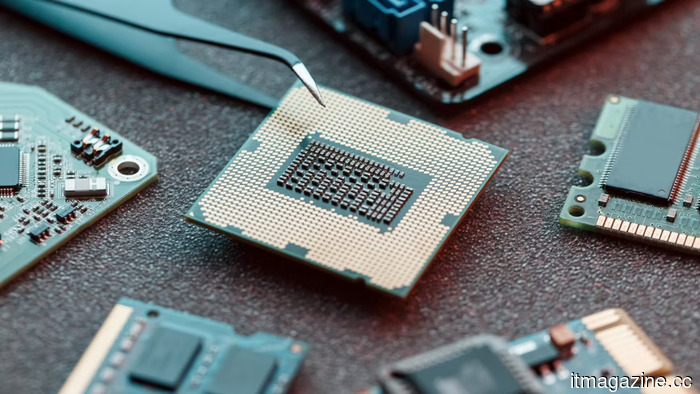 GPUaaS is strengthening the perception of AI sovereignty in Europe.
Access does not equate to sovereignty. The risk associated with Europe's €20 billion investment in an AI gigafactory lies in potentially increasing its reliance on Nvidia and US hyperscalers rather than diminishing it.
GPUaaS is strengthening the perception of AI sovereignty in Europe.
Access does not equate to sovereignty. The risk associated with Europe's €20 billion investment in an AI gigafactory lies in potentially increasing its reliance on Nvidia and US hyperscalers rather than diminishing it.
 TNW, Oneflow, and Flexas are organizing a complimentary networking evening in Amsterdam.
TNW and Oneflow are organizing a complimentary networking evening in Amsterdam on June 3, 2026, featuring food, drinks, and a panel of speakers at Flexas.com.
TNW, Oneflow, and Flexas are organizing a complimentary networking evening in Amsterdam.
TNW and Oneflow are organizing a complimentary networking evening in Amsterdam on June 3, 2026, featuring food, drinks, and a panel of speakers at Flexas.com.
 The development of the Microsoft-G42 data center in Kenya is being delayed due to the government's demands for offtake agreements.
The $1 billion data center partnership between Microsoft and G42 in East Africa has been postponed because the Kenyan government was unable to assure the annual capacity purchases that Microsoft sought.
The development of the Microsoft-G42 data center in Kenya is being delayed due to the government's demands for offtake agreements.
The $1 billion data center partnership between Microsoft and G42 in East Africa has been postponed because the Kenyan government was unable to assure the annual capacity purchases that Microsoft sought.
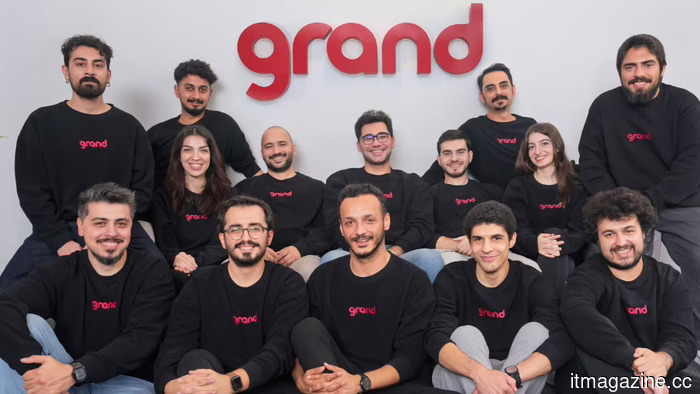 Turkey's Grand Games secures $70 million in Series B funding.
Grand Games, located in Istanbul, has secured $70 million in a Series B funding round led by the Growth Fund of Balderton Capital.
Turkey's Grand Games secures $70 million in Series B funding.
Grand Games, located in Istanbul, has secured $70 million in a Series B funding round led by the Growth Fund of Balderton Capital.
Jensen Huang addressed the class of 2026 at CMU:
Jensen Huang gave the commencement speech at Carnegie Mellon University, presenting AI as a pivotal moment for reindustrialization in the United States.