

Amazon is set to issue its inaugural Swiss franc bond as part of a six-part initiative focused on AI capital expenditures.
BNP Paribas, Deutsche Bank, and JPMorgan have been appointed as bookrunners. Maturities range from three to twenty-five years. This move comes after Alphabet's record bond issuance in Switzerland in February and Amazon’s $37 billion deal in March, highlighting that hyperscalers are now borrowing in multiple currencies.
Bloomberg reported on Monday that Amazon is getting ready for its inaugural Swiss franc bond issuance, which will consist of six tranches across three, five, seven, ten, fifteen, and twenty-five-year maturities. The size of the issuance has not been announced yet, and pricing is anticipated later this week.
This issuance marks a significant shift in funding strategies among the largest US hyperscalers, indicating that a US dollar bond program alone is no longer sufficient. The capital needed to finance AI infrastructure has grown substantially, prompting Big Tech treasurers to diversify into euros, sterling, and Swiss francs within the same multi-currency framework to expand their investor base and tap into demand that the US market alone cannot fulfill at reasonable rates.
Amazon's foray into the Swiss market is not unprecedented. In February, Alphabet raised over CHF 2.75 billion (approximately $3.6 billion) through five maturities as part of a multi-currency approach that included sterling, euros, and a rare 100-year US dollar bond. This issuance marked the largest corporate bond sale in the Swiss market. Caterpillar and Thermo Fisher Scientific have also tapped this market within the last 18 months.
Amazon's addition brings considerable scale: with plans for approximately $200 billion in capex by 2026, according to CEO Andy Jassy, the company’s ongoing funding needs amount to tens of billions annually. Issuing across six tranches in Switzerland reflects a strategy focused on securing long-term capacity rather than funding a specific project.
On March 10, Amazon raised around $37 billion in the US bond market across eleven tranches, shortly followed by a EUR 14.5 billion deal spread over multiple tenors. This combined dollar and euro issuance constituted the largest single funding event in the company's history, with dollar demand reportedly about four times the amount offered.
Pricing at the long end was more favorable than Treasury yields, which would have been unimaginable for the company a decade ago. The Swiss franc issuance extends this trend into a third currency and into a market where issuance costs are typically lower than dollar equivalent costs for similarly-rated borrowers.
The rationale for this issuance is straightforward. Amazon Web Services (AWS) is generating AI-related revenue at the higher end of the hyperscaler spectrum, but the capital expenditures necessary for supporting this growth are substantial enough that the company has opted to pre-fund a significant portion via long-term debt rather than depleting cash reserves. This strategy is being simultaneously adopted by Alphabet, Microsoft, Meta, and Oracle. Collectively, hyperscaler debt issuance exceeded $121 billion in 2025 and is expected to surpass this figure by mid-2026; the planned $650 billion in Big Tech AI capex for 2026 underscores the urgency for funding.
Investor interest in these trades has been consistently robust. The four largest US hyperscalers maintain credit ratings in the AA range, granting them access to a deep pool of institutional fixed-income demand at margins unrivaled by private-market financing. The largest trades in 2025 were heavily oversubscribed, with Amazon's dollar issuance in March being covered approximately four times.
Although the Swiss franc market is smaller overall (with the all-currency corporate market clearing about CHF 60-70 billion annually, according to Refinitiv), the rate environment—where Swiss yields are significantly lower than their US dollar and euro counterparts—makes it commercially appealing for issuers to distribute their total funding needs across different currencies.
The logic of a multi-currency strategy revolves around diversification rather than merely seeking better yields. It reduces reliance on any single investor base, offers treasurers flexibility in accessing specific tranches during regional volatility, and extends the average maturity profile by engaging markets with strong long-duration demand.
Amazon’s inclusion of a 25-year tranche in its Swiss deal aligns with this strategy, while the three, five, seven, and ten-year tranches provide flexibility in the middle of the curve. The fifteen and twenty-five-year offerings cater to insurance and pension demand that is generally harder to source in comparable amounts in dollars.
A broader question arises concerning the sustainability of the favorable funding environment. Hyperscaler bond issuance has been occurring at a rate even optimistic analysts did not anticipate at the beginning of 2025. Morgan Stanley and JPMorgan have projected that the sector may need to issue up to $1.5 trillion in additional debt over the next few years to fund AI expansion at the planned pace. This estimation hinges on capex continuing to trend upward; if AI revenue growth falls short of expectations, the credit metrics supporting the AA ratings might face increased scrutiny.
The strong cash generation contributing to Alphabet’s market-cap growth
Other articles
 Mortal Kombat 2 excels in fan service over narrative development.
Mortal Kombat 2 offers intense fatalities and plenty of fan service, yet its hasty storytelling and underutilized characters prevent this sequel from achieving a true Flawless Victory.
Mortal Kombat 2 excels in fan service over narrative development.
Mortal Kombat 2 offers intense fatalities and plenty of fan service, yet its hasty storytelling and underutilized characters prevent this sequel from achieving a true Flawless Victory.
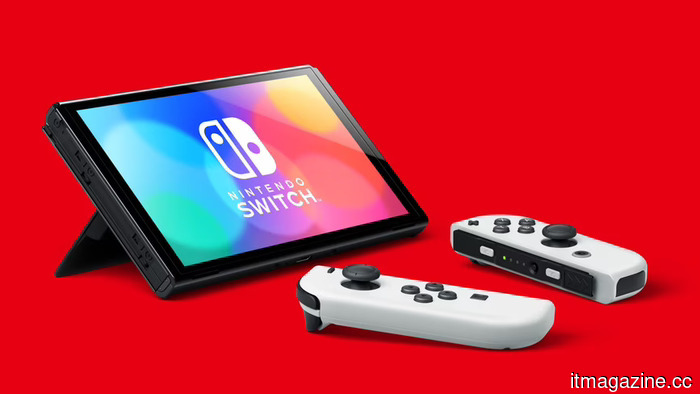 Nintendo's stock drops 7% following a price increase for the Switch 2.
Nintendo's FY27 forecast anticipates a 17% decline in Switch 2 hardware sales, along with a ¥100 billion impact from expenses related to memory, tariffs, and shipping.
Nintendo's stock drops 7% following a price increase for the Switch 2.
Nintendo's FY27 forecast anticipates a 17% decline in Switch 2 hardware sales, along with a ¥100 billion impact from expenses related to memory, tariffs, and shipping.
 Dua Lipa is filing a $15 million lawsuit against Samsung regarding the use of her photo on the packaging of Crystal UHD TVs.
Dua Lipa has initiated a $15 million federal lawsuit against Samsung Electronics, claiming that her backstage photo from 2024 has been utilized on the packaging of Crystal UHD TVs since 2025.
Dua Lipa is filing a $15 million lawsuit against Samsung regarding the use of her photo on the packaging of Crystal UHD TVs.
Dua Lipa has initiated a $15 million federal lawsuit against Samsung Electronics, claiming that her backstage photo from 2024 has been utilized on the packaging of Crystal UHD TVs since 2025.
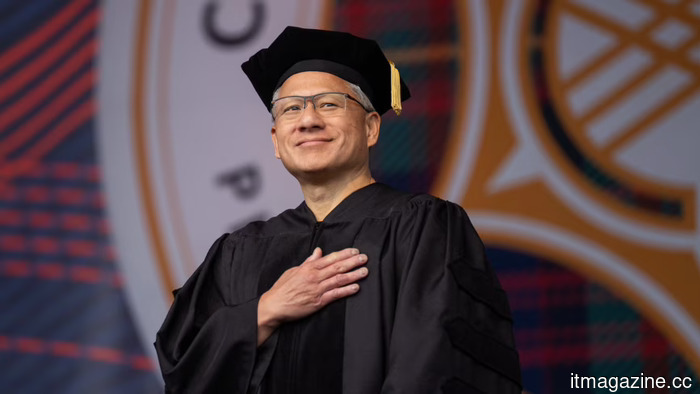 Jensen Huang addresses the class of 2026 at CMU:
Jensen Huang gave the commencement speech at Carnegie Mellon University, portraying AI as a moment of reindustrialization for the United States.
Jensen Huang addresses the class of 2026 at CMU:
Jensen Huang gave the commencement speech at Carnegie Mellon University, portraying AI as a moment of reindustrialization for the United States.
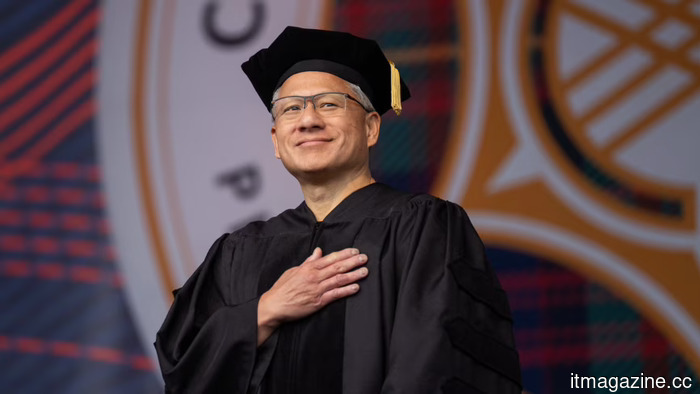 Jensen Huang addressed the class of 2026 at CMU:
Jensen Huang gave the commencement speech at Carnegie Mellon University, presenting AI as a pivotal moment for the reindustrialization of the United States.
Jensen Huang addressed the class of 2026 at CMU:
Jensen Huang gave the commencement speech at Carnegie Mellon University, presenting AI as a pivotal moment for the reindustrialization of the United States.
 The dimensions of a credit card: This completely operational computer also includes an e-ink display.
The open-source Muxcard combines a working computer, E Ink screen, NFC, and wireless connectivity within a design that is as slim and compact as a credit card.
The dimensions of a credit card: This completely operational computer also includes an e-ink display.
The open-source Muxcard combines a working computer, E Ink screen, NFC, and wireless connectivity within a design that is as slim and compact as a credit card.
Amazon is set to issue its inaugural Swiss franc bond as part of a six-part initiative focused on AI capital expenditures.
Amazon has appointed BNP Paribas, Deutsche Bank, and JPMorgan for its inaugural bond issuance in Swiss francs.