

Amazon is readying its inaugural Swiss franc bond as part of a six-part initiative to invest in AI capital expenditures.
BNP Paribas, Deutsche Bank, and JPMorgan have been tasked with managing the issuance. The maturities range from three to twenty-five years. This transaction follows Alphabet’s record issuance in Switzerland in February and Amazon’s $37 billion deal in March, highlighting that hyperscalers are now operating as multi-currency borrowers.
According to Bloomberg, Amazon is preparing to issue its first Swiss franc bonds in a six-tranche offering with maturities of three, five, seven, ten, fifteen, and twenty-five years. The size of the issuance has not been revealed by Amazon, and pricing is expected to be announced later this week. This trade underscores a significant shift in the funding strategies of major U.S. hyperscalers, suggesting that a U.S. dollar bond program alone is no longer adequate.
The capital required for AI infrastructure has increased considerably, prompting Big Tech treasurers to actively diversify into euros, sterling, and Swiss francs as part of a multi-currency approach, aiming to expand their investor base and tap into demand that the U.S. market cannot fulfill at reasonable rates. Amazon’s entry into the Swiss market follows a well-established trend; in February, Alphabet issued over CHF 2.75 billion (approximately $3.6 billion) across five maturities in a multi-currency initiative that also included sterling, euro, and a rare 100-year U.S. dollar bond. That Swiss issuance was the largest corporate bond sale in the Swiss market, while Caterpillar and Thermo Fisher Scientific have also accessed this market in the last eighteen months.
Amazon's scale is noteworthy: with around $200 billion planned for capital expenditures by 2026, according to comments from CEO Andy Jassy, the company's additional funding needs are in the tens of billions annually. The approach of issuing six tranches across the Swiss curve aligns with a treasurer's intent to secure long-term capacity rather than merely financing a specific project.
On March 10, Amazon raised approximately $37 billion across eleven tranches in the U.S. bond market, followed closely by a EUR 14.5 billion deal with various tenors. At that time, the combined dollar and euro fundraising was the largest in the company's history, with demand for the dollar issuance reportedly around four times the amount sold. Pricing on the longer maturities was tighter than Treasury yields, a situation that would have been unimaginable for the company a decade ago.
This Swiss franc issuance introduces a third currency, extending a pattern where issuance costs are generally lower than those for comparable dollar borrowers. The reasoning behind this issuance is clear: Amazon Web Services is driving high-end AI-related revenue growth, but the capital expenditures necessary to support that growth are significant enough that the company prefers to pre-fund a large portion through long-term debt rather than depleting cash reserves.
Other companies like Alphabet, Microsoft, Meta, and Oracle are making similar decisions. In 2025, combined debt issuance from hyperscalers surpassed $121 billion and is expected to exceed this figure by mid-2026. The projected $650 billion in combined Big Tech AI capital expenditures for 2026 underlines the funding urgency.
Investor interest in these transactions has been overwhelmingly positive. All four major U.S. hyperscalers maintain credit ratings in the AA range, enabling them access to substantial institutional fixed-income demand at margins unmatched by private-market financing. Large trades in 2025 were oversubscribed, with Amazon’s dollar issuance in March being covered around four times over.
The Swiss franc market is relatively smaller (the total all-currency corporate market sees roughly CHF 60 to 70 billion annually according to Refinitiv), but the lower interest rate environment, with Swiss yields significantly below their U.S. dollar and euro counterparts, makes it appealing for issuers with needs that can be met across different currencies. The strategy here is more about diversification than yield optimization; a multi-currency program decreases reliance on any single investor base, provides treasury flexibility during regional market fluctuations, and extends the average maturity profile by accessing markets with robust long-term demand.
Amazon’s choice to include a 25-year tranche in this Swiss deal aligns with this strategy. The three, five, seven, and ten-year tranches allow for middle-of-the-curve flexibility, while the fifteen and twenty-five-year maturities cater to insurance and pension demand that is more challenging to fulfill in sizeable amounts in dollars.
A pressing question that has emerged from the cleaner trades in recent months is the duration of the favorable funding environment. Hyperscaler bond issuance has accelerated beyond even optimistic forecasts made at the start of 2025. Analysts from Morgan Stanley and JPMorgan have projected that the sector may need to issue as much as $1.5 trillion in additional debt over the coming years to support the anticipated AI infrastructure growth. This estimate assumes that capital expenditures will continue to rise; if AI revenue growth does not meet expectations, the credit metrics supporting the AA ratings could face increased scrutiny.
The solid cash generation that
Other articles
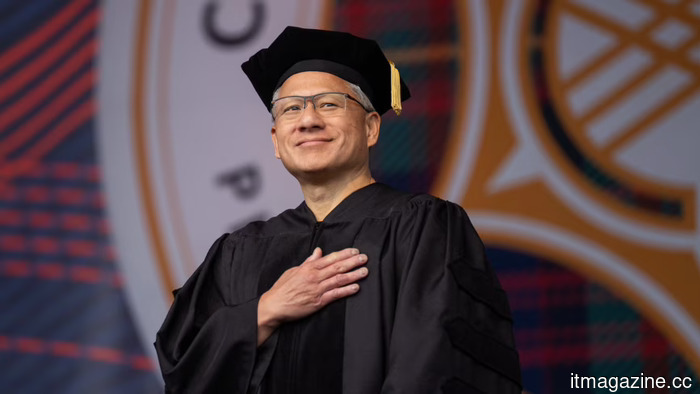 Jensen Huang addresses the class of 2026 at CMU:
Jensen Huang gave the commencement speech at Carnegie Mellon University, portraying AI as a moment of reindustrialization for the United States.
Jensen Huang addresses the class of 2026 at CMU:
Jensen Huang gave the commencement speech at Carnegie Mellon University, portraying AI as a moment of reindustrialization for the United States.
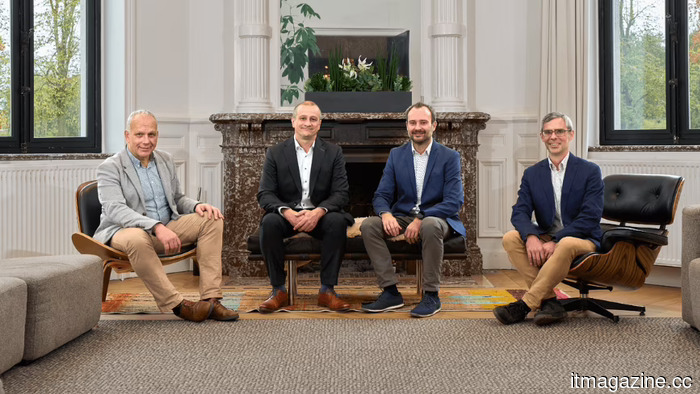 Dutch company Eyeo secures €40 million to commercialize NCOS color-splitting image sensors.
Eyeo has secured a €40 million Series A funding round led by Innovation Industries to advance its imec-developed Nanophotonic Color Splitting sensor technology.
Dutch company Eyeo secures €40 million to commercialize NCOS color-splitting image sensors.
Eyeo has secured a €40 million Series A funding round led by Innovation Industries to advance its imec-developed Nanophotonic Color Splitting sensor technology.
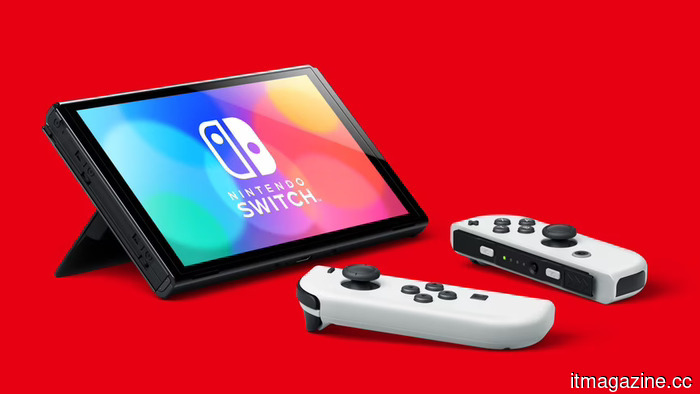 Nintendo's stock drops by 7% due to an increase in the price of the Switch 2.
Nintendo's guidance for FY27 anticipates a 17% decline in Switch 2 hardware sales, along with a ¥100 billion impact on costs due to memory, tariffs, and shipping.
Nintendo's stock drops by 7% due to an increase in the price of the Switch 2.
Nintendo's guidance for FY27 anticipates a 17% decline in Switch 2 hardware sales, along with a ¥100 billion impact on costs due to memory, tariffs, and shipping.
 Mortal Kombat 2 excels in fan service more than in narrative development.
Mortal Kombat 2 offers a wealth of brutal fatalities and plenty of fan service, yet its hurried narrative and underutilized characters prevent this sequel from achieving a genuine Flawless Victory.
Mortal Kombat 2 excels in fan service more than in narrative development.
Mortal Kombat 2 offers a wealth of brutal fatalities and plenty of fan service, yet its hurried narrative and underutilized characters prevent this sequel from achieving a genuine Flawless Victory.
 Dua Lipa is filing a $15 million lawsuit against Samsung regarding the use of her photo on the packaging of Crystal UHD TVs.
Dua Lipa has initiated a $15 million federal lawsuit against Samsung Electronics, claiming that her backstage photo from 2024 has been utilized on the packaging of Crystal UHD TVs since 2025.
Dua Lipa is filing a $15 million lawsuit against Samsung regarding the use of her photo on the packaging of Crystal UHD TVs.
Dua Lipa has initiated a $15 million federal lawsuit against Samsung Electronics, claiming that her backstage photo from 2024 has been utilized on the packaging of Crystal UHD TVs since 2025.
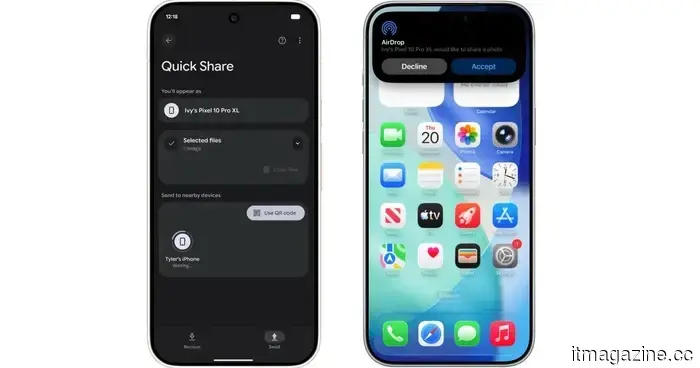 I used to find transferring files between devices stressful — now I hardly give it a second thought.
For a long time, transferring a file between my iPhone, Android phone, and MacBook felt like trying to broker peace between opposing countries. But now, without any major announcement, the conflict has ended — and my workflow has never been more serene.
I used to find transferring files between devices stressful — now I hardly give it a second thought.
For a long time, transferring a file between my iPhone, Android phone, and MacBook felt like trying to broker peace between opposing countries. But now, without any major announcement, the conflict has ended — and my workflow has never been more serene.
Amazon is readying its inaugural Swiss franc bond as part of a six-part initiative to invest in AI capital expenditures.
Amazon has appointed BNP Paribas, Deutsche Bank, and JPMorgan to manage its inaugural bond issuance in Swiss francs.