
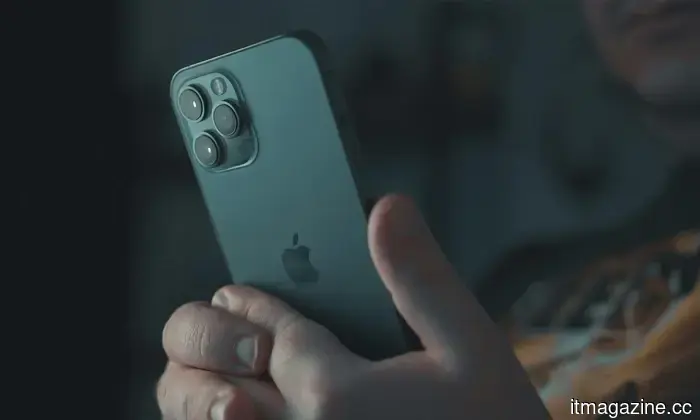
I believed I required an iPhone Pro until I considered my actual usage.
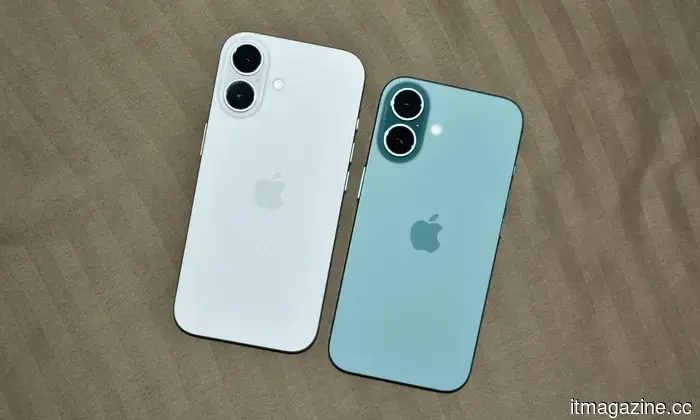
For some time, I had persuaded myself that my next iPhone needed to be a Pro model. This wasn't due to a genuine assessment of my phone requirements, but rather because the marketing gradually influenced me. The allure of triple cameras, a titanium frame, a ProMotion display, and the notion that it could handle anything contributed to a lingering impression that opting for the standard iPhone would mean settling. I felt as though I would be missing out on the "real" experience. Eventually, I moved past the specification sheets and focused on my actual usage. Honestly, the entire justification for choosing a Pro model quietly unraveled.
Apple excels at instilling doubt about the regular iPhone
Apple has a remarkable ability to make the Pro seem indispensable. Each September, the keynote presentations follow a familiar trajectory. The regular iPhone gets its moment, but once the Pro models are introduced, the tone of the presentation shifts. It suddenly centers on the "best" cameras, premium materials, special features, and top-tier performance. Without stating it overtly, the message is clear: this is the iPhone you should desire. The standard model begins to feel like the compromise for those with simpler requirements.
And truthfully, that strategy is effective. This isn’t because Apple is deceiving anyone; rather, the Pro genuinely offers superior capabilities. The cameras are enhanced, the build feels more luxurious, the additional features are tangible, and for users who take advantage of them, the higher cost is entirely justifiable. The issue arises when "this is better" subtly shifts to "I need this." That’s the assumption many of us make without pausing to question whether those extra features would even impact our daily phone usage.
I kept pursuing Pro features that I rarely utilized
When I transitioned from imagining how I used my phone to observing how I actually did, the truth emerged as quite basic. Most of my day consists of routine activities that many people engage in: scrolling through social media, responding to messages, listening to music, watching the occasional YouTube video, reading topics of interest, checking emails, using Maps, and making calls.
I do take numerous photos, but upon reflection, I realized I wasn't capturing images that truly required a Pro-level camera system. Most of my pictures are taken in good lighting and with minimal effort, and to be honest, modern smartphones perform excellently in this regard. I rarely encountered situations where I actually needed an advanced telephoto lens or the additional computational photography features reserved for Pro models. On the rare occasions when high camera quality was essential for work, I typically had a dedicated camera with me.
Then there was ProMotion — probably the feature I referenced most frequently to justify wanting a Pro iPhone. For years, the smoother 120Hz display felt like a compelling reason to invest extra in the Pro models. The difference is indeed noticeable. Scrolling feels more fluid, animations appear more appealing, and everything flows better. However, over time, I realized an interesting fact: I appreciated this feature the most when I was consciously aware of it. In everyday usage, I adapted quickly, and the standard iPhone never felt slow or frustrating. Now that the iPhone 17 lineup offers high refresh rate displays in the regular models as well, my justification for going Pro has largely diminished. One of the significant reasons to choose Pro is no longer exclusive, making the standard iPhone much more appealing than it once was.
The standard iPhone is carrying a lot more significance than people acknowledge
The regular iPhone has become surprisingly easy to undervalue, primarily because discussions about it are often framed in terms of what the Pro models offer that it does not. However, when you pause comparisons and examine the standard iPhone independently, it reveals itself to be a remarkably complete device.
The main camera is already excellent for the types of photos most individuals take daily. Performance is seldom an issue, especially since the regular models frequently share the same core chip architecture as the Pro versions. Whether it’s social media, gaming, multitasking, photo editing, or managing multiple apps at once, the phone handles it all effortlessly. The display is good, battery life has significantly improved over the years, and you still receive the same software experience, long-term updates, and overall reliability that draw people to iPhones in the first place.
Ultimately, for my actual usage — and likely for most people as well — the regular iPhone no longer feels like a compromise. It only begins to seem "lesser" when compared side-by-side with a list of features exclusive to the Pro.
The moment I recognized I was shopping for an idealized version of myself
I don’t aim to persuade anyone against purchasing a Pro iPhone. For some individuals, the additional features indeed make sense. If you frequently shoot video, regularly use the telephoto camera, value high-end materials, or genuinely benefit from advanced tools, then the elevated price is likely warranted. Those are real advantages. However, they are
Other articles
 Amazon is set to issue its inaugural Swiss franc bond as part of a six-part initiative focused on AI capital expenditures.
Amazon has appointed BNP Paribas, Deutsche Bank, and JPMorgan for its inaugural bond issuance in Swiss francs.
Amazon is set to issue its inaugural Swiss franc bond as part of a six-part initiative focused on AI capital expenditures.
Amazon has appointed BNP Paribas, Deutsche Bank, and JPMorgan for its inaugural bond issuance in Swiss francs.
 If the manufacturer of your router or drone is prohibited from operating in the US, they will continue to receive updates until 2029.
The FCC has prolonged support for updates on restricted routers and drones until 2029, with the goal of mitigating cybersecurity threats posed by unsupported and vulnerable equipment.
If the manufacturer of your router or drone is prohibited from operating in the US, they will continue to receive updates until 2029.
The FCC has prolonged support for updates on restricted routers and drones until 2029, with the goal of mitigating cybersecurity threats posed by unsupported and vulnerable equipment.
 GPUaaS is strengthening the perception of AI sovereignty in Europe.
Access does not equate to sovereignty. The risk associated with Europe's €20 billion investment in an AI gigafactory lies in potentially increasing its reliance on Nvidia and US hyperscalers rather than diminishing it.
GPUaaS is strengthening the perception of AI sovereignty in Europe.
Access does not equate to sovereignty. The risk associated with Europe's €20 billion investment in an AI gigafactory lies in potentially increasing its reliance on Nvidia and US hyperscalers rather than diminishing it.
 Jensen Huang addressed the class of 2026 at CMU:
Jensen Huang gave the commencement speech at Carnegie Mellon University, presenting AI as a pivotal moment for reindustrialization in the United States.
Jensen Huang addressed the class of 2026 at CMU:
Jensen Huang gave the commencement speech at Carnegie Mellon University, presenting AI as a pivotal moment for reindustrialization in the United States.
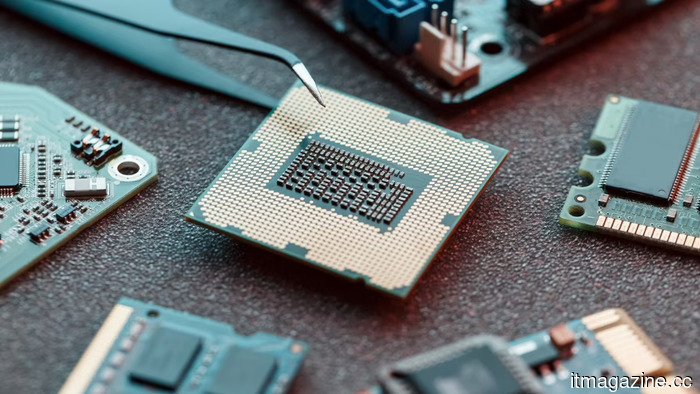 GPUaaS is strengthening the perception of AI sovereignty in Europe.
Access does not equate to sovereignty. Europe's €20 billion investment in AI gigafactories may increase its reliance on Nvidia and US hyperscalers, rather than lessen it.
GPUaaS is strengthening the perception of AI sovereignty in Europe.
Access does not equate to sovereignty. Europe's €20 billion investment in AI gigafactories may increase its reliance on Nvidia and US hyperscalers, rather than lessen it.
 Amazon is set to issue its inaugural Swiss franc bond as part of a six-part initiative aimed at capital expenditures for AI.
Amazon has appointed BNP Paribas, Deutsche Bank, and JPMorgan to lead its inaugural Swiss franc bond issuance.
Amazon is set to issue its inaugural Swiss franc bond as part of a six-part initiative aimed at capital expenditures for AI.
Amazon has appointed BNP Paribas, Deutsche Bank, and JPMorgan to lead its inaugural Swiss franc bond issuance.
I believed I required an iPhone Pro until I considered my actual usage.
Every September, Apple's keynote made me feel like I was a Pro user. It turns out I was simply a great audience member.