

Amazon is set to issue its inaugural Swiss franc bond as part of a six-part initiative aimed at capital expenditures for AI.
BNP Paribas, Deutsche Bank, and JPMorgan are tasked with managing the issuance. The maturities range from three to 25 years. This transaction follows Alphabet's record Swiss issuance in February and Amazon's $37 billion deal in March, highlighting that hyperscalers are now engaging in multi-currency borrowing.
According to Bloomberg, Amazon is set to launch its inaugural Swiss franc bond issuance in a six-tranche deal encompassing maturities of three, five, seven, ten, fifteen, and twenty-five years. The size of the deal has not been revealed by Amazon, with pricing anticipated later this week.
This trade marks a significant shift in the funding strategies of the largest US hyperscalers, indicating that a US dollar bond program alone is no longer adequate. The substantial capital required for AI infrastructure has compelled Big Tech treasurers to diversify their funding sources into euros, sterling, and Swiss francs, often within the same multi-currency program, in order to expand their investor base and meet demand that the US market cannot fulfill at reasonable rates.
Amazon's entry into the Swiss market mirrors a familiar trajectory. In February, Alphabet issued over CHF 2.75 billion (approximately $3.6 billion) across five maturities as part of a multi-currency initiative that also included sterling, euro, and a rare 100-year US dollar bond. This Swiss tranche represented the largest corporate bond sale in the Swiss market to date. Caterpillar and Thermo Fisher Scientific have also tapped this market in the last eighteen months.
What Amazon brings to the list is scale: with roughly $200 billion in capital expenditures planned for 2026, as stated by CEO Andy Jassy, the company's additional funding needs are in the range of tens of billions annually. Offering six tranches across the Swiss curve suggests a strategy focused on securing long-duration capacity rather than funding specific projects.
On March 10, Amazon raised about $37 billion through eleven tranches in the US bond market, which was soon followed by a EUR 14.5 billion deal with multiple tenors. At that time, the combined dollar-and-euro financing was the largest funding event in the company's history, with demand reported to be approximately four times the amount issued. Pricing on the long end was notably below Treasury yields at margins unimaginable a decade ago.
The Swiss franc issuance now extends this approach into a third currency, where issuance costs generally run significantly lower than those for similarly-rated borrowers in dollars. The rationale behind this issuance is clear: Amazon Web Services (AWS) is experiencing high growth in AI-related revenues, but the capex needed for this growth is substantial. Therefore, the company has opted to pre-fund a significant portion through long-duration debt rather than depleting cash reserves. This decision is concurrently being made by Alphabet, Microsoft, Meta, and Oracle. Collectively, hyperscaler debt issuance surpassed $121 billion in 2025 and is expected to exceed that amount by mid-2026; the projected $650 billion in Big Tech AI capex for 2026 underscores the urgency behind this funding.
Investor interest in these offerings has consistently been robust. The four largest US hyperscalers retain credit ratings in the AA range, granting them access to substantial pools of institutional fixed-income demand at margins unmatched by any private-market financing structure. The largest trades of 2025 were oversubscribed to levels that would appear unusual in any other sector; Amazon's dollar trade in March was about four times covered.
While the Swiss franc market is smaller in absolute terms (the total corporate market across all currencies stands around CHF 60-70 billion yearly, according to Refinitiv), the current rate environment, with Swiss yields significantly lower than US dollar and euro equivalents, makes it appealing for issuers looking to distribute their funding needs across various currencies.
This currency strategy embodies genuine diversification rather than merely yield optimization. A multi-currency program minimizes reliance on any single investor base, offers treasurers flexibility in accessing specific tranches during times of regional market volatility, and lengthens the average maturity profile by tapping markets with strong long-duration demand.
Amazon's decision to include a 25-year tranche in this Swiss issuance aligns with this strategy, while the three, five, seven, and ten-year tranches provide flexibility in the middle of the curve. The fifteen- and twenty-five-year pieces fulfill demand from insurance companies and pension funds, which may be harder to source in equivalent sizes in dollars.
The overarching question, which recent trades have heightened rather than diminished, is how long the favorable funding environment will continue. Hyperscaler bond issuance has been occurring at a pace even optimistic analysts did not anticipate at the start of 2025. Morgan Stanley and JPMorgan have projected that the sector may need to issue as much as $1.5 trillion in additional debt in the coming years to support the necessary AI build-out at the planned rate. This figure is based on the assumption that capex continues to rise; if AI revenue growth falls
Other articles
 I allowed this Galaxy S26 feature to manage my battery, and it truly functions well.
The Device Care functions of the Galaxy S26 manage battery health, background applications, and system optimization in a way that truly impacts performance over time. After initial setup, it generally remains unobtrusive, allowing you to use your phone with ease.
I allowed this Galaxy S26 feature to manage my battery, and it truly functions well.
The Device Care functions of the Galaxy S26 manage battery health, background applications, and system optimization in a way that truly impacts performance over time. After initial setup, it generally remains unobtrusive, allowing you to use your phone with ease.
 Graduates who are heavily influenced by AI are not particularly appealing for finance jobs due to their lack of depth in ideas.
Financial companies are reevaluating AI-native graduates amid rising worries about superficial analysis, inadequate critical thinking skills, and an overreliance on generative AI tools.
Graduates who are heavily influenced by AI are not particularly appealing for finance jobs due to their lack of depth in ideas.
Financial companies are reevaluating AI-native graduates amid rising worries about superficial analysis, inadequate critical thinking skills, and an overreliance on generative AI tools.
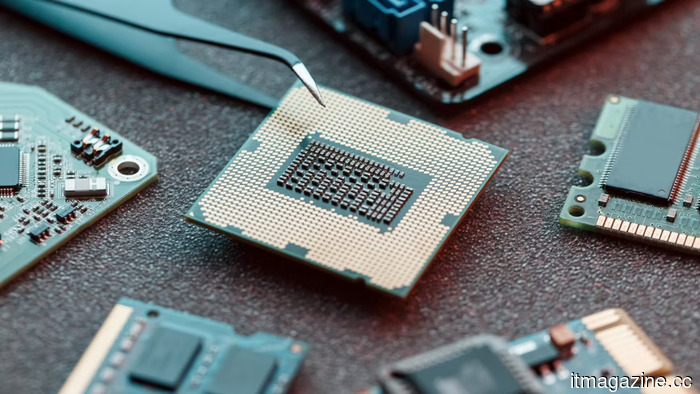 GPUaaS is strengthening the perception of AI sovereignty in Europe.
Access does not equate to sovereignty. The risk associated with Europe's €20 billion investment in an AI gigafactory lies in potentially increasing its reliance on Nvidia and US hyperscalers rather than diminishing it.
GPUaaS is strengthening the perception of AI sovereignty in Europe.
Access does not equate to sovereignty. The risk associated with Europe's €20 billion investment in an AI gigafactory lies in potentially increasing its reliance on Nvidia and US hyperscalers rather than diminishing it.
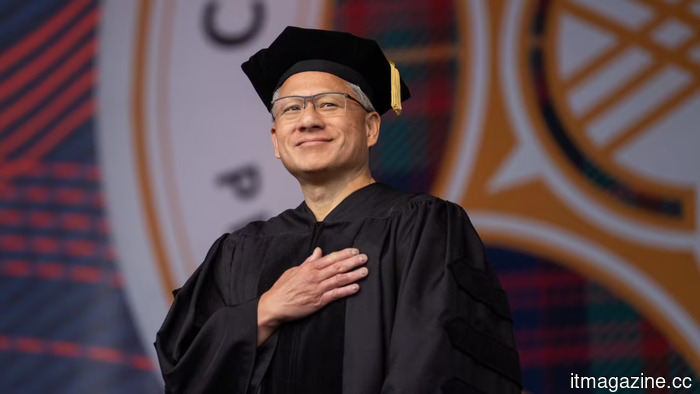 Jensen Huang addressed the class of 2026 at CMU:
Jensen Huang gave the commencement speech at Carnegie Mellon University, presenting AI as a pivotal moment for reindustrialization in the United States.
Jensen Huang addressed the class of 2026 at CMU:
Jensen Huang gave the commencement speech at Carnegie Mellon University, presenting AI as a pivotal moment for reindustrialization in the United States.
 Credit card dimensions: This fully operational computer is also equipped with an e-ink display.
The open-source Muxcard combines a working computer, E Ink display, NFC, and wireless connectivity into a compact, credit card-sized design.
Credit card dimensions: This fully operational computer is also equipped with an e-ink display.
The open-source Muxcard combines a working computer, E Ink display, NFC, and wireless connectivity into a compact, credit card-sized design.
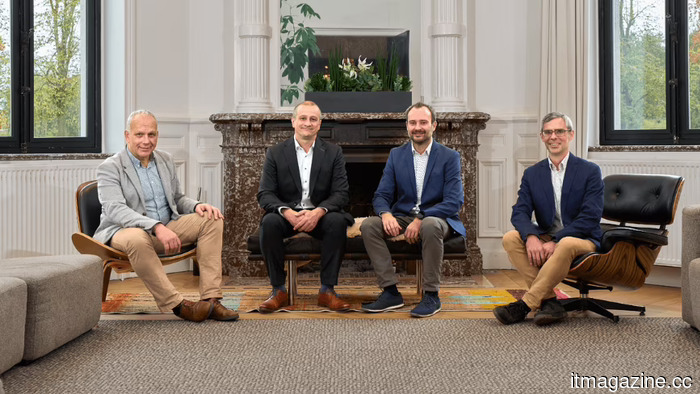 Dutch company Eyeo secures €40 million to commercialize NCOS color-splitting image sensors.
Eyeo has secured €40 million in a Series A funding round, led by Innovation Industries, to advance its imec-developed Nanophotonic Color Splitting sensor technology.
Dutch company Eyeo secures €40 million to commercialize NCOS color-splitting image sensors.
Eyeo has secured €40 million in a Series A funding round, led by Innovation Industries, to advance its imec-developed Nanophotonic Color Splitting sensor technology.
Amazon is set to issue its inaugural Swiss franc bond as part of a six-part initiative aimed at capital expenditures for AI.
Amazon has appointed BNP Paribas, Deutsche Bank, and JPMorgan to lead its inaugural Swiss franc bond issuance.