

Amazon is set to issue its inaugural Swiss franc bond as part of a six-phase initiative focused on artificial intelligence capital expenditures.
BNP Paribas, Deutsche Bank, and JPMorgan have received the mandate to oversee the issuance, with maturities ranging from three to 25 years. This transaction follows Alphabet's record Swiss issuance in February and Amazon's $37 billion deal in March, showcasing that hyperscalers are now borrowing in multiple currencies.
Amazon is gearing up for its inaugural bond issuance in Swiss francs, as reported by Bloomberg on Monday, with a six-tranche deal that spans maturities of three, five, seven, ten, fifteen, and twenty-five years. The size of this trade has not been disclosed by Amazon yet, and pricing is anticipated later this week.
This trade represents a clear indication that the largest US hyperscalers have evolved their funding approach—relying solely on a US dollar bond program is no longer adequate. The significant capital needed to develop AI infrastructure has led Big Tech treasurers to actively diversify into euros, sterling, and Swiss francs, often within the same multi-currency framework, to expand their investor demographic and meet demands not satisfied by the US market alone at favorable rates.
Amazon's entry into the Swiss market follows a familiar path. In February, Alphabet issued more than CHF 2.75 billion (around $3.6 billion) across five maturities as part of a multi-currency initiative that included sterling, euros, and an uncommon 100-year US dollar bond. This Swiss issuance marked the largest corporate bond sale in the Swiss market. Companies like Caterpillar and Thermo Fisher Scientific have also tapped into this market over the past eighteen months.
What distinguishes Amazon in this context is its scale: CEO Andy Jassy indicated plans for approximately $200 billion in capex by 2026, resulting in an incremental funding requirement of several tens of billions per year. The choice of six tranches across the Swiss yield curve suggests a strategy focused on securing long-term capacity rather than financing a specific project.
On March 10, Amazon raised around $37 billion over eleven tranches in the US bond market, immediately followed by a EUR 14.5 billion deal across various tenors. This combined dollar-and-euro issuance was, at that time, the largest single funding event in the company’s history, with demand for the dollar offering reportedly four times greater than the amount sold.
Pricing on the longer maturities came in beneath Treasury yields by margins that would have seemed unimaginable for the company a decade ago. The Swiss franc issuance now extends this trend into a third currency and a market structure where issuance costs are generally much lower than for similarly-rated borrowers in US dollars.
The rationale for this issuance is straightforward. Amazon Web Services (AWS) is witnessing substantial growth in AI-related revenue at the high end of the hyperscaler scale, but the capex necessary to sustain that growth is significant enough that the company prefers to pre-fund a large portion through long-term debt rather than deplete cash reserves. This decision is mirrored by Alphabet, Microsoft, Meta, and Oracle. Cumulatively, hyperscaler debt issuance surpassed $121 billion in 2025 and is projected to exceed that amount by mid-2026; the combined Big Tech AI capex now planned for 2026 is $650 billion, highlighting the urgency for adequate funding.
Investor demand for these trades has remained robust. The four largest US hyperscalers all maintain credit ratings within the AA range, enabling them to access the deepest pools of institutional fixed-income demand at margins unmatched by any private-market financing structure. The largest trades in 2025 were oversubscribed significantly; for instance, Amazon's dollar trade in March saw about four times coverage.
While the Swiss franc market is smaller in absolute terms (the annual all-currency corporate market is approximately CHF 60-70 billion according to Refinitiv), the rate environment, characterized by Swiss yields being significantly lower than their US dollar and euro counterparts, makes it attractive for issuers able to spread their funding needs across different currencies.
The logic behind a multi-currency strategy is true diversification rather than yield optimization. Such a program minimizes reliance on any single investor base, provides treasurers with flexibility in accessing different tranches during periods of regional volatility, and extends the average maturity profile by tapping into markets where demand for long-duration issuance is particularly strong.
Amazon's selection of a 25-year tranche at the long end of the Swiss deal aligns with this strategy. The three, five, seven, and ten-year tranches offer flexibility mid-curve, while the fifteen and twenty-five-year pieces cater to insurance and pension demand that is more challenging to source in equivalent size in dollars.
A broader concern, highlighted by the smoother trades of the past three months, is the duration of the supportive funding environment. Hyperscaler bond issuance has surged at a rate that even optimistic analysts did not foresee at the beginning of 2025. Morgan Stanley and JPMorgan have projected that the sector may need to generate as much as $1.5 trillion in additional debt
Other articles
 If the manufacturer of your router or drone is prohibited from operating in the US, they will continue to receive updates until 2029.
The FCC has prolonged support for updates on restricted routers and drones until 2029, with the goal of mitigating cybersecurity threats posed by unsupported and vulnerable equipment.
If the manufacturer of your router or drone is prohibited from operating in the US, they will continue to receive updates until 2029.
The FCC has prolonged support for updates on restricted routers and drones until 2029, with the goal of mitigating cybersecurity threats posed by unsupported and vulnerable equipment.
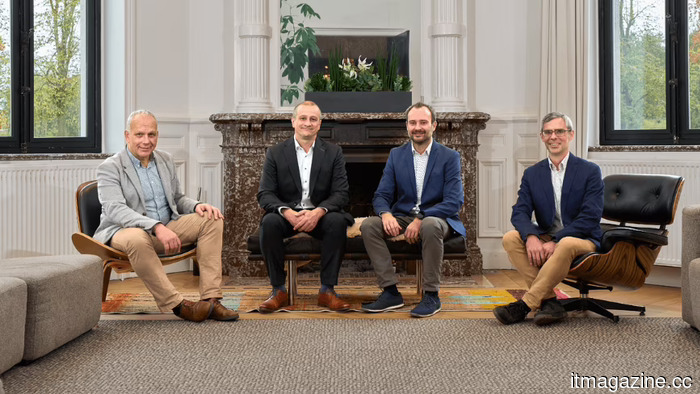 Dutch company Eyeo secures €40 million to commercialize NCOS color-splitting image sensors.
eyeo has secured €40 million in a Series A funding round led by Innovation Industries to advance its Nanophotonic Color Splitting sensor technology, which was developed by imec.
Dutch company Eyeo secures €40 million to commercialize NCOS color-splitting image sensors.
eyeo has secured €40 million in a Series A funding round led by Innovation Industries to advance its Nanophotonic Color Splitting sensor technology, which was developed by imec.
 Mortal Kombat 2 excels in fan service more than in narrative development.
Mortal Kombat 2 offers a wealth of brutal fatalities and plenty of fan service, yet its hurried narrative and underutilized characters prevent this sequel from achieving a genuine Flawless Victory.
Mortal Kombat 2 excels in fan service more than in narrative development.
Mortal Kombat 2 offers a wealth of brutal fatalities and plenty of fan service, yet its hurried narrative and underutilized characters prevent this sequel from achieving a genuine Flawless Victory.
 Amazon is readying its inaugural Swiss franc bond as part of a six-part initiative to invest in AI capital expenditures.
Amazon has appointed BNP Paribas, Deutsche Bank, and JPMorgan to manage its inaugural bond issuance in Swiss francs.
Amazon is readying its inaugural Swiss franc bond as part of a six-part initiative to invest in AI capital expenditures.
Amazon has appointed BNP Paribas, Deutsche Bank, and JPMorgan to manage its inaugural bond issuance in Swiss francs.
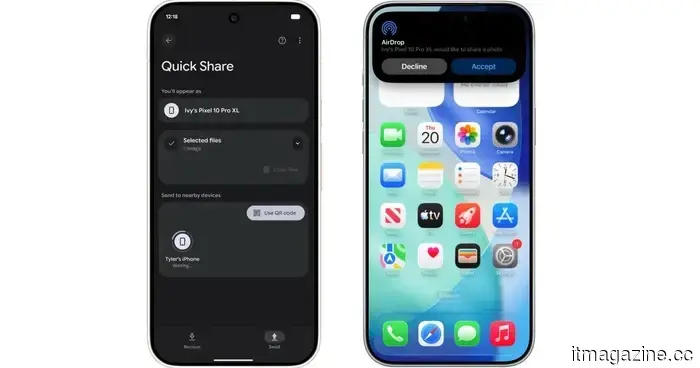 I used to find transferring files between devices stressful — now I hardly give it a second thought.
For a long time, transferring a file between my iPhone, Android phone, and MacBook felt like trying to broker peace between opposing countries. But now, without any major announcement, the conflict has ended — and my workflow has never been more serene.
I used to find transferring files between devices stressful — now I hardly give it a second thought.
For a long time, transferring a file between my iPhone, Android phone, and MacBook felt like trying to broker peace between opposing countries. But now, without any major announcement, the conflict has ended — and my workflow has never been more serene.
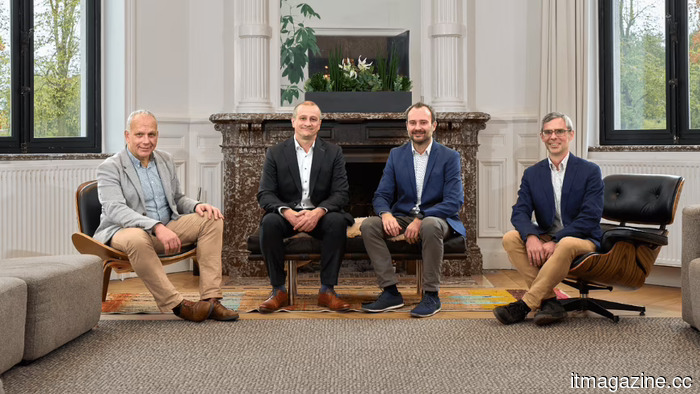 Dutch company Eyeo secures €40 million to commercialize NCOS color-splitting image sensors.
Eyeo has completed a €40 million Series A funding round, led by Innovation Industries, to advance its nanophotonic color-splitting sensor technology developed by imec.
Dutch company Eyeo secures €40 million to commercialize NCOS color-splitting image sensors.
Eyeo has completed a €40 million Series A funding round, led by Innovation Industries, to advance its nanophotonic color-splitting sensor technology developed by imec.
Amazon is set to issue its inaugural Swiss franc bond as part of a six-phase initiative focused on artificial intelligence capital expenditures.
Amazon has appointed BNP Paribas, Deutsche Bank, and JPMorgan for its inaugural issuance of bonds in Swiss franc.