
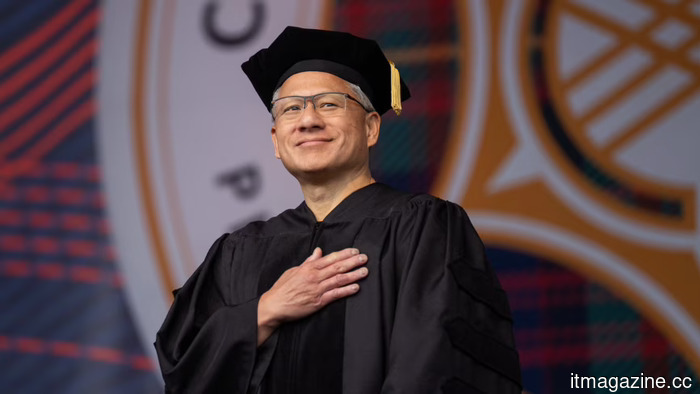
Jensen Huang addresses the class of 2026 at CMU:
NVIDIA's CEO presented the keynote at Carnegie Mellon University's 128th commencement ceremony on Sunday and was awarded an honorary doctorate. His speech characterized AI as a pivotal moment for reindustrialization in the US and urged both engineers and policymakers to enhance capabilities and safety concurrently.
Jensen Huang, the founder and CEO of NVIDIA, addressed the graduates, stating they are entering the workforce during what he described as the most significant computing-platform transformation in history. “I cannot imagine a more exciting time to begin your life's work,” he remarked.
The venue supported his message well, as Carnegie Mellon’s School of Computer Science developed the Logic Theorist in the 1950s, considered the first artificial intelligence program, and started the world’s first academic Robotics Institute in 1979. Huang highlighted this legacy, emphasizing, “AI started right here at Carnegie Mellon,” before a crowd of graduates gathered in the rain at Gesling Stadium. CMU President Farnam Jahanian also conferred an honorary Doctor of Science and Technology degree upon him, a prestigious recognition from the university.
The essence of his speech centered on four key imperatives that Huang has reiterated in various occasions, tailored to the graduates: “Advance safely. Create thoughtful policies. Make AI broadly accessible. And encourage everyone to engage.” This approach resonated with a campus known for significant contributions to both AI capability and safety, especially in areas where the two intersect.
“Scientists and engineers,” Huang asserted, “have a profound responsibility to advance AI capabilities and AI safety together.” He positioned AI within the context of US industrial history, claiming it presents “a once-in-a-generation opportunity to reindustrialize America and restore the nation’s capacity to build.”
He expanded on this theme by including a wider range of professionals, stating that AI's advantages would extend to “electricians, plumbers, ironworkers, technicians and all kinds of builders” in addition to the technical roles typically associated with CMU graduates. This emphasis has become increasingly prominent in NVIDIA’s communication this year, especially amid rising political concerns regarding AI's impact on the labor market.
Regarding the nature of work, Huang made a nuanced distinction between the tasks and the purpose of a job. “Radiologists,” he noted, “don’t just read scans. They care for patients.” He explained that AI can automate the reading of scans (the task) while enhancing the role of radiologists (the purpose). This framing, which Huang has frequently used, serves as NVIDIA’s response to narratives suggesting AI will replace workers. However, the applicability of the radiology example can vary in different clinical situations, and Huang did not delve into those complexities, which, while fitting for a commencement speech, merit consideration in alternative contexts.
Huang addressed the political atmosphere surrounding AI in a diplomatic manner permissible in a commencement setting. “Every major technological revolution in history created fear alongside opportunity,” he remarked. “When society engages technology openly, responsibly, and optimistically, we expand human potential far more than we diminish it.” He called on policymakers to create sensible regulations that safeguard society while promoting innovation and progress, echoing sentiments shared by organizations like Anthropic, OpenAI, and Microsoft over the past year. However, he did not address whether the current US regulatory debate achieves that objective.
The speech had personal elements as Huang reflected on his experience as a first-generation immigrant to the US, his parents’ faith in American possibilities, and a country that he described as “not easy, but full of opportunities. Not a guarantee, but a chance.” He posed a sentiment that seemed both rhetorical and heartfelt: “How can we not be romantic about America?” This phrase often resonates well with audiences that have their own immigration narratives.
As NVIDIA has committed $40 billion in AI investments this year, framing the company’s achievements as part of American renewal rather than just commercial success aligns with their interests. In closing, Huang referenced Carnegie Mellon’s motto and imparted an imperative: “My heart is in the work. So put your heart into the work. Build something worthy of your education, your potential, and the people who believed in you long before the world did.” He then waved to the graduates as he exited the stage, with thousands of smartphones raised in the crowd.
Huang’s tone during the commencement was distinctly different from that of his keynotes. Over the past year, he has appeared at events like GTC, Computex, and Davos, delivering similar themes within a more theatrical format, often involving product demonstrations. In contrast, the CMU speech adopted a more straightforward tone, fitting the occasion. The core arguments remained consistent, though the delivery changed.
For the graduates, the practical implications of this address are noteworthy. The work environment for most CMU computer science graduates is fundamentally different from that of their predecessors, even from just three years back. The first US undergraduate AI degree was offered by CMU in 2018, and its initial cohorts have now graduated. Established job categories in machine learning
Other articles
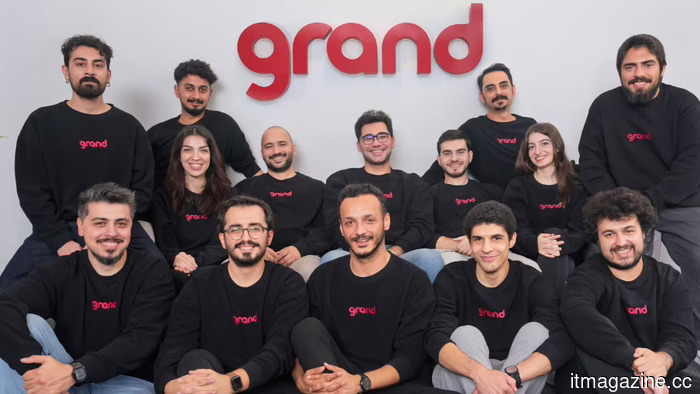 Turkey's Grand Games secures $70 million in Series B funding.
Grand Games, located in Istanbul, has secured $70 million in a Series B funding round led by the Growth Fund of Balderton Capital.
Turkey's Grand Games secures $70 million in Series B funding.
Grand Games, located in Istanbul, has secured $70 million in a Series B funding round led by the Growth Fund of Balderton Capital.
 Mortal Kombat 2 excels in fan service more than in narrative development.
Mortal Kombat 2 offers a wealth of brutal fatalities and plenty of fan service, yet its hurried narrative and underutilized characters prevent this sequel from achieving a genuine Flawless Victory.
Mortal Kombat 2 excels in fan service more than in narrative development.
Mortal Kombat 2 offers a wealth of brutal fatalities and plenty of fan service, yet its hurried narrative and underutilized characters prevent this sequel from achieving a genuine Flawless Victory.
 Nintendo's stock drops by 7% due to an increase in the price of the Switch 2.
Nintendo's guidance for FY27 anticipates a 17% decline in Switch 2 hardware sales, along with a ¥100 billion impact on costs due to memory, tariffs, and shipping.
Nintendo's stock drops by 7% due to an increase in the price of the Switch 2.
Nintendo's guidance for FY27 anticipates a 17% decline in Switch 2 hardware sales, along with a ¥100 billion impact on costs due to memory, tariffs, and shipping.
 The dimensions of a credit card: This completely operational computer also includes an e-ink display.
The open-source Muxcard combines a working computer, E Ink screen, NFC, and wireless connectivity within a design that is as slim and compact as a credit card.
The dimensions of a credit card: This completely operational computer also includes an e-ink display.
The open-source Muxcard combines a working computer, E Ink screen, NFC, and wireless connectivity within a design that is as slim and compact as a credit card.
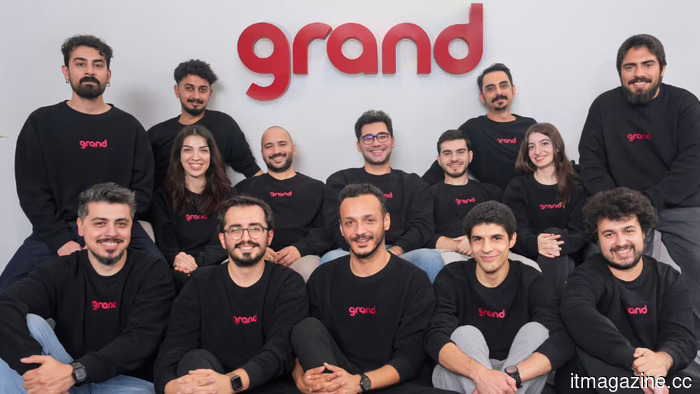 Turkey's Grand Games secures $70 million in Series B funding.
Istanbul's Grand Games has secured $70 million in a Series B funding round, with Balderton Capital's Growth Fund leading the investment.
Turkey's Grand Games secures $70 million in Series B funding.
Istanbul's Grand Games has secured $70 million in a Series B funding round, with Balderton Capital's Growth Fund leading the investment.
 I believed I required an iPhone Pro until I considered my actual usage.
Every September, Apple's keynote made me feel like I was a Pro user. It turns out I was simply a great audience member.
I believed I required an iPhone Pro until I considered my actual usage.
Every September, Apple's keynote made me feel like I was a Pro user. It turns out I was simply a great audience member.
Jensen Huang addresses the class of 2026 at CMU:
Jensen Huang gave the commencement speech at Carnegie Mellon University, portraying AI as a moment of reindustrialization for the United States.