
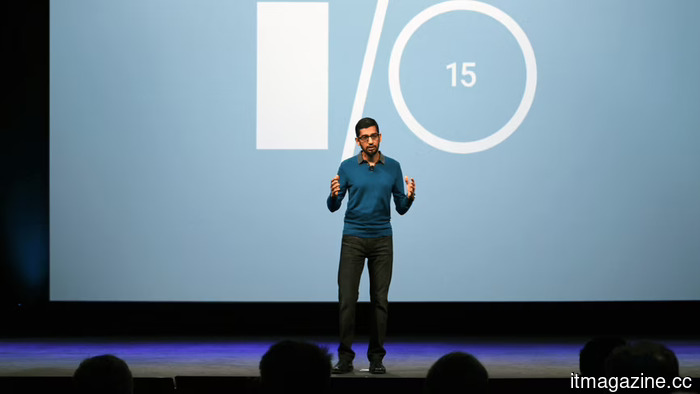
Alphabet is set to conduct its inaugural yen bond sale to finance its AI developments.
Mizuho, Bank of America, and Morgan Stanley have been assigned the mandate. Pricing is anticipated this month. This trade follows Alphabet’s record issuances in Swiss francs, sterling, and euros in February, along with last week’s $17 billion euro-Canadian dollar combination, all aimed at supporting the $180-190 billion capital expenditure program.
Alphabet has announced plans to issue yen-denominated bonds for the first time, as revealed in a Japanese securities filing on Monday. Mizuho, Bank of America, and Morgan Stanley are responsible for managing the book.
This issuance is expected to reach several hundred billion yen, with pricing decisions expected later this month. It represents the latest segment of a multi-currency funding initiative the company is pursuing vigorously through 2026 to finance a substantial AI infrastructure development.
The yen issuance follows a remarkable series of transactions. In February, Alphabet executed its inaugural Swiss franc deal, which, exceeding CHF 2.75 billion across five maturities, was the largest corporate bond sale ever in the Swiss market. This Swiss issuance was coupled with a rare 100-year US dollar bond and sterling tranches, amounting to approximately $32 billion in a single multi-currency push. Last week, the company added around $17 billion through a EUR 9 billion euro deal and an CAD 8.5 billion Canadian dollar issuance.
The yen issuance brings this strategy into a sixth currency, providing Alphabet with long-duration JPY funding that few other foreign corporations have priced lately. The funding behind this issuance is straightforward. In late April, Alphabet raised its 2026 capital-spending forecast by $5 billion to a range of $180 billion to $190 billion, with another significant increase anticipated for 2027.
The overall picture of AI capex among hyperscalers, which reflects a $650 billion commitment by the five largest players, suggests a funding need that no single bond market can adequately satisfy. The yen market is particularly significant because Japanese institutional investors, especially life-insurance funds and pension plans, have substantial long-duration JPY liabilities and have been lacking high-quality assets to match them since the Bank of Japan ended its negative-rate policy.
A high-grade AA corporate issuing at scale over long tenors addresses both sides of this equation. The economic conditions also favor this issuance. Japanese yields are projected to rise in 2025 and 2026 as the Bank of Japan normalizes its policy, yet they remain significantly lower than US dollar counterparts across the maturity spectrum. For a corporate borrower with a comprehensive multi-currency program, converting tranches into JPY captures coupon savings that, when considering multi-billion-dollar issuance volumes, result in substantial reductions in interest expenses.
Alphabet, historically a sensitive borrower to rates in the high-grade market, has been actively diversifying its funding mix for this reason. The mandate with Mizuho serves as a local connection, while Bank of America and Morgan Stanley handle global distribution. Mizuho, with the most extensive corporate bond distribution network in Japan, enables Alphabet to access the local buy-side that Western firms cannot compete with for initial issuances.
Selecting Mizuho alongside two US-based co-lead managers is standard for a prominent debut Samurai trade and indicates the company's expectation of securing significant Japanese institutional support for the transaction.
A key strategic consideration is whether this pace of issuance is maintainable. The combined debt issuance by major tech firms surpassed $121 billion in 2025 and is on track to exceed that amount by mid-2026, with hyperscalers increasingly turning to global bond markets for AI funding. Alphabet's previous high watermark, a $10 billion bond from 2020, was initially framed as a one-time financing effort. The current trend appears to be recurring: within about fifteen months, Alphabet has accessed the dollar, euro, sterling, Swiss franc, Canadian dollar, and is soon to tap the yen markets, with total proceeds nearing $50 billion.
This approach only works if the cash flow from the AI development can scale accordingly. On the cash flow front, Alphabet's market capitalization lead over Nvidia after its Q1 earnings is part of what instills confidence in bond investors. Google Cloud showcased 32% revenue growth in Q1 2026, and the segment's operating margin has consistently improved.
Alphabet continues to have the largest overall free cash flow in the tech sector, and its consolidated balance sheet supports debt issuance at AA-spread levels that few peers can match. The yen tranche will likely price favorably compared to US dollar equivalents on a swapped basis. The more pressing question pertains to the anticipated returns from AI capex five years down the line, rather than how well the issuance prices today.
Moreover, a notable market signal exists. Alphabet's decision to issue in yen now, amid visible tightening from the BOJ and increasing Japanese rates, implies that the company foresees medium-term US dollar funding costs staying higher than the current market suggests. Securing long-duration JPY at present yields, before continued
Other articles
 A $13,500 Unitree robot was 'blessed' at the Jogyesa Temple in Seoul.
A Unitree robot was 'blessed' at the Jogyesa Temple in Seoul. Amidst the event, the Jogye Order established five AI ethics guidelines that are worth considering.
A $13,500 Unitree robot was 'blessed' at the Jogyesa Temple in Seoul.
A Unitree robot was 'blessed' at the Jogyesa Temple in Seoul. Amidst the event, the Jogye Order established five AI ethics guidelines that are worth considering.
 The Samsung Galaxy S25 series has recently received the significant One UI 8.5 update in the United States.
Samsung One UI 8.5 is being released for the Galaxy S25 series in the US, featuring customizable quick settings, enhanced photo editing tools, and several minor yet pleasing updates.
The Samsung Galaxy S25 series has recently received the significant One UI 8.5 update in the United States.
Samsung One UI 8.5 is being released for the Galaxy S25 series in the US, featuring customizable quick settings, enhanced photo editing tools, and several minor yet pleasing updates.
 It seems that Nintendo has effectively blocked a method for accessing YouTube on the Switch 2.
Switch 2 users discovered an ingenious method to access YouTube via a concealed browser. Nintendo managed to block this within hours, despite the absence of an official streaming app nearly a year post-launch.
It seems that Nintendo has effectively blocked a method for accessing YouTube on the Switch 2.
Switch 2 users discovered an ingenious method to access YouTube via a concealed browser. Nintendo managed to block this within hours, despite the absence of an official streaming app nearly a year post-launch.
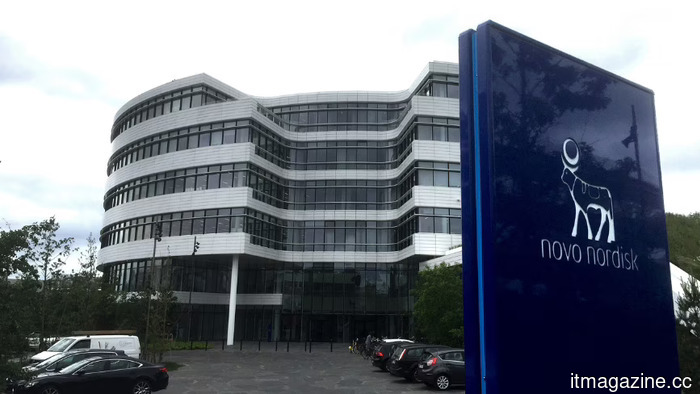 Novo Nordisk transfers Parkinson's cell therapy to Cellular Intelligence, which is backed by Zuckerberg.
Novo Nordisk has transferred its Parkinson's cell therapy, STEM-PD, which was previously on hold, to the AI biotech company Cellular Intelligence in exchange for equity and milestone payments.
Novo Nordisk transfers Parkinson's cell therapy to Cellular Intelligence, which is backed by Zuckerberg.
Novo Nordisk has transferred its Parkinson's cell therapy, STEM-PD, which was previously on hold, to the AI biotech company Cellular Intelligence in exchange for equity and milestone payments.
 Samsung was recently sued for millions of dollars by pop star Dua Lipa.
Dua Lipa is taking legal action against Samsung, seeking a minimum of $15 million, claiming that the company utilized her likeness on television packaging without her consent to market their TVs.
Samsung was recently sued for millions of dollars by pop star Dua Lipa.
Dua Lipa is taking legal action against Samsung, seeking a minimum of $15 million, claiming that the company utilized her likeness on television packaging without her consent to market their TVs.
Alphabet is set to conduct its inaugural yen bond sale to finance its AI developments.
Alphabet has appointed Mizuho, Bank of America, and Morgan Stanley to lead its inaugural bond sale denominated in yen.