
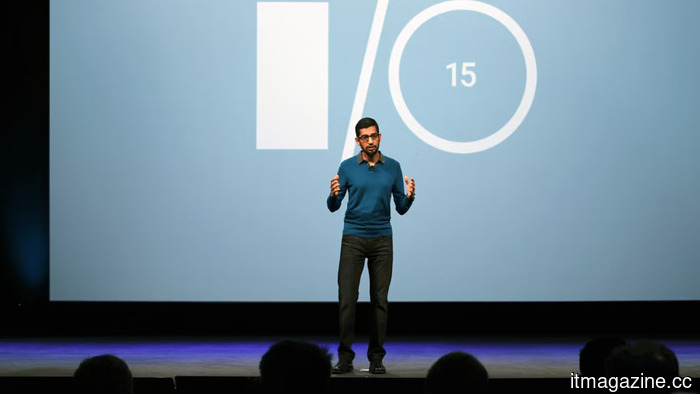
Alphabet intends to conduct its inaugural yen bond offering to finance its artificial intelligence development.
Mizuho, Bank of America, and Morgan Stanley have been assigned the mandate. Pricing is anticipated this month. This issuance follows Alphabet’s record-breaking issuances in Swiss franc, sterling, and euro currencies in February, as well as last week’s $17 billion euro-Canadian-dollar combination, all aimed at funding the $180-190 billion capital expenditure program.
Alphabet announced its intention to issue yen-denominated bonds for the first time in a Japanese securities filing on Monday. Mizuho, Bank of America, and Morgan Stanley have been tasked with managing the books for this issuance.
The total issuance is expected to be several hundred billion yen, with pricing decisions forthcoming later this month. This represents the latest segment of a multi-currency funding initiative the company is pursuing aggressively through 2026 to finance a substantial AI infrastructure project.
The yen issuance follows a significant series of transactions. In February, Alphabet completed its first Swiss franc deal, which at over CHF 2.75 billion across five maturities, marked the largest corporate bond sale in the Swiss market history. Alongside this, they issued a rare 100-year US dollar bond and sterling tranches, amounting to approximately $32 billion in a single multi-currency effort. Last week, they added about $17 billion through a EUR 9 billion euro deal and an CAD 8.5 billion Canadian dollar issuance.
The yen issuance builds on this strategy by entering a sixth currency and providing Alphabet with long-duration JPY funding that few foreign corporates have accessed in recent years. The capital expenditure behind the issuance is clear. In late April, Alphabet raised its 2026 capital spending forecast by $5 billion to a range of $180 billion to $190 billion, with another substantial increase anticipated for 2027.
The broader AI capital expenditure picture, which includes a $650 billion commitment across the five largest hyperscalers, has created funding needs that no single bond market can satisfy on its own. The yen market is particularly significant as Japanese institutional investors, especially life-insurance companies and pension funds, have large long-term JPY-denominated obligations and have been lacking in high-quality assets to offset these since the Bank of Japan ended its negative interest rate policy.
A high-grade AA corporate issuing large amounts at extended maturities addresses both of these needs. The pricing dynamics also favor the issuance. Japanese yields have been rising in 2025 and 2026 as the Bank of Japan normalizes policy, yet they remain significantly lower than US dollar equivalents across the curve.
For a corporate borrower with a comprehensive multi-currency funding program, transitioning portions into JPY captures basis-point savings on coupon rates, which aggregate to meaningful reductions in interest expenses for multi-billion-dollar issuances. Alphabet has historically been one of the most rate-sensitive borrowers in the high-grade sector and has been actively diversifying its funding sources for this reason.
Mizuho serves as the local connection, while Bank of America and Morgan Stanley offer global distribution. Mizuho possesses the most extensive corporate bond distribution network in Japan among local underwriters, which allows Alphabet to access regional investors that Western firms cannot match for initial issuances. Partnering with Mizuho alongside two US-based co-managers is typical for a prominent debut Samurai issuance and indicates that the company anticipates significant Japanese institutional support for the trade.
A key strategic consideration is whether the pace of issuance can be sustained. Total debt issuance from major tech firms exceeded $121 billion in 2025 and is projected to surpass that figure by mid-2026, as hyperscalers increasingly turn to global bond markets to finance AI developments. Alphabet’s previous high point, a $10 billion bond issued in 2020, was viewed as a singular financing effort. The current trend is consistent: Alphabet has accessed dollar, euro, sterling, Swiss franc, Canadian dollar, and soon yen markets within about fifteen months, with total proceeds nearing $50 billion.
This trend is only viable if the cash flow from the AI infrastructure can scale up to support it. On the cash-flow front, Alphabet’s market-cap advantage over Nvidia following its Q1 earnings boosts bond investor confidence. Google Cloud reported 32% revenue growth in Q1 2026, and operating margins in this segment continue to improve. Alphabet's overall free cash flow remains the highest in the tech sector, and the company's consolidated balance sheet enables debt issuance at AA-spread levels that few peers can attain.
The yen tranche is expected to price well below US dollar equivalents on a swapped basis. The more critical question is what the returns on AI capital expenditure will look like in five years, rather than whether the current issuance prices well.
Additionally, there is a notable market signal. Alphabet’s decision to issue in yen now, amid tightening from the Bank of Japan and rising Japanese rates, suggests the company anticipates that US dollar funding costs will remain elevated compared to what the current yield curve indicates. Locking in long-duration JPY at the current yields, before
Другие статьи
 BYD's incredibly rapid Flash charging technology for electric vehicles became so hot that it could roast a turkey.
A practical evaluation of BYD's Megawatt Flash Charge technology showed battery temperatures reaching 169.6°F, significantly exceeding China's advised safety limit for lithium iron phosphate cells, which has sparked worries regarding the long-term health of the batteries.
BYD's incredibly rapid Flash charging technology for electric vehicles became so hot that it could roast a turkey.
A practical evaluation of BYD's Megawatt Flash Charge technology showed battery temperatures reaching 169.6°F, significantly exceeding China's advised safety limit for lithium iron phosphate cells, which has sparked worries regarding the long-term health of the batteries.
 Shein claims that Temu is engaged in large-scale copyright infringement.
Shein has claimed that Temu has replicated approximately 2,300 product images on a large scale as a two-week trial commenced at London's High Court.
Shein claims that Temu is engaged in large-scale copyright infringement.
Shein has claimed that Temu has replicated approximately 2,300 product images on a large scale as a two-week trial commenced at London's High Court.
 OpenAI introduces a $4 billion deployment company in collaboration with TPG, Advent, Bain, and Brookfield.
OpenAI has established OpenAI Deployment Company, backed by over $4 billion in initial funding from a syndicate of 19 firms led by TPG.
OpenAI introduces a $4 billion deployment company in collaboration with TPG, Advent, Bain, and Brookfield.
OpenAI has established OpenAI Deployment Company, backed by over $4 billion in initial funding from a syndicate of 19 firms led by TPG.
 Santa Clara County files a lawsuit against Meta concerning fraudulent advertisements on Facebook and Instagram.
Santa Clara County has filed a lawsuit against Meta regarding fraudulent advertisements on Facebook and Instagram, claiming that these scams generate up to $7 billion in annual revenue.
Santa Clara County files a lawsuit against Meta concerning fraudulent advertisements on Facebook and Instagram.
Santa Clara County has filed a lawsuit against Meta regarding fraudulent advertisements on Facebook and Instagram, claiming that these scams generate up to $7 billion in annual revenue.
 BYD's lightning-quick Flash charging technology for electric vehicles became so heated that it could roast a turkey.
A practical evaluation of BYD's Megawatt Flash Charge technology measured battery temperatures at 169.6°F, significantly exceeding China's advised safety limit for lithium iron phosphate batteries, which has sparked worries regarding the long-term health of the batteries.
BYD's lightning-quick Flash charging technology for electric vehicles became so heated that it could roast a turkey.
A practical evaluation of BYD's Megawatt Flash Charge technology measured battery temperatures at 169.6°F, significantly exceeding China's advised safety limit for lithium iron phosphate batteries, which has sparked worries regarding the long-term health of the batteries.
 Samsung was recently sued for millions of dollars by pop star Dua Lipa.
Dua Lipa is taking legal action against Samsung, seeking a minimum of $15 million, claiming that the company utilized her likeness on television packaging without her consent to market their TVs.
Samsung was recently sued for millions of dollars by pop star Dua Lipa.
Dua Lipa is taking legal action against Samsung, seeking a minimum of $15 million, claiming that the company utilized her likeness on television packaging without her consent to market their TVs.
Alphabet intends to conduct its inaugural yen bond offering to finance its artificial intelligence development.
Alphabet has appointed Mizuho, Bank of America, and Morgan Stanley to manage its inaugural bond sale denominated in yen.