

The University of Michigan's $20 million early investment in OpenAI has now escalated to a valuation of $2 billion, as trial documents concerning Musk disclose details about the endowment's wager.
**Summary**: Court documents from the trial between Musk and Altman have revealed that the University of Michigan invested $20 million in OpenAI prior to the creation of ChatGPT. This investment is now valued at $2 billion. The University made the investment before Microsoft contributed billions and before OpenAI's valuation exceeded that of some nations. The documents indicate that this significant stake resulted in a remarkable return for what was, at the time, a nonprofit research organization with no commercial offerings.
Michigan's investment was part of an early fundraising effort that also included significant contributions from Khosla Ventures, Reid Hoffman, a Y Combinator fund, and Paul Buchheit of Google, well before the public launch of ChatGPT and Microsoft's $1 billion investment in 2019. During the investment period, OpenAI had no revenue, no consumer products, and was committed to ensuring that advanced AI benefits humanity.
The University’s endowment, which was around $17.9 billion at the end of the 2025 fiscal year, has been relatively aggressive in its AI investments. The $20 million allocation to OpenAI was a meaningful commitment, especially as it focused on a nonprofit operation at a time when the commercial possibilities of large language models were not widely recognized.
In 2023, Michigan also invested $75 million in Hydrazine Capital, a venture fund led by Altman, increasing its commitment to $180 million by 2024. These investments represent a concentrated exposure of the university's endowment in the same network, as they relate to the same individual. Reports indicated that the endowment benefited from AI and cryptocurrency investments, leading to returns that surpassed the broader market. An opinion piece in the student newspaper suggested reconsidering the AI investments due to ethical concerns.
Musk, who invested about $50 million into OpenAI, expressed regret over his funding. In contrast, Michigan’s contribution transitioned into equity following OpenAI's change from a nonprofit to a for-profit model. This change culminated in a restructuring as OpenAI Group PBC in late 2025, with early investors like Michigan receiving equity stakes in the newly formed entity while the OpenAI Foundation retained a 26% share.
Documents presented during the trial indicated that Musk's legal team alleged the nonprofit's mission was insincere, arguing that the conversion was planned. The shift to a for-profit model is the key focus of the trial and has significantly boosted the value of Michigan's original investment, which lacked a liquidity option as a nonprofit. OpenAI's substantial funding round of $122 billion in March 2026 valued the firm at $852 billion, with an IPO expected, potentially valuing it at $1 trillion. Should Michigan maintain its investment through the public offering at that point, returns could exceed 100 to 1.
University endowments historically invest in venture capital, with Michigan's investment representing a notable but not unique example among large endowments. Unlike many institutions that followed the alternative asset allocation model pioneered by Yale’s late David Swensen, Michigan chose to invest in AI before its commercial viability was established, well ahead of mainstream venture capital interest or the emergence of ChatGPT.
The trajectory of the AI industry by 2025 confirmed the foresight of Michigan’s investment staff, recognizing that large language models would evolve into one of the most valuable technological platforms, surpassing even smartphones. Now, as the $20 million investment has grown to $2 billion, Michigan must decide whether to realize its gains or continue its stake in a company that is currently incurring significant losses despite substantial revenue. The initial investment was astute; the forthcoming exit will reveal whether it was also a wise decision.
Other articles
 From Celestial Bodies to Introspection: The Connection Between the Hint App's Symbolism and Psychology
Instead of regarding astrology merely as a mystical tool for predictions, some contemporary users and app creators present its symbolism as a catalyst for self-reflection. Acknowledging this change, applications like Hint.app merge artificial intelligence (AI) with traditional astrological frameworks to link symbolic meanings with psychology-based introspection. In this approach, astrology serves less [...]
From Celestial Bodies to Introspection: The Connection Between the Hint App's Symbolism and Psychology
Instead of regarding astrology merely as a mystical tool for predictions, some contemporary users and app creators present its symbolism as a catalyst for self-reflection. Acknowledging this change, applications like Hint.app merge artificial intelligence (AI) with traditional astrological frameworks to link symbolic meanings with psychology-based introspection. In this approach, astrology serves less [...]
.jpg) This Oscar-nominated revenge thriller ranks among the top 3 movies on Peacock that you should check out this weekend (May 8-10).
From an Academy Award-winning revenge thriller to a popular Korean crime film, Peacock offers three overlooked movies that are worth checking out this weekend.
This Oscar-nominated revenge thriller ranks among the top 3 movies on Peacock that you should check out this weekend (May 8-10).
From an Academy Award-winning revenge thriller to a popular Korean crime film, Peacock offers three overlooked movies that are worth checking out this weekend.
 Apple requires you to confirm your identity prior to receiving the Education discount on products.
Students confirm their status through the school portal or by uploading an ID; homeschool educators must provide a government ID along with a homeschool document. Most verifications are done immediately, while manual reviews are finalized within 24 hours.
Apple requires you to confirm your identity prior to receiving the Education discount on products.
Students confirm their status through the school portal or by uploading an ID; homeschool educators must provide a government ID along with a homeschool document. Most verifications are done immediately, while manual reviews are finalized within 24 hours.
 Amazon introduces vertical videos suitable for doomscrolling in the Prime Video app.
Discovering content on Prime Video might soon resemble scrolling through Shorts rather than navigating a traditional streaming menu.
Amazon introduces vertical videos suitable for doomscrolling in the Prime Video app.
Discovering content on Prime Video might soon resemble scrolling through Shorts rather than navigating a traditional streaming menu.
 Akamai's shares jump 27% following a $1.8 billion cloud agreement with Anthropic as the CDN firm shifts towards AI infrastructure.
Akamai announced a seven-year cloud agreement worth $1.8 billion with Anthropic, marking its largest contract to date. The stock jumped 27% as the CDN pioneer's shift towards AI infrastructure receives validation.
Akamai's shares jump 27% following a $1.8 billion cloud agreement with Anthropic as the CDN firm shifts towards AI infrastructure.
Akamai announced a seven-year cloud agreement worth $1.8 billion with Anthropic, marking its largest contract to date. The stock jumped 27% as the CDN pioneer's shift towards AI infrastructure receives validation.
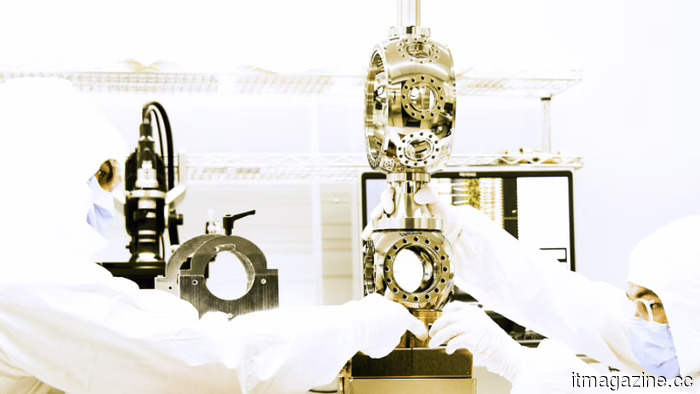 Quantinuum submits plans for a $20 billion IPO, reporting $31 million in revenue, as the Honeywell-backed quantum computing company aims for a listing on Nasdaq.
Quantinuum has submitted paperwork for a Nasdaq IPO, aiming for a valuation exceeding $20 billion. The quantum computing firm, supported by Honeywell, declared revenues of $30.9 million and losses amounting to $192.6 million.
Quantinuum submits plans for a $20 billion IPO, reporting $31 million in revenue, as the Honeywell-backed quantum computing company aims for a listing on Nasdaq.
Quantinuum has submitted paperwork for a Nasdaq IPO, aiming for a valuation exceeding $20 billion. The quantum computing firm, supported by Honeywell, declared revenues of $30.9 million and losses amounting to $192.6 million.
The University of Michigan's $20 million early investment in OpenAI has now escalated to a valuation of $2 billion, as trial documents concerning Musk disclose details about the endowment's wager.
Court documents from the Musk v. Altman trial reveal that the University of Michigan invested $20 million in OpenAI prior to the launch of ChatGPT. This investment now has a projected redemption value of $2 billion.