
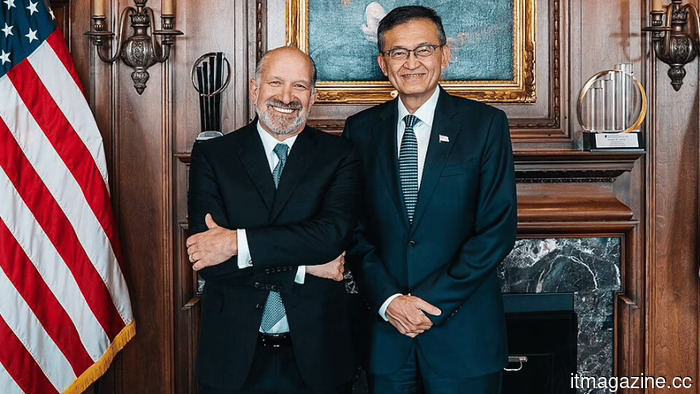
Under Lip-Bu Tan's leadership, Intel's stock has tripled, as relationships with Trump, Musk, and Apple surpass the company's ongoing need for improved manufacturing execution.
**TL;DR** Intel's stock has tripled under Lip-Bu Tan, who has gained favor with Trump, collaborated with Musk, and drawn Apple's attention. The crucial question remains whether these connections will yield the manufacturing success that Intel has struggled to achieve for the past decade. Over a twelve-month period, Intel's stock has tripled, but its CEO has yet to communicate a concrete plan to most employees.
Tan, who took over as CEO in March 2025, has focused his initial fourteen months on forging external partnerships rather than restructuring the internal operations. He has garnered support from Donald Trump, formed a partnership with Elon Musk, intrigued Apple, and made the U.S. government Intel's third-largest shareholder. In April, the stock reached an all-time high, soaring 24% in one day—its best growth since 1987—and saw a 114% increase that month, marking the most successful month in Intel’s 55-year Nasdaq history.
The core issue remains whether these relationships will lead to effective manufacturing execution, which Intel has not managed for a decade. According to Bloomberg, more than a dozen current and former employees have indicated that Tan's specific plans for product and manufacturing improvements have not been broadly communicated. Intel faces fundamental challenges: it needs products that reclaim lost market share and manufacturing capabilities convincing enough for rivals to invest billions for access. Both outcomes are uncertain.
The U.S. government invested $8.9 billion in Intel in August 2025, securing a 9.9% stake at $20.47 per share, which is now valued at approximately $36 billion. This deal, combining CHIPS Act grants with a secure chip program investment, positioned the federal government as a major shareholder following a meeting where Tan successfully transformed a public confrontation with Trump into a partnership, reportedly rallying support from figures like Michael Dell.
The Terafab collaboration with Musk's SpaceX, xAI, and Tesla aims to create a large chip manufacturing complex in Texas, starting with a $55 billion investment and a potential total cost of $119 billion. This agreement emerged from Tan's ongoing conversations with Musk and was unexpected for many leaders at Intel. Tesla plans to utilize Intel's forthcoming 14A manufacturing process, with xAI’s AI5 chip among the initial products intended for the facility.
Apple has initiated discussions with Intel and Samsung to explore producing its main device chips in the U.S., which would be a transformative shift for Intel's foundry business if these talks progress beyond the initial stages reported. Currently, Apple manufactures nearly all its processors at TSMC in Taiwan. Any move toward diversification would represent the most significant endorsement of Intel's manufacturing goals since Tan's appointment.
In his first interview as CEO, Tan acknowledged his external focus, stating, "Intel has the technology, talent, and scale to lead again, but leadership is earned through execution." He aims to finalize a recruitment initiative by the end of June for an internal leadership team he believes can effectively deliver results.
The challenge of execution is measurable. New Street Research indicates that Intel's cost per chip is roughly three times higher than TSMC's, the industry front-runner. Over 40% of that disparity is due to yield—the percentage of usable chips produced per run—where Intel's yield rate stands at about 65%, while TSMC's exceeds 80%. Only 8% of the cost difference is related to higher labor costs in the U.S.
Intel's 18A manufacturing process, crucial for the company's future in foundry services, is improving but still not competitive. Intel is developing its Computex 2026 product lineup around 18A, including Panther Lake mobile chips and 288-core Clearwater Forest server processors, but expected yield rates won't reach industry standards until 2027. The company previously fell short on demand in its last quarter due to insufficient production capacity for a resurgence in data center chip orders.
Naga Chandrasekaran, who has overseen Intel's factory operations for nearly two years after joining from Micron, highlighted a primary goal: regaining Intel's own product teams, which currently outsource some of their key chips to TSMC. However, merely restoring internal demand won’t be enough. He stated, "Intel products alone, even in a wildly successful scenario, cannot fund the capital and fill the fabs to maintain competitive success in today’s silicon business."
This level of candidness contrasts sharply with the years of the previous leadership's optimistic portrayal of the company's decline. Under Pat Gelsinger, Tan's predecessor, the company’s three years of losses and a 33% revenue drop from the peak in 2021 were not framed as dire, according to Chandrasekaran.
The internal culture has normalized schedule slippage, as observed by Kevork Kechichian, who Tan appointed to lead Intel's server chip unit after his career at Qualcomm and Arm. When deadlines slipped, rather than developing recovery plans, teams proposed merely adjusting
Other articles
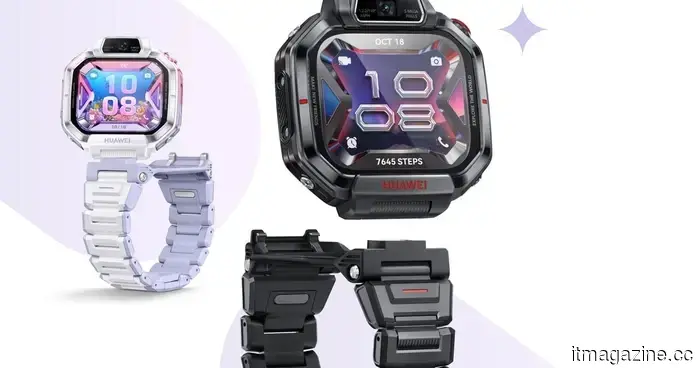 This excessively designed smartwatch features two cameras and can transform into an action camera.
The Huawei Watch Kids X1 Pro features both front and rear cameras, a detachable body resembling an action camera, location tracking, video calling capabilities, and an 850mAh battery.
This excessively designed smartwatch features two cameras and can transform into an action camera.
The Huawei Watch Kids X1 Pro features both front and rear cameras, a detachable body resembling an action camera, location tracking, video calling capabilities, and an 850mAh battery.
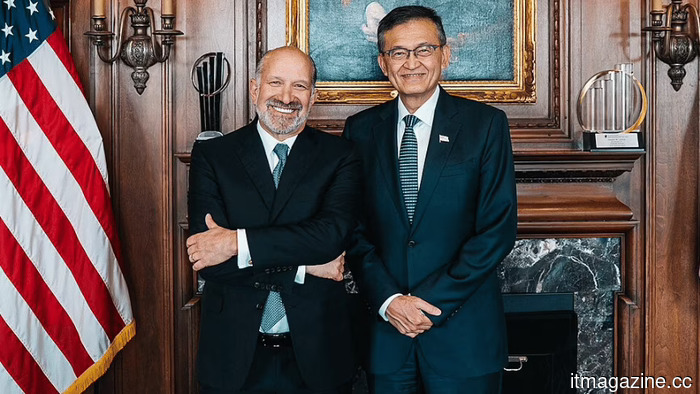 Under Lip-Bu Tan's leadership, Intel's stock has tripled, driven by relationships with Trump, Musk, and Apple, even as the company continues to require improvements in its manufacturing execution.
Under CEO Lip-Bu Tan, Intel's stock has seen a threefold increase, as he has gained the support of Trump, collaborated with Musk on Terafab, and drawn in Apple. However, the factories still trail TSMC.
Under Lip-Bu Tan's leadership, Intel's stock has tripled, driven by relationships with Trump, Musk, and Apple, even as the company continues to require improvements in its manufacturing execution.
Under CEO Lip-Bu Tan, Intel's stock has seen a threefold increase, as he has gained the support of Trump, collaborated with Musk on Terafab, and drawn in Apple. However, the factories still trail TSMC.
 Hugging Face and ClawHub faced compromises involving hundreds of harmful AI models and agent skills as supply chain attacks aimed at AI infrastructure.
Hugging Face has 352,000 issues related to unsafe models. ClawHub's registry includes 341 skills of malicious AI agents. Currently, the AI supply chain is the most appealing target in the realm of software security.
Hugging Face and ClawHub faced compromises involving hundreds of harmful AI models and agent skills as supply chain attacks aimed at AI infrastructure.
Hugging Face has 352,000 issues related to unsafe models. ClawHub's registry includes 341 skills of malicious AI agents. Currently, the AI supply chain is the most appealing target in the realm of software security.
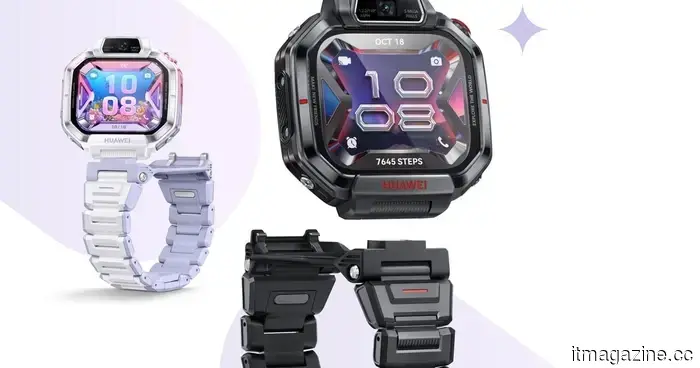 This excessively designed smartwatch features two cameras and transforms into an action camera.
The Huawei Watch Kids X1 Pro features front and rear cameras, a removable body akin to an action camera, location tracking, video calling capabilities, and is equipped with an 850mAh battery.
This excessively designed smartwatch features two cameras and transforms into an action camera.
The Huawei Watch Kids X1 Pro features front and rear cameras, a removable body akin to an action camera, location tracking, video calling capabilities, and is equipped with an 850mAh battery.
 Hugging Face and ClawHub were breached, leading to the infiltration of hundreds of harmful AI models and agent capabilities as supply chain attacks focus on AI infrastructure.
Hugging Face is home to 352,000 issues related to unsafe models. ClawHub's repository includes 341 skills associated with malicious AI agents. The AI supply chain has become the most appealing target in the realm of software security.
Hugging Face and ClawHub were breached, leading to the infiltration of hundreds of harmful AI models and agent capabilities as supply chain attacks focus on AI infrastructure.
Hugging Face is home to 352,000 issues related to unsafe models. ClawHub's repository includes 341 skills associated with malicious AI agents. The AI supply chain has become the most appealing target in the realm of software security.
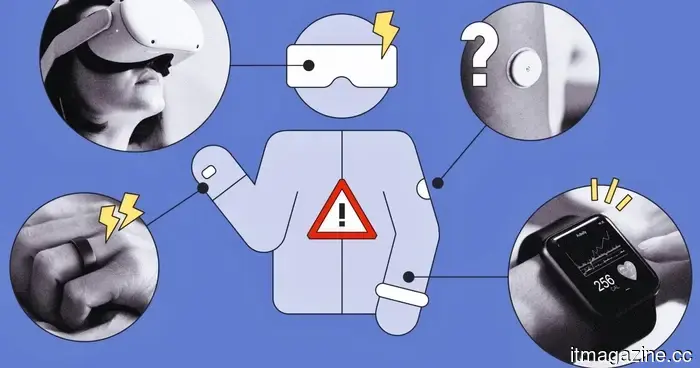 Wearables are not just a danger to privacy. Studies indicate that their hacking poses a threat described as "ransomware for the body."
Wearables are capable of more than just monitoring your steps. Recent studies caution that hackers might take advantage of them to cause physical harm, influence your emotions, or even extort you completely.
Wearables are not just a danger to privacy. Studies indicate that their hacking poses a threat described as "ransomware for the body."
Wearables are capable of more than just monitoring your steps. Recent studies caution that hackers might take advantage of them to cause physical harm, influence your emotions, or even extort you completely.
Under Lip-Bu Tan's leadership, Intel's stock has tripled, as relationships with Trump, Musk, and Apple surpass the company's ongoing need for improved manufacturing execution.
Under CEO Lip-Bu Tan, Intel's stock has increased threefold, with Tan winning the favor of Trump, collaborating with Musk on Terafab, and drawing in Apple. However, the factories still fall short compared to TSMC.