
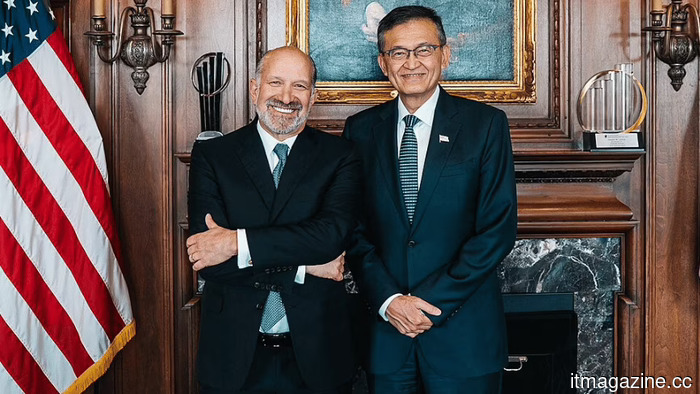
Intel's stock has tripled during Lip-Bu Tan's leadership, as relationships with Trump, Musk, and Apple surpass the company's manufacturing execution, which still requires improvement.
Intel's stock has tripled under the leadership of Lip-Bu Tan, who has garnered support from Trump, collaborated with Musk, and piqued Apple's interest. The critical question remains whether these relationships will translate into the manufacturing success that Intel has been unable to achieve for a decade.
Intel's stock has increased threefold in the past year, yet its CEO has not communicated a clear plan to most employees. Lip-Bu Tan, who took over as CEO in March 2025, has spent his first fourteen months focusing on external relationships rather than restructuring operations within the company. He has gained the favor of Donald Trump, formed a partnership with Elon Musk, attracted interest from Apple, and made the U.S. government Intel's third-largest shareholder. In April, the stock reached an all-time high, rising 24 percent in one day, marking the best performance since 1987. The shares climbed 114 percent that month, the best in Intel's 55 years on the Nasdaq.
The concern is whether these connections will yield the manufacturing results that Intel has failed to produce for a decade. More than a dozen current and former employees informed Bloomberg that Tan has not adequately shared his specific strategies for addressing product and manufacturing issues. Critical challenges persist: Intel needs to develop products that can reclaim market share and establish manufacturing capabilities convincing enough to draw competitors to pay billions for access. Neither of these things is assured.
In August 2025, the U.S. government invested $8.9 billion in Intel, acquiring a 9.9 percent stake at $20.47 per share, which has now appreciated to approximately $36 billion. This agreement, which included CHIPS Act grants and a secure chip program investment, made the federal government a significant shareholder. It followed a White House meeting where Tan shifted a public confrontation with Trump into an agreement, reportedly bringing in figures like Michael Dell as supporters.
The Terafab collaboration with Musk’s SpaceX, xAI, and Tesla aims to create a large chip manufacturing complex in Texas, beginning with a $55 billion investment and potentially costing up to $119 billion. This partnership emerged from Tan's ongoing discussions with Musk and took many of Intel's other leaders by surprise. Tesla intends to utilize Intel’s upcoming 14A manufacturing process, with xAI’s AI5 chip being one of the first products aimed for this facility.
Apple has initiated talks with Intel and Samsung regarding the production of its primary device chips in the U.S., a development that could significantly transform Intel’s foundry business if these early-stage discussions progress. Currently, Apple produces nearly all its processors at TSMC in Taiwan, and any shift would validate Intel’s manufacturing goals since Tan's appointment.
In his inaugural interview as CEO, Tan acknowledged the external focus. “Intel possesses the technology, talent, and scale to lead again, but leadership requires execution,” he stated. He aims to complete a recruitment process for an internal leadership team he trusts by the end of June.
The challenge of execution is measurable. New Street Research indicates that Intel’s cost per chip is around three times higher than that of TSMC, the industry leader. The largest portion of that discrepancy, over 40 percent, concerns yield—the percentage of usable chips produced in each manufacturing run. Intel’s yield rate hovers around 65 percent, while TSMC's exceeds 80 percent. Only 8 percent of the cost differential is due to higher labor costs in the U.S.
Intel’s 18A manufacturing process, crucial for the company’s foundry future, is progressing but not yet competitive. The company is designing its Computex 2026 products around 18A, including Panther Lake mobile chips and 288-core Clearwater Forest server processors, but yields are not expected to meet industry standards until 2027. The last quarter reflected a failure to meet demand, partly due to insufficient production capacity for the upswing in data center chip orders.
Naga Chandrasekaran, who has led Intel's factory division for nearly two years after moving from Micron, stated that one of his primary objectives is to regain Intel’s own product teams, which currently outsource significant chip production to TSMC. However, recapturing internal demand won't suffice alone. “Intel products alone, even in the most successful scenario, cannot fund the capital, fill the fabs, and achieve the scale needed to be competitive in today's silicon business,” he explained.
This level of candidness is rare for a company that had previously presented its declining fortunes in a more optimistic light under former CEO Pat Gelsinger, during which the company endured three years of losses and a 33 percent revenue decrease from its 2021 peak.
The culture at Intel has adapted to allow for schedule delays, as noted by Kevork Kechichian, who Tan appointed to lead Intel's server chip unit after his tenure at Qualcomm and Arm. Kechichian remarked on a cultural shift that accepts deadlines slipping: when teams lagged
Other articles
 Hugging Face and ClawHub faced compromises involving hundreds of harmful AI models and agent skills as supply chain attacks aimed at AI infrastructure.
Hugging Face has 352,000 issues related to unsafe models. ClawHub's registry includes 341 skills of malicious AI agents. Currently, the AI supply chain is the most appealing target in the realm of software security.
Hugging Face and ClawHub faced compromises involving hundreds of harmful AI models and agent skills as supply chain attacks aimed at AI infrastructure.
Hugging Face has 352,000 issues related to unsafe models. ClawHub's registry includes 341 skills of malicious AI agents. Currently, the AI supply chain is the most appealing target in the realm of software security.
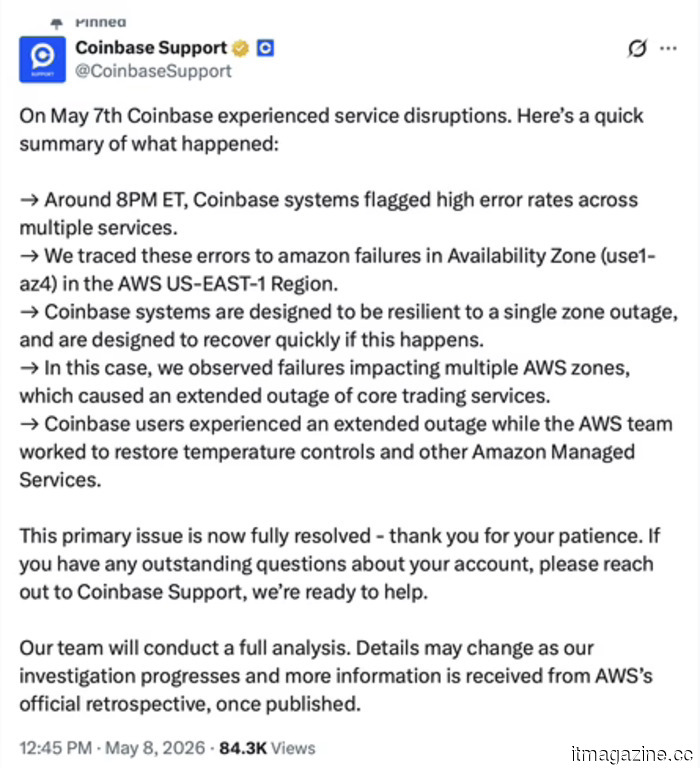 On Monday, Coinbase laid off 700 employees, reported a loss of $394 million on Thursday, and experienced a blackout on Friday due to an overheating data center.
Coinbase was unavailable for seven hours following an overheating incident at an AWS data center in Virginia. This disruption came at the end of a week that included 700 job cuts and a quarterly loss of $394 million.
On Monday, Coinbase laid off 700 employees, reported a loss of $394 million on Thursday, and experienced a blackout on Friday due to an overheating data center.
Coinbase was unavailable for seven hours following an overheating incident at an AWS data center in Virginia. This disruption came at the end of a week that included 700 job cuts and a quarterly loss of $394 million.
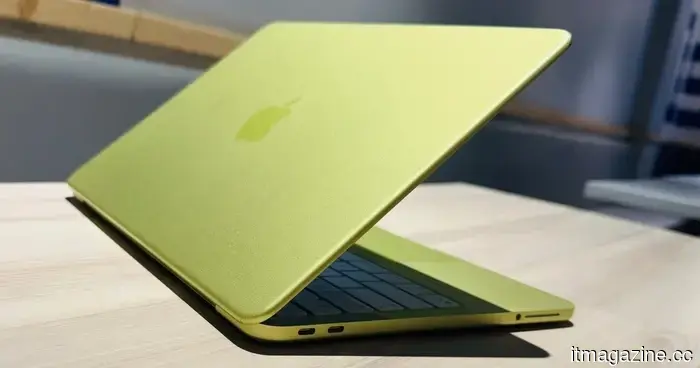 The MacBook Neo was such a tremendous success for Apple that it could soon lead to a price increase.
To increase production to 10 million units, new A18 Pro chips must be sourced from TSMC at full price instead of using binned rejects, while DRAM prices have risen by 57% and 3nm capacity has become constrained.
The MacBook Neo was such a tremendous success for Apple that it could soon lead to a price increase.
To increase production to 10 million units, new A18 Pro chips must be sourced from TSMC at full price instead of using binned rejects, while DRAM prices have risen by 57% and 3nm capacity has become constrained.
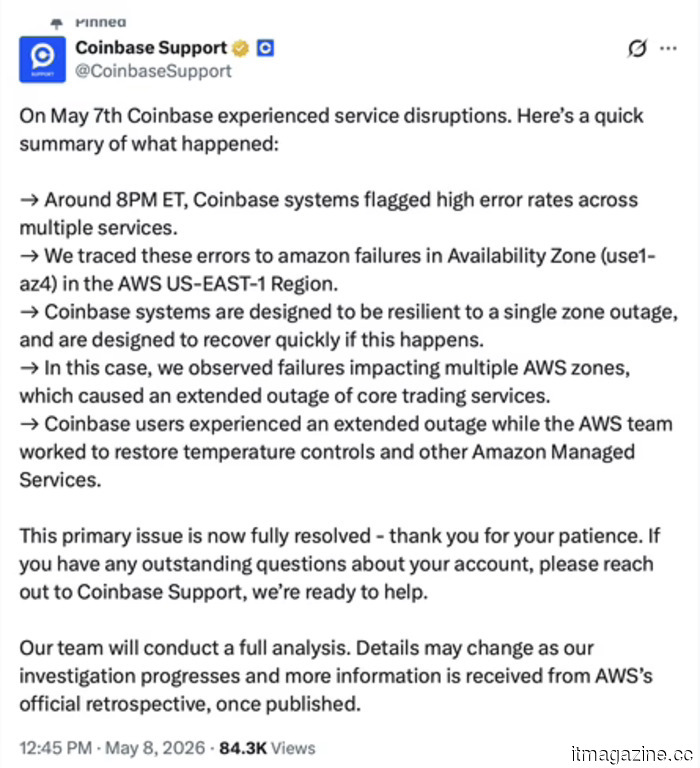 On Monday, Coinbase laid off 700 employees, reported a loss of $394 million on Thursday, and experienced an outage on Friday due to an overheated data center.
Coinbase experienced a seven-hour outage following an overheating incident at an AWS data center in Virginia. This disruption came at the end of a week marked by 700 job cuts and a quarterly loss of $394 million.
On Monday, Coinbase laid off 700 employees, reported a loss of $394 million on Thursday, and experienced an outage on Friday due to an overheated data center.
Coinbase experienced a seven-hour outage following an overheating incident at an AWS data center in Virginia. This disruption came at the end of a week marked by 700 job cuts and a quarterly loss of $394 million.
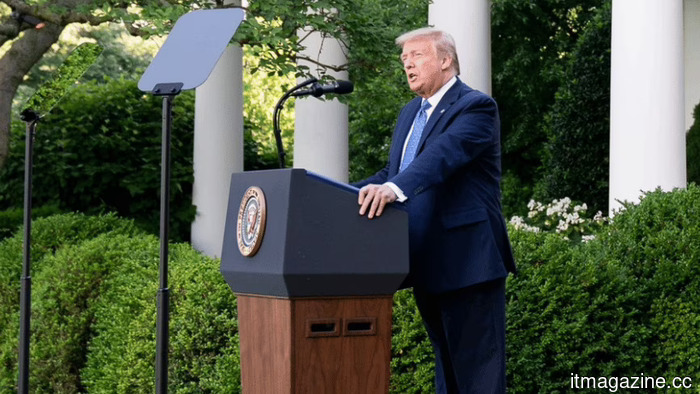 Trump's proposal for H-1B visas would set the minimum salary for entry-level tech positions at around $162,000.
A rule from the Trump administration would increase H-1B prevailing wages by approximately 30% at the entry-level tier, setting the minimum salary for foreign tech workers in San Francisco at $162,000.
Trump's proposal for H-1B visas would set the minimum salary for entry-level tech positions at around $162,000.
A rule from the Trump administration would increase H-1B prevailing wages by approximately 30% at the entry-level tier, setting the minimum salary for foreign tech workers in San Francisco at $162,000.
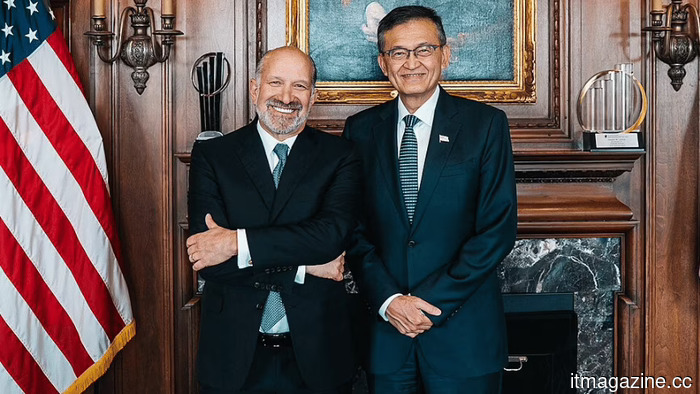 Under Lip-Bu Tan's leadership, Intel's stock has tripled, driven by relationships with Trump, Musk, and Apple, even as the company continues to require improvements in its manufacturing execution.
Under CEO Lip-Bu Tan, Intel's stock has seen a threefold increase, as he has gained the support of Trump, collaborated with Musk on Terafab, and drawn in Apple. However, the factories still trail TSMC.
Under Lip-Bu Tan's leadership, Intel's stock has tripled, driven by relationships with Trump, Musk, and Apple, even as the company continues to require improvements in its manufacturing execution.
Under CEO Lip-Bu Tan, Intel's stock has seen a threefold increase, as he has gained the support of Trump, collaborated with Musk on Terafab, and drawn in Apple. However, the factories still trail TSMC.
Intel's stock has tripled during Lip-Bu Tan's leadership, as relationships with Trump, Musk, and Apple surpass the company's manufacturing execution, which still requires improvement.
Under CEO Lip-Bu Tan, Intel's stock has increased threefold, gaining the approval of Trump, collaborating with Musk on Terafab, and drawing the interest of Apple. However, the factories still fall short compared to TSMC.