
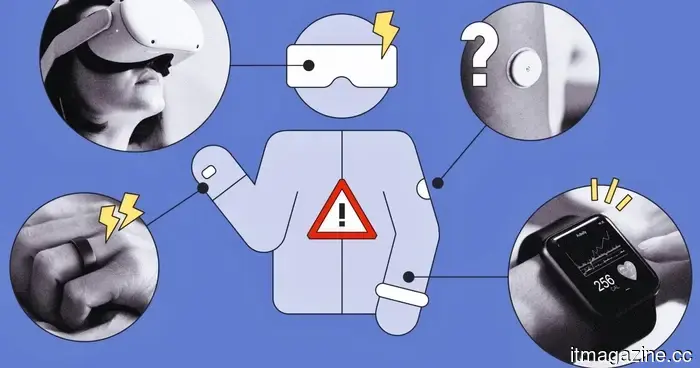
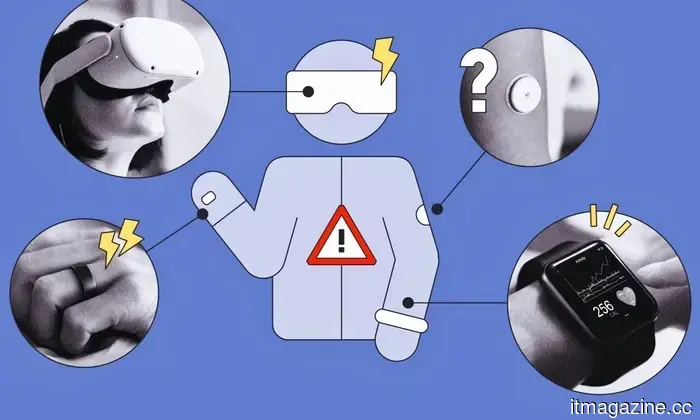
Wearables are not just a danger to privacy. Studies indicate that their hacking poses a threat described as "ransomware for the body."
Forget about stolen passwords. Researchers warn that your wearable devices may be used against you.
Your smartwatch monitors your heart rate, sleep patterns, and various other health metrics. But what if someone unauthorized gains access to this information? Researchers at CISPA have some troubling insights.
Daniel Gerhardt, a doctoral researcher, recently published a paper examining the privacy and security vulnerabilities associated with on-body interaction technologies, including wearables, smart glasses, and smart clothing. His conclusions are concerning.
Could your smart devices endanger you?
The study highlights that the privacy and security issues related to wearable technology should not be underestimated. A wearable device is in close proximity to your body and has access to more data than your smartphone or computer, which raises the potential for harm beyond mere password breaches.
One of the most concerning discoveries is the physical threat. For instance, a smart jacket with heating components could potentially be hacked to inflict burns. There’s also the possibility of devices being used for extortion. One expert in the study referred to this risk as “ransomware for the body,” which is a phrase that should give anyone pause.
Psychological hazards are also a concern. Systems that are immersive or manipulative could inflict stress or force users into undesirable situations. Additionally, it's not just the wearers who are at risk; these devices can gather data from bystanders without their consent.
Is there a solution?
Gerhardt also proposed eight design principles aimed at assisting researchers, designers, and companies in creating safer wearables from the outset. These guidelines include reducing data collection, enhancing user transparency, and strengthening security measures in both hardware and software.
The research was shared at the ACM CHI Conference on Human Factors in Computing Systems, a prominent event in the field of human-computer interaction research.
As wearable technology continues to evolve, ensuring safety now, before these devices become essential, appears to be a wise approach.
Rachit is an experienced tech journalist with over seven years of experience covering the consumer technology sector.
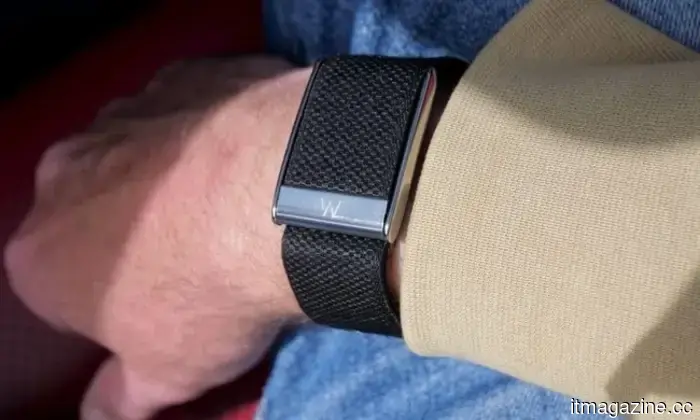
Whoop’s answer to Fitbit Air and Google Health is real doctors, not merely an AI chatbot.
In the competition for health data ownership, Google opted for AI, while Whoop chose to rely on real physicians. This pivotal choice may influence which fitness tracker serious health consumers prefer in 2026 and beyond.
Recently, Google introduced the Fitbit Air as a direct competitor to the Whoop screenless fitness band, rebranded the Fitbit app as Google Health, and launched an AI coach powered by Gemini. Just one day later, Whoop countered with on-demand video consultations with licensed healthcare professionals for US users.
The differences are striking. While Google is investing in AI as a general health advisor, Whoop is emphasizing licensed doctors, arguing that they can better serve fitness-oriented users (via CNBC).
Read more
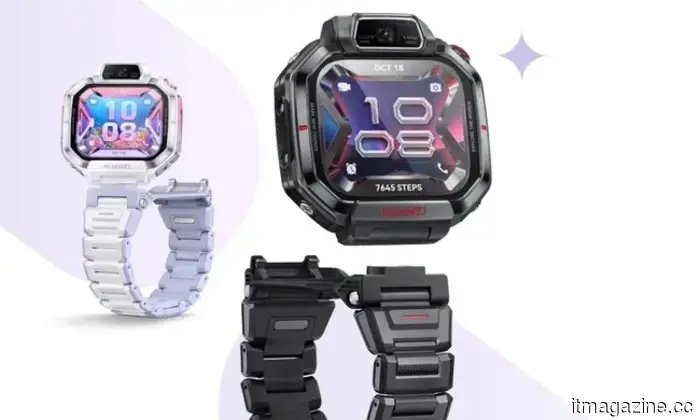
This over-engineered smartwatch boasts two cameras and can transform into an action camera.
Huawei’s new smartwatch for children resembles a compact action camera in disguise.
Huawei’s latest offering, the Watch Kids X1 Pro, is a wearable designed specifically for kids, featuring a detachable design, dual cameras, location tracking, video calling, parental controls, and various camera features that make it feel more like a small action cam attached to a wrist.
How this smartwatch aims to function as a camera.
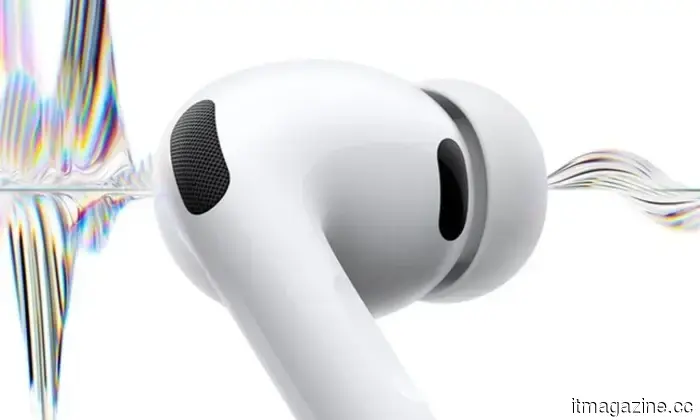
Apple’s upcoming AirPods may give Siri vision, and they are already in testing.
Camera-equipped AirPods could be the key to rejuvenating Siri’s reputation.
Artificial intelligence is still an interaction that most people must actively engage in. You open an app, enter a command, take a picture, or ask a question. However, Apple’s next major upgrade for AirPods could change that. According to Bloomberg’s Mark Gurman, the company is in the final stages of development on camera-enabled earbuds that could integrate visual AI into a device many people use every day.
How near are these AI AirPods to being released?
Read more.

Other articles
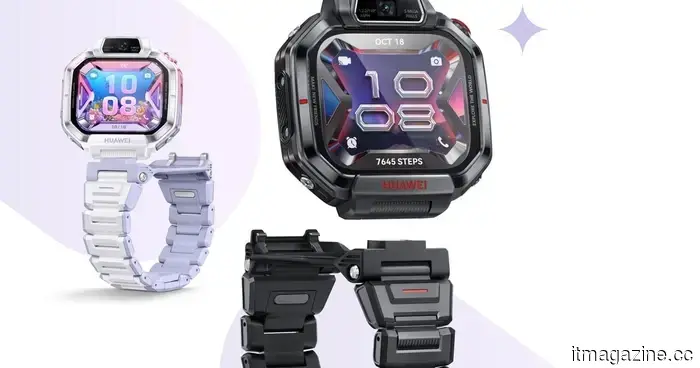 This excessively designed smartwatch features two cameras and transforms into an action camera.
The Huawei Watch Kids X1 Pro features front and rear cameras, a removable body akin to an action camera, location tracking, video calling capabilities, and is equipped with an 850mAh battery.
This excessively designed smartwatch features two cameras and transforms into an action camera.
The Huawei Watch Kids X1 Pro features front and rear cameras, a removable body akin to an action camera, location tracking, video calling capabilities, and is equipped with an 850mAh battery.
 Intel's stock has tripled under Lip-Bu Tan, as relationships with Trump, Musk, and Apple surpass the company's current manufacturing execution needs.
Under CEO Lip-Bu Tan, Intel's stock has increased threefold, gaining the approval of Trump, collaborating with Musk on Terafab, and drawing in Apple. However, the factories continue to fall short compared to TSMC.
Intel's stock has tripled under Lip-Bu Tan, as relationships with Trump, Musk, and Apple surpass the company's current manufacturing execution needs.
Under CEO Lip-Bu Tan, Intel's stock has increased threefold, gaining the approval of Trump, collaborating with Musk on Terafab, and drawing in Apple. However, the factories continue to fall short compared to TSMC.
 On Monday, Coinbase laid off 700 employees, reported a loss of $394 million on Thursday, and experienced a shutdown on Friday due to an overheating data center.
Coinbase experienced a seven-hour outage following an overheating incident at an AWS data center in Virginia. This interruption came at the end of a week that included 700 job cuts and a quarterly loss of $394 million.
On Monday, Coinbase laid off 700 employees, reported a loss of $394 million on Thursday, and experienced a shutdown on Friday due to an overheating data center.
Coinbase experienced a seven-hour outage following an overheating incident at an AWS data center in Virginia. This interruption came at the end of a week that included 700 job cuts and a quarterly loss of $394 million.
 Hugging Face and ClawHub were breached, resulting in the compromise of numerous malicious AI models and agent capabilities as supply chain attacks focus on AI infrastructure.
Hugging Face has 352,000 issues related to unsafe models. ClawHub's repository includes 341 skills for malicious AI agents. Currently, the AI supply chain is the most appealing target in software security.
Hugging Face and ClawHub were breached, resulting in the compromise of numerous malicious AI models and agent capabilities as supply chain attacks focus on AI infrastructure.
Hugging Face has 352,000 issues related to unsafe models. ClawHub's repository includes 341 skills for malicious AI agents. Currently, the AI supply chain is the most appealing target in software security.
 Spotify's AI DJ now communicates in French, German, Italian, and Brazilian Portuguese.
Spotify has recently announced an expansion of its premium AI DJ feature, aimed at improving the experience for users in Europe and Brazil.
Spotify's AI DJ now communicates in French, German, Italian, and Brazilian Portuguese.
Spotify has recently announced an expansion of its premium AI DJ feature, aimed at improving the experience for users in Europe and Brazil.
 AWS experiences an overheating outage in northern Virginia, causing disruptions for Coinbase.
A shortage in the cooling system at a particular AWS data center in northern Virginia caused service interruptions on Thursday.
AWS experiences an overheating outage in northern Virginia, causing disruptions for Coinbase.
A shortage in the cooling system at a particular AWS data center in northern Virginia caused service interruptions on Thursday.
Wearables are not just a danger to privacy. Studies indicate that their hacking poses a threat described as "ransomware for the body."
Wearables are capable of more than just monitoring your steps. Recent studies caution that hackers might take advantage of them to cause physical harm, influence your emotions, or even extort you completely.