
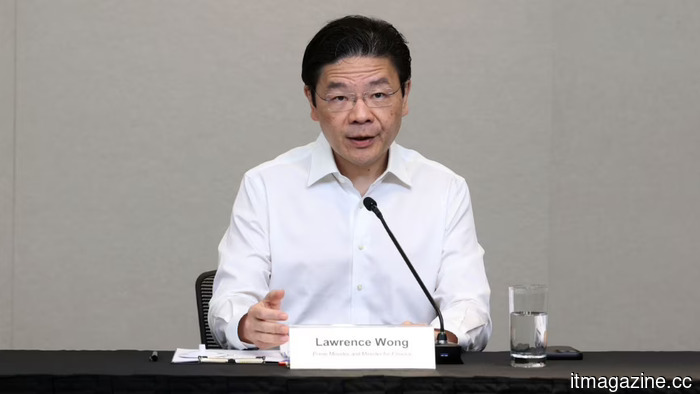
Lawrence Wong stands firm: AI will not lead to jobless growth in Singapore.
Singapore's parliament has asserted that the nation will not experience jobless growth as artificial intelligence transforms the economy, according to a report by Bloomberg referencing Channel NewsAsia.
This declaration reiterates Prime Minister Lawrence Wong's stance from February during the parliamentary discussion on the 2026 Budget and marks the clearest commitment made by a major Asian economy regarding AI's impact on employment thus far.
Wong's messaging has remained consistent. In his speech on February 26, he informed Members of Parliament (MPs) that the government aims to utilize AI to enhance the economy while ensuring that such growth leads to quality jobs and improved wages. “These concerns are tangible and we must and will address them seriously,” he stated while responding to inquiries from opposition and backbenchers regarding worker fears related to AI integration.
The critical issue is whether Singapore can fulfill this pledge. Wong highlighted three main concerns raised by MPs: the possibility that increased AI utilization might lead to diminished employer investment in employee training, that older workers returning to the workforce could face significant challenges, and that entry-level professional and technical positions might be diminished before any structural solutions are implemented. He emphasized that the government would take proactive measures to avoid these outcomes rather than react after they occur.
Presently, the labor market indicators are positive. The percentage of permanent employees in Singapore has reached an all-time high of nearly 91%, with growth across most sectors. Job vacancies exceed the number of job seekers, with over 40% of open positions being entry-level roles for professionals, managers, executives, and technicians. This backdrop makes the pledge of no jobless growth more credible. However, the more challenging question is whether this trend can be maintained as AI application increases.
Wong has complemented his verbal commitment with concrete funding initiatives. The Champions of AI program will offer customized support, including enterprise transformation and workforce training, for companies aiming for extensive AI-driven business changes. Four national AI missions have been established in advanced manufacturing, connectivity and logistics, finance, and healthcare, with a National AI Council overseeing the national development efforts.
The labor movement has also made its own policy requests. Labor MPs associated with the National Trades Union Congress are advocating for AI-ready career pathways, enhanced job-transition support for dislocated workers, and specific initiatives to ensure that AI-enhanced workplaces remain inclusive for older and lower-skilled employees. Historically, the NTUC has worked closely with the ruling People’s Action Party, and its perspective on the AI issue strengthens rather than challenges Wong’s position.
The broader economic environment is also pertinent. Wong's budget address in February was situated within a narrative of “a more dangerous world,” highlighting global trade fragmentation, US-China business tensions, and the broader uncertainties that AI is creating in white-collar job markets across developed nations.
In his speech on May Day, he continued to frame the AI-employment issue as a key element of his government's medium-term policy strategy.
However, the pledge does not clarify what constitutes “jobless growth” or what would trigger government intervention if such a trend occurs. The technical definition is crucial because Singapore's labor market is notably reactive to government-led adjustments, with active labor market programs, employer subsidies, and migration policies available as tools.
Wong's commitment essentially guarantees that these tools will be proactively utilized if the AI integration process begins to generate the structural patterns that the pledge aims to avoid.
The credibility of this commitment will be empirically tested. If Singapore maintains its overall employment rate, real wage growth, and entry-level hiring volumes throughout the upcoming years of AI advancement, the no-jobless-growth promise will appear insightful.
Conversely, if these metrics do not hold, Wong's government will confront the political challenge of whether the policy framework is agile enough to fulfill the commitment in reality. The parliamentary reaffirmation on Wednesday suggests the government views this issue as a long-term commitment rather than a mere rhetorical stance.
Other articles
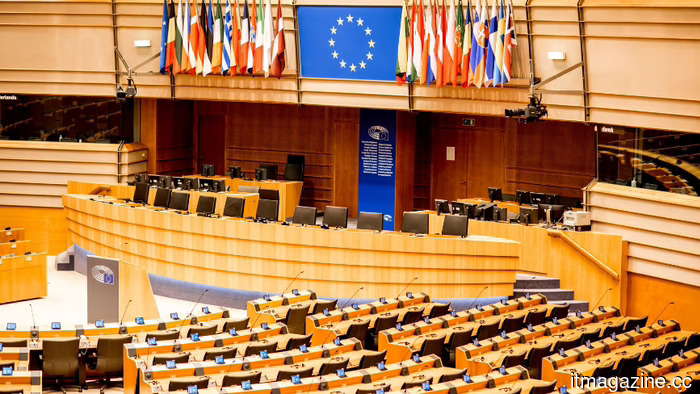 Brussels reaches an agreement to streamline the AI Act and ban nudification applications.
The Parliament and Council have reached an agreement to extend the EU AI Act's high-risk deadline to December 2027 and to prohibit AI nudification tools, resolving a prolonged stalemate.
Brussels reaches an agreement to streamline the AI Act and ban nudification applications.
The Parliament and Council have reached an agreement to extend the EU AI Act's high-risk deadline to December 2027 and to prohibit AI nudification tools, resolving a prolonged stalemate.
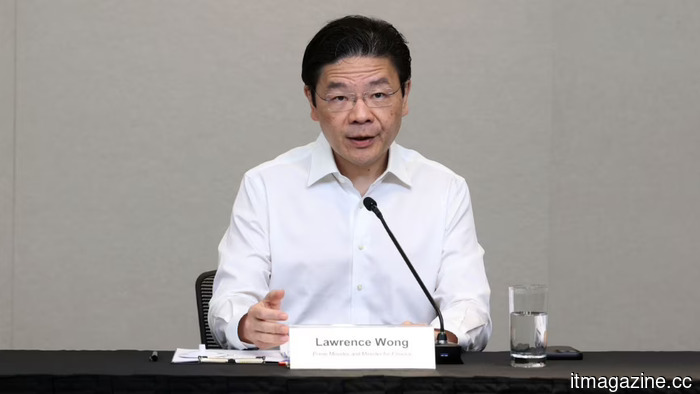 Lawrence Wong remains firm: AI will not lead to jobless growth in Singapore.
Singapore's parliament has reconfirmed Prime Minister Lawrence Wong's commitment made in February, stating that the nation will not undergo jobless growth.
Moonshot AI’s valuation of $20 billion marks one of the quickest funding paths in China's AI sector.
Moonshot AI, the Beijing-based developer of the Kimi chatbot, is finalizing a $2 billion funding round with a post-money valuation exceeding $20 billion.
Lawrence Wong remains firm: AI will not lead to jobless growth in Singapore.
Singapore's parliament has reconfirmed Prime Minister Lawrence Wong's commitment made in February, stating that the nation will not undergo jobless growth.
Moonshot AI’s valuation of $20 billion marks one of the quickest funding paths in China's AI sector.
Moonshot AI, the Beijing-based developer of the Kimi chatbot, is finalizing a $2 billion funding round with a post-money valuation exceeding $20 billion.
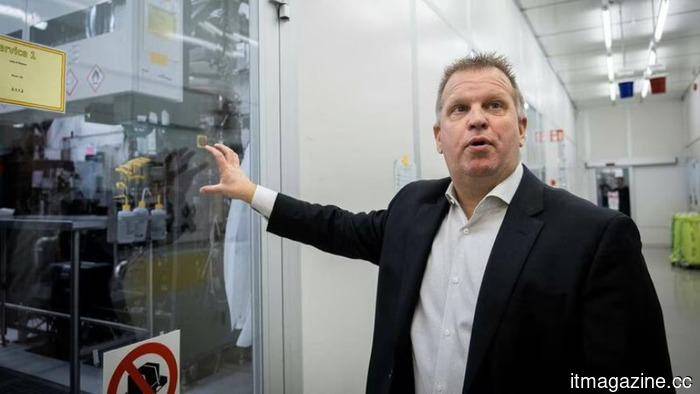 Pure-play MEMS foundry Silex sets the price for its IPO in Stockholm.
Silex Microsystems made a strong debut on Nasdaq Stockholm on 7 May 2026, opening significantly higher after being priced at SEK 81 per share.
Pure-play MEMS foundry Silex sets the price for its IPO in Stockholm.
Silex Microsystems made a strong debut on Nasdaq Stockholm on 7 May 2026, opening significantly higher after being priced at SEK 81 per share.
 Quantum Motion secures $160 million in the EU's inaugural significant late-stage investment.
The new Scaleup Europe Fund of the European Union has spearheaded a $160 million funding round for Quantum Motion, a UK-based company specializing in silicon-CMOS spin-qubits.
Quantum Motion secures $160 million in the EU's inaugural significant late-stage investment.
The new Scaleup Europe Fund of the European Union has spearheaded a $160 million funding round for Quantum Motion, a UK-based company specializing in silicon-CMOS spin-qubits.
 Skyroot is hailed as India’s first space-tech unicorn, just before the Vikram-1 launch scheduled for June.
Skyroot Aerospace has completed a funding round that reached unicorn valuation, supported by funds managed by GIC and BlackRock, in anticipation of the scheduled launch of Vikram-1 in June.
Skyroot is hailed as India’s first space-tech unicorn, just before the Vikram-1 launch scheduled for June.
Skyroot Aerospace has completed a funding round that reached unicorn valuation, supported by funds managed by GIC and BlackRock, in anticipation of the scheduled launch of Vikram-1 in June.
Lawrence Wong stands firm: AI will not lead to jobless growth in Singapore.
Singapore's parliament has reiterated Prime Minister Lawrence Wong's commitment made in February that the nation will not face jobless growth.