
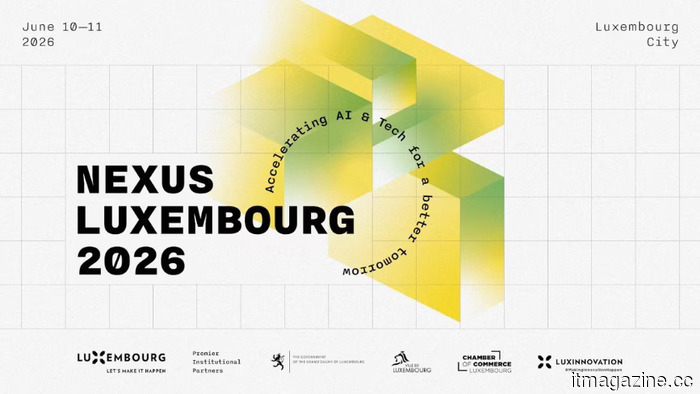
Why Nexus Luxembourg has established itself as a mainstay in Europe's AI agenda.
On 10–11 June, the Grand Duchy will host its third flagship tech summit, just weeks before the most significant provisions of the EU AI Act come into effect. Here’s an overview of what this event has evolved into and why it holds particular importance this year.
Luxembourg, with a population smaller than that of Manchester and a significant role in European finance, has been quietly establishing itself as a credible hub for technology over the past few years. The nation’s digital sovereignty strategy aims to enhance its data, AI, and quantum capabilities by 2030. Currently, it is home to more than 810 active startups, with over 240 integrating AI as a fundamental component.
This is supported by the MeluXina supercomputer and Tier IV data centres. The central public moment in this narrative occurs in June, for the third consecutive year.
On 10 and 11 June 2026, Nexus Luxembourg will return to Luxexpo The Box for its third session, a two-day summit that has quickly become one of the most anticipated AI and tech events in Europe. Organized by The Dots and Paperjam, this edition will span 13,500 square meters, feature five conference stages, and include over 150 speakers, with expectations of more than 10,000 attendees from over 50 countries.
This year’s edition is designed as a “4-in-1” experience with four curated tracks running simultaneously instead of one sprawling agenda. The Intelligence Forum serves as the conference's core, focusing on applied AI, autonomous systems, cybersecurity, sovereignty, and productivity tools across various industries. The Fintech Sphere brings together stakeholders from financial services, founders, and regulators to discuss the future of European finance, a suitable fit for Luxembourg, where fintech is a vital economic pillar.
The Launchpad Arena will host a startup competition, while the fourth track, Luxembourg Makes It Happen, will be centrally located at the venue, where institutions, EU policymakers, national champions, and keynote speakers will gather.
This structure is intentional. It mirrors a trend seen in more successful European tech events: an unwieldy unconference no longer attracts the attention of senior decision-makers, who tend to prefer structured sessions with the right participants. Nexus Luxembourg aims to position itself within that framework.
The centerpiece of the Launchpad Arena is the Nexus Luxembourg Awards. This year, 250 startups and scale-ups have been selected across 10 categories to compete live on stage for a grand prize of €100,000. The prize comprises €25,000 in cash and €75,000 in high-quality business services, such as workspace, consultancy, and media exposure, signaling Luxembourg’s ambition to embed winners within the local ecosystem rather than merely providing a one-time financial boost.
The 10 categories reflect current European tech investment concentrations: cybersecurity, fintech and digital finance, govtech and digital society, green and climate tech, healthtech and biotech, Industry 4.0, smart mobility and autonomous driving, space tech, web3 and digital assets, and data & AI. The focus on space particularly highlights Luxembourg’s historical positioning as a serious player in Europe’s space economy.
Despite its small size, Luxembourg significantly impacts tech. The country’s R&D grants, covering up to 80% of qualifying expenses, an English-speaking workforce, and proximity to Brussels are all attractive factors. Earlier successes like Talkwalker, OCSiAI, and JobToday have demonstrated that the ecosystem can produce globally relevant companies, but achieving scale and consistency remains a challenge.
Nexus Luxembourg serves as a key lever in this pursuit and acts as a counterpart to the broader European ambition for technological self-determination and digital sovereignty. Luxembourg’s national strategy directly aligns with this movement, prioritizing investments in data, AI, and quantum infrastructure.
The “Luxembourg Makes It Happen” track at the summit serves as a curated showcase of this strategy.
Attendees can anticipate a diverse range of topics from the 150-plus speaker program, including cybersecurity, data sovereignty, fintech, govtech, green tech, space tech, Industry 4.0, smart mobility, and healthtech. The final list of speakers is still being finalized, but it will likely feature a mix of European policymakers, successful business founders, and a select few international voices for added perspective.
Luxexpo The Box is well-suited for this format, offering five stages, 13,500 square meters of exhibition space, and a compact layout in the city of Luxembourg that facilitates easy movement between sessions and improved networking opportunities.
This year’s summit is particularly significant due to its timing, as it takes place just weeks before the EU AI Act’s major implementation deadline. Luxembourg’s startup ecosystem has surpassed 800 active companies, with the subset of those using AI having doubled since 2020. The MeluXina supercomputer has entered its second generation, and the Grand Duchy’s national strategy positions it as a credible sovereign alternative to dependence on US tech giants. All of
Other articles
 Scale AI secures a $500 million contract with the Pentagon, five times larger than its previous agreement.
Scale AI has secured a $500 million contract from the Chief Digital and Artificial Intelligence Office of the Pentagon, marking a fivefold increase in the company's current contract.
Scale AI secures a $500 million contract with the Pentagon, five times larger than its previous agreement.
Scale AI has secured a $500 million contract from the Chief Digital and Artificial Intelligence Office of the Pentagon, marking a fivefold increase in the company's current contract.
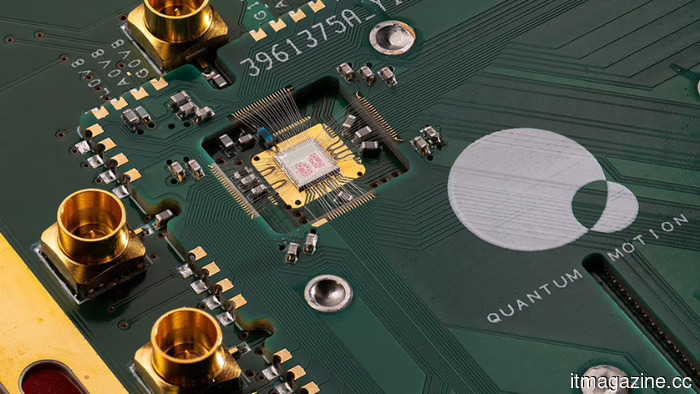 Quantum Motion secures $160 million in the EU's initial significant late-stage investment.
The new Scaleup Europe Fund of the European Union has spearheaded a $160 million investment round in Quantum Motion, a UK-based company specializing in silicon-CMOS spin-qubits.
Moonshot AI’s $20 billion valuation confirms it as one of the fastest-growing AI funding journeys in China.
Moonshot AI, the Beijing-based creator of the Kimi chatbot, is concluding a $2 billion funding round with a post-money valuation exceeding $20 billion.
Quantum Motion secures $160 million in the EU's initial significant late-stage investment.
The new Scaleup Europe Fund of the European Union has spearheaded a $160 million investment round in Quantum Motion, a UK-based company specializing in silicon-CMOS spin-qubits.
Moonshot AI’s $20 billion valuation confirms it as one of the fastest-growing AI funding journeys in China.
Moonshot AI, the Beijing-based creator of the Kimi chatbot, is concluding a $2 billion funding round with a post-money valuation exceeding $20 billion.
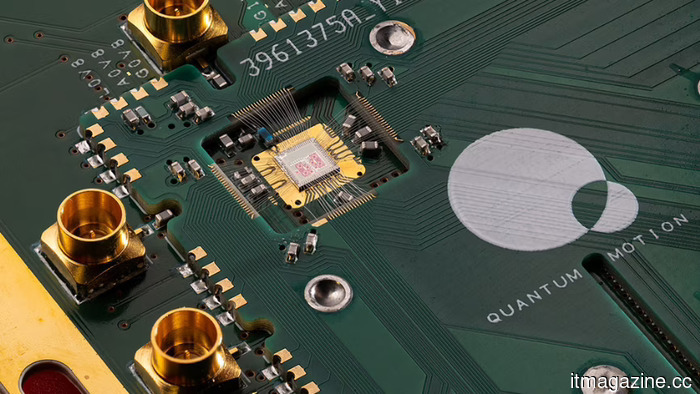 Quantum Motion secures $160 million in the EU's initial significant late-stage investment.
The European Union's newly established Scaleup Europe Fund has directed a $160 million investment into Quantum Motion, a UK-based company specializing in silicon-CMOS spin-qubit technology.
Quantum Motion secures $160 million in the EU's initial significant late-stage investment.
The European Union's newly established Scaleup Europe Fund has directed a $160 million investment into Quantum Motion, a UK-based company specializing in silicon-CMOS spin-qubit technology.
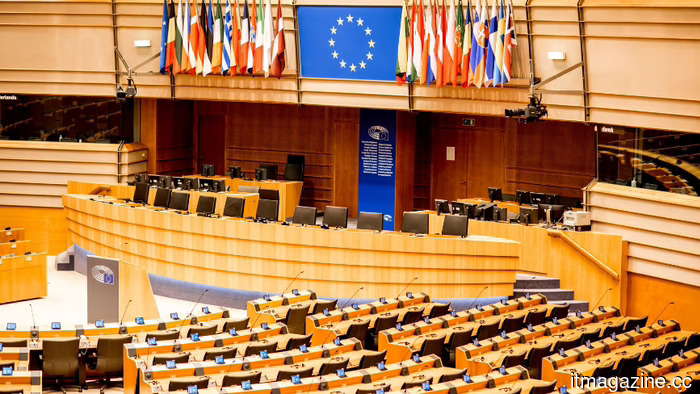 Brussels reaches an agreement to streamline the AI Act and ban nudification applications.
The Parliament and Council have reached an agreement to extend the EU AI Act's high-risk deadline to December 2027 and to prohibit AI nudification tools, resolving a prolonged stalemate.
Moonshot AI’s valuation of $20 billion marks one of the quickest funding paths in China's AI sector.
Moonshot AI, the Beijing-based developer of the Kimi chatbot, is finalizing a $2 billion funding round with a post-money valuation exceeding $20 billion.
Brussels reaches an agreement to streamline the AI Act and ban nudification applications.
The Parliament and Council have reached an agreement to extend the EU AI Act's high-risk deadline to December 2027 and to prohibit AI nudification tools, resolving a prolonged stalemate.
Moonshot AI’s valuation of $20 billion marks one of the quickest funding paths in China's AI sector.
Moonshot AI, the Beijing-based developer of the Kimi chatbot, is finalizing a $2 billion funding round with a post-money valuation exceeding $20 billion.
Why Nexus Luxembourg has established itself as a mainstay in Europe's AI agenda.
Nexus Luxembourg will take place from 10-11 June 2026, featuring over 150 speakers, 250 competing startups, and a grand prize of €100,000.