
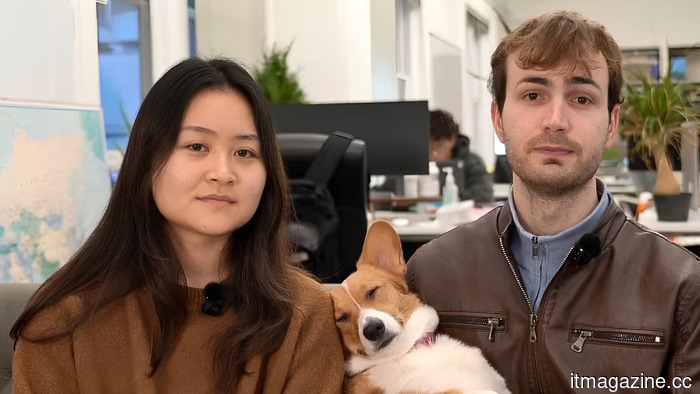
In just four months, Corgi has reached unicorn status, growing from $630 million to $1.3 billion.
The AI-native insurance carrier backed by Y Combinator completed its Series A in January with a valuation of $630 million. The Series B round, which amounts to double this figure, will facilitate the company's expansion from startup insurance into the trucking sector, where it claims that quoting and risk modeling can be similarly optimized.
Corgi, designed for startups and supported by Y Combinator, secured a $160 million Series B round at a $1.3 billion valuation, with TCV leading the investment. This funding round took place about four months after the company combined its initial seed funding and Series A into a single $108 million raise, involving investors like Y Combinator, Kindred Ventures, Contrary, Oliver Jung, Glade Brook Capital Partners, Seven Stars, and Leblon Capital.
The rapid pace of these developments is particularly notable. The four-month gap between the Series A and the Series B, which granted Corgi unicorn status, is exceptional even by the standards of today's AI startups. The January 2026 funding round merged previously undisclosed seed funding with Series A, contributing to the total.
The announcement also confirmed that Corgi received regulatory approval for what it describes as the first comprehensive insurance carrier designed for startups. What distinguishes Corgi from many insurtech firms is its full-stack approach. The company writes its own policies and manages its own risk instead of operating merely as a broker for established insurers, utilizing an AI underwriting layer to significantly reduce the quoting time from days to mere minutes.
On its website, the company presents its service as “Startup Insurance, Quoted in Minutes.” The Series B funding will support the launch of a new vertical; Corgi is branching out from its foundational startup-insurance market into trucking. It asserts that it can leverage the same AI-driven quoting and adaptive risk modeling that characterized its initial offering. The expectation is that the underwriting framework developed for startup risk profiles will align more effectively with trucking compared to traditional insurance systems.
The company's founders, CEO Nico Laqua and COO Emily Yuan, lead their respective areas of expertise. Yuan, previously a product manager at OpenAI, manages operations and product development, while Laqua, with a background in fintech and underwriting, steers the company’s commercial growth. Corgi's approach presents a structural challenge to the broker-centric incumbents that currently lead the small-business and specialty insurance markets.
Corgi's valuation trajectory resembles the pattern seen in 2026 among AI-infrastructure-related companies, characterized by a blend of speed and regulatory presence. Although the company’s initial customer base is primarily composed of early-stage tech enterprises, its underlying carrier infrastructure is broadly licensed. Trucking marks the first officially announced vertical expansion, with indications of further verticals to come.
TCV, leading the Series B round, is among the larger growth-stage technology investors based in the US. The initial group of investors was predominantly focused on AI and fintech, and the arrival of a generalist growth-stage investor in Series B shifts the focus of the cap table. Details regarding terms beyond the headline valuation have not been revealed.
What is evident from the announcement is that Corgi has accelerated its commercial timeline beyond what its original fundraising strategy had forecasted. The Series B represents a significant increase in both capital and growth aspirations, aligning with Corgi's identity as an AI-native insurance carrier rather than merely an insurtech broker. The next milestone will be the underwriting performance of the trucking pilot and whether the AI-driven quoting in minutes can hold up against the operational challenges of a market where incumbent carriers have been slow to innovate.
Other articles
 Why Nexus Luxembourg has established itself as a mainstay in Europe's AI agenda.
Nexus Luxembourg will take place from 10-11 June 2026, featuring over 150 speakers, 250 competing startups, and a grand prize of €100,000.
Why Nexus Luxembourg has established itself as a mainstay in Europe's AI agenda.
Nexus Luxembourg will take place from 10-11 June 2026, featuring over 150 speakers, 250 competing startups, and a grand prize of €100,000.
 Amazon steps back from the grocery market in Singapore and focuses on cross-border operations instead.
Amazon will discontinue Amazon Fresh and local fulfillment in Singapore on July 6, 2026, resulting in a limited number of layoffs.
Amazon steps back from the grocery market in Singapore and focuses on cross-border operations instead.
Amazon will discontinue Amazon Fresh and local fulfillment in Singapore on July 6, 2026, resulting in a limited number of layoffs.
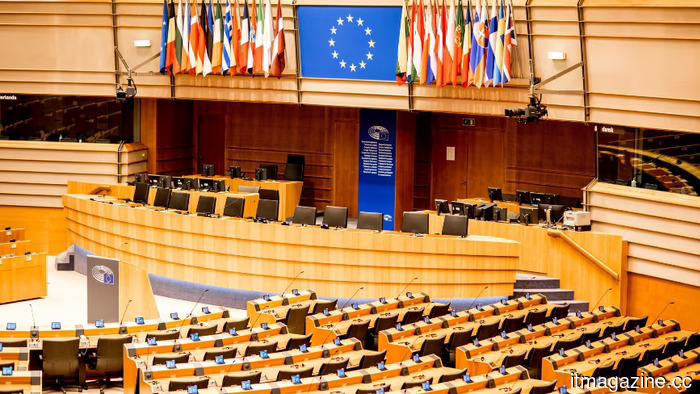 Brussels reaches an agreement to streamline the AI Act and prohibit nudification applications.
Parliament and the Council have reached an agreement to extend the deadline for high-risk provisions of the EU AI Act to December 2027 and to prohibit AI nudification tools, resolving a prolonged stalemate.
Brussels reaches an agreement to streamline the AI Act and prohibit nudification applications.
Parliament and the Council have reached an agreement to extend the deadline for high-risk provisions of the EU AI Act to December 2027 and to prohibit AI nudification tools, resolving a prolonged stalemate.
 Scale AI secures a $500 million contract with the Pentagon, five times larger than its previous agreement.
Scale AI has secured a $500 million contract from the Chief Digital and Artificial Intelligence Office of the Pentagon, marking a fivefold increase in the company's current contract.
Scale AI secures a $500 million contract with the Pentagon, five times larger than its previous agreement.
Scale AI has secured a $500 million contract from the Chief Digital and Artificial Intelligence Office of the Pentagon, marking a fivefold increase in the company's current contract.
 Why Nexus Luxembourg has established itself as a staple in Europe’s AI calendar.
Nexus Luxembourg will take place from June 10 to 11, 2026, featuring over 150 speakers, 250 competing startups, and a grand prize of €100,000.
Why Nexus Luxembourg has established itself as a staple in Europe’s AI calendar.
Nexus Luxembourg will take place from June 10 to 11, 2026, featuring over 150 speakers, 250 competing startups, and a grand prize of €100,000.
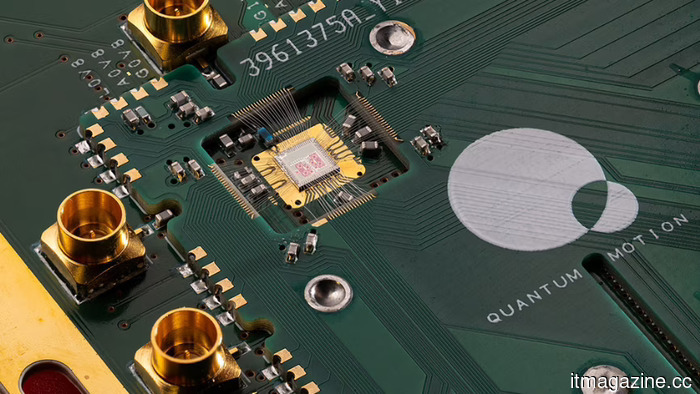 Quantum Motion secures $160 million in the EU's inaugural significant late-stage investment.
The new Scaleup Europe Fund of the European Union has spearheaded a $160 million funding round for Quantum Motion, a UK-based company specializing in silicon-CMOS spin-qubits.
Quantum Motion secures $160 million in the EU's inaugural significant late-stage investment.
The new Scaleup Europe Fund of the European Union has spearheaded a $160 million funding round for Quantum Motion, a UK-based company specializing in silicon-CMOS spin-qubits.
In just four months, Corgi has reached unicorn status, growing from $630 million to $1.3 billion.
Corgi, the AI-native insurance carrier supported by Y Combinator, has secured $160 million in a Series B round, reaching a valuation of $1.3 billion, just four months after its Series A round, which was closed at $630 million.