
A surprising study caused me to reconsider my approach to using AI, and you might want to do the same.
I’ve always viewed myself as a light user of AI. I don’t rely on ChatGPT for writing my emails or crafting narratives. Primarily, I use it to quickly look up information or to recall something that I can't quite remember. This seemed like a responsible way to engage with technology. As a journalist, I understand the hallucination issues associated with AI and the "burden of truth verification" that comes with utilizing an AI assistant. However, a recent study has caused me to reconsider the limited benefits I derive from AI tools like Google’s Gemini for everyday tasks.
The findings are difficult to overlook.
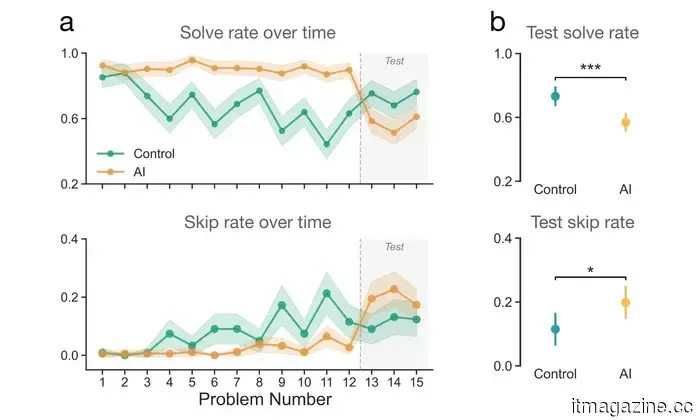
The research, which involved three separate randomized experiments focusing on math and reading comprehension, revealed results that should make any AI user reflect. After just ten minutes of problem-solving with the assistance of AI, participants who subsequently lost access to the AI performed worse and gave up more often than those who had never engaged with it at all. This happened not after prolonged reliance, but rather after a mere ten minutes.
arXiv
The fact that these effects were observed in both math and reading comprehension is noteworthy, as these represent fundamentally different cognitive skills. This indicates that the results aren’t just an anomaly pertaining to a specific type of task but are instead a broader outcome of our interaction with these tools. Yet, what stood out most was that it wasn’t the AI that caused the negative impact; it was the way in which people were utilizing it.
On any given day, I might have brushed this study off lightly, given the fluctuating nature of research into AI’s advantages and disadvantages. However, this particular study comes from respected institutions such as Carnegie Mellon University, University of Oxford, the Massachusetts Institute of Technology, and the University of California, Los Angeles.
How you utilize AI is more important than the frequency of its use.
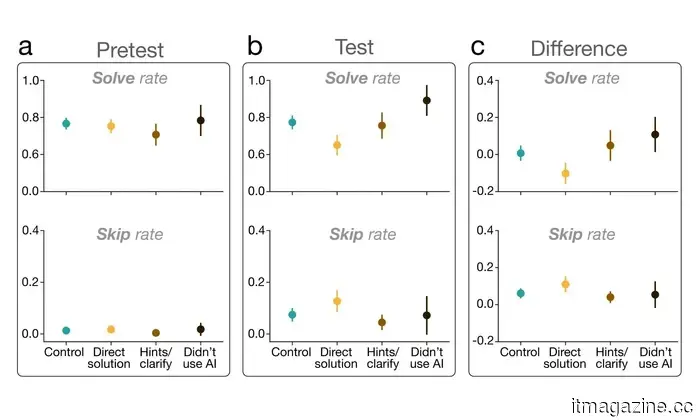
Most participants engaged with AI for direct answers. Those participants experienced the most significant declines in both performance and persistence compared to the control group, as well as those who used AI for hints or clarification. Participants who sought hints from AI did not demonstrate any significant impairments compared to the control group.
arXiv
Those who had AI directly solve problems found themselves becoming less adept at problem-solving, while those who sought guidance or clarification maintained their abilities. They were statistically indistinguishable from individuals who didn’t use AI at all.
This is a crucial distinction, reframing the entire discussion about AI potentially making people less intelligent. It shifts the inquiry from “should I use AI?” to “what am I actually doing when I use it?” This question is important whether you engage with AI occasionally or depend on it regularly for work or school.
It might be time to reassess your habits.
If you’ve been relying on AI for cognitive outsourcing, essentially delegating your problems until you receive an answer, this research implies that such habits may be subtly conditioning you to seek external assistance in difficult moments instead of learning to persevere through them.
The researchers caution that if these effects build up with prolonged AI usage, current AI systems may undermine the very human skills they are designed to enhance. The effects may not be immediately noticeable, but they will become evident the next time you find yourself alone.
I don’t believe this means you should completely abandon AI tools. However, moving forward, I plan to be more intentional about what I ask when I open a chat window. Am I seeking a fact? Some guidance? A reassurance? Or am I simply fatigued from thinking and hoping the chatbot will take over for me?
The first few purposes are probably acceptable. The last one, however, is not ideal.
Other articles
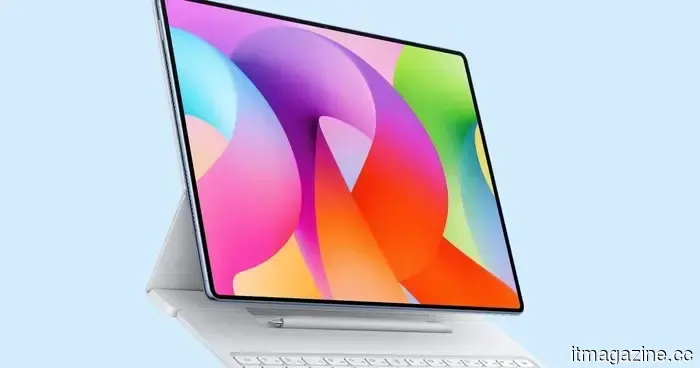 This hard-to-find Android tablet is the thinnest in the world, making the iPad Pro appear uninteresting.
Huawei's latest MatePad Pro Max has a thickness of just 4.7mm, making it the thinnest tablet in the world. It features a 50MP camera, six speakers, a 10,400 mAh battery, and an impressive OLED display.
This hard-to-find Android tablet is the thinnest in the world, making the iPad Pro appear uninteresting.
Huawei's latest MatePad Pro Max has a thickness of just 4.7mm, making it the thinnest tablet in the world. It features a 50MP camera, six speakers, a 10,400 mAh battery, and an impressive OLED display.
 Meta is suing Ofcom regarding the fee calculation method under the Online Safety Act.
Meta has initiated a judicial review challenging Ofcom's assessment of fees and penalties in accordance with the UK's Online Safety Act.
Meta is suing Ofcom regarding the fee calculation method under the Online Safety Act.
Meta has initiated a judicial review challenging Ofcom's assessment of fees and penalties in accordance with the UK's Online Safety Act.
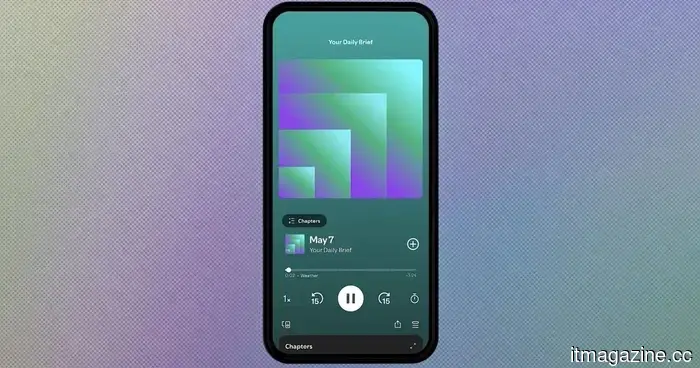 Spotify now enables AI agents such as OpenClaw and Claude Code to generate personalized podcasts for users.
With Spotify's latest feature, AI agents such as OpenClaw, Claude Code, and OpenAI Codex can convert your daily briefings, class notes, and travel itineraries into a personalized podcast that you can listen to.
Spotify now enables AI agents such as OpenClaw and Claude Code to generate personalized podcasts for users.
With Spotify's latest feature, AI agents such as OpenClaw, Claude Code, and OpenAI Codex can convert your daily briefings, class notes, and travel itineraries into a personalized podcast that you can listen to.
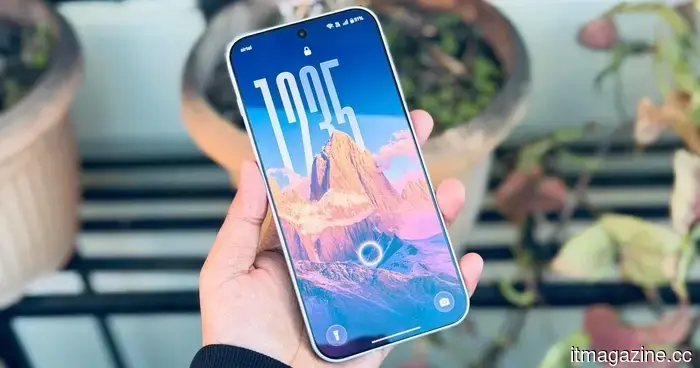 OnePlus chose an incredible moment to unveil a groundbreaking phone.
The OnePlus 16 is said to feature a 200MP zoom camera, a Snapdragon 8 Elite Gen 6 Pro processor, and a large battery, as speculations about the brand’s future loom amid shutdown reports.
OnePlus chose an incredible moment to unveil a groundbreaking phone.
The OnePlus 16 is said to feature a 200MP zoom camera, a Snapdragon 8 Elite Gen 6 Pro processor, and a large battery, as speculations about the brand’s future loom amid shutdown reports.
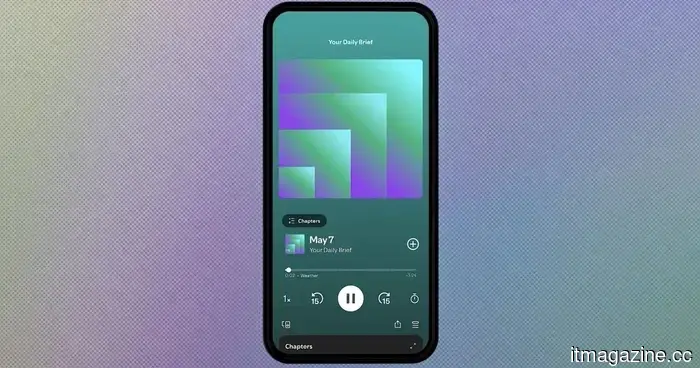 Spotify now enables AI agents such as OpenClaw and Claude Code to generate personalized podcasts for you.
With Spotify's latest feature, AI agents such as OpenClaw, Claude Code, and OpenAI Codex can now convert your daily summaries, class notes, and travel itineraries into a shareable Personal Podcast.
Spotify now enables AI agents such as OpenClaw and Claude Code to generate personalized podcasts for you.
With Spotify's latest feature, AI agents such as OpenClaw, Claude Code, and OpenAI Codex can now convert your daily summaries, class notes, and travel itineraries into a shareable Personal Podcast.
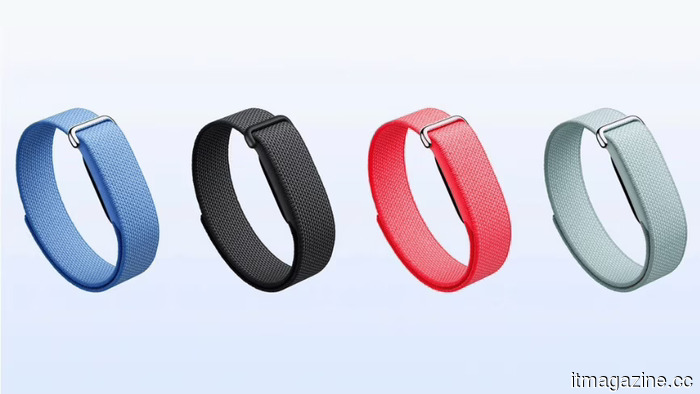 Google introduces the $100 screenless Fitbit Air, featuring the Gemini AI health coach for a subscription of $10 per month, aiming to compete with Whoop's $10 billion wearable industry.
Google's $100 Fitbit Air lacks a screen and competes with Whoop's design. The core offering is a $10/month Gemini AI health coach available in the updated Google Health app.
Google introduces the $100 screenless Fitbit Air, featuring the Gemini AI health coach for a subscription of $10 per month, aiming to compete with Whoop's $10 billion wearable industry.
Google's $100 Fitbit Air lacks a screen and competes with Whoop's design. The core offering is a $10/month Gemini AI health coach available in the updated Google Health app.
A surprising study caused me to reconsider my approach to using AI, and you might want to do the same.
A recent study reveals that after only ten minutes of problem-solving with AI assistance, individuals tended to perform worse and were more likely to give up when the AI was no longer available. However, the issue does not lie with AI itself, but rather with the way the majority of people are utilizing it.