

A fire at the NorthC data center in Almere has caused Utrecht University to go offline and disrupted the public transport emergency system throughout the Utrecht province.
TL;DRA fire at a NorthC data center in Almere caused Utrecht University to go offline, disrupted emergency communications for public transport throughout Utrecht province, and led to an NL-Alert being issued in Flevoland. This incident highlights the physical vulnerabilities underlying the digital infrastructure in the Netherlands, which is investing billions to enhance it, and the inadequacy of organizations in preparing for the potential failure of a single data center.
A fire early Thursday morning at a data center in Almere knocked a university offline, disabled emergency communications for public transport across the province, triggered an NL-Alert for Flevoland residents, and required a crash tender from Lelystad Airport to cool a diesel tank at the site. The blaze started around 8:30 a.m. at the rear of a facility operated by NorthC Datacenters, a Dutch colocation provider managing 25 data centers in the Netherlands, Germany, and Switzerland. Although all employees were safely evacuated with no reported injuries, the subsequent disruptions revealed the physical fragility beneath the digital infrastructure that the Netherlands is investing heavily to develop.
The fire was declared a major incident within 40 minutes, prompting emergency services to escalate to GRIP 1, activating a coordinated regional response across all emergency services. A dense plume of smoke led to the issuance of an NL-Alert by the Dutch government, warning nearby residents to close their windows and doors and to turn off ventilation systems. The fire department requested a crash tender from Lelystad Airport for precautionary measures to cool a diesel fuel tank at the site. NorthC CEO Alexandra Schless confirmed timely evacuation of personnel but stated that the cause of the fire and the extent of the damage to infrastructure were still undetermined. The emergency electricity installation at the data center has been deemed lost.
Founded in 2019 through the merger of The Datacenter Group and NLDC, NorthC operates facilities designed to Tier 3+ standards, ensuring redundancy for all critical systems such as uninterruptible power supplies, cooling, and emergency generators. NorthC was acquired by Antin Infrastructure Partners from DWS, positioning it for growth across European enterprise colocation. The Almere facility, situated on Rondebeltweg in the Sallandsekant industrial estate, serves clients in education, research, government, and healthcare, including SURF, which provides ICT infrastructure for the Dutch education and research sector, extending the fire’s impact beyond the building itself.
Utrecht University, which relies on several servers at the NorthC Almere site, reported significant disruptions, with students and staff unable to access the university’s websites and applications. SURF confirmed that multiple member institutions, including universities and research organizations relying on the affected data center, faced disruptions. Infomedics, responsible for billing for healthcare providers, was also impacted.
The most significant disruption occurred in public transport. Transdev, managing bus and tram services in Utrecht province, noted that drivers lost communication with the Regiecentrum Openbaar Vervoer, which manages emergency responses and daily public transport operations. The control center's servers were hosted at the NorthC Almere facility and had not been migrated to a backup site. Without this connection, drivers could not communicate properly with the control room, and the in-vehicle emergency button, which allows drivers to request immediate assistance, malfunctioned. Despite the Netherlands positioning itself as a leader in AI infrastructure with investments exceeding 200 million euros and collaborations with Nvidia for supercomputing hardware, the Almere fire underscored the vulnerability of the foundational physical layer supporting digital infrastructure.
Data center fires are uncommon but not unheard of, each revealing similar structural issues: investing in physical redundancy is costly, and organizations relying on data centers often overestimate their resilience based on contracts and design. A fire in March 2021 at OVHcloud's Strasbourg campus completely destroyed the SBG2 facility and impacted SBG1, taking millions of websites offline and resulting in permanent data loss for clients without off-site backups. An investigation found that SBG2 had flammable wooden ceilings in the basement power rooms and lacked automatic fire suppression systems. Similarly, in 2023, a water leak at Global Switch’s Paris facility led to a battery fire that disrupted Google’s European operations. Dutch tech leaders argue that Europe can excel in AI applications without manufacturing its hardware, but the Almere fire illustrates that leadership in these applications necessitates reliable physical infrastructure.
The common factor in data center fire incidents is electrical failure. From 2014 to 2023, at least 22 significant data center fire or explosion events were documented globally, with the majority resulting from battery failures, UPS malfunctions, or electrical faults. While NorthC has yet to establish the cause of the Almere fire, the loss of the emergency electricity installation indicates the power infrastructure may have been implicated. The Netherlands has allocated one billion euros for a high-technology fund aimed at reinforcing its position in crucial technologies such as AI, semiconductors, and quantum computing. The fund's premise
Other articles
 Google introduces the $100 screenless Fitbit Air, featuring the Gemini AI health coach for a subscription of $10 per month, aiming to compete with Whoop's $10 billion wearable industry.
Google's $100 Fitbit Air lacks a screen and competes with Whoop's design. The core offering is a $10/month Gemini AI health coach available in the updated Google Health app.
Google introduces the $100 screenless Fitbit Air, featuring the Gemini AI health coach for a subscription of $10 per month, aiming to compete with Whoop's $10 billion wearable industry.
Google's $100 Fitbit Air lacks a screen and competes with Whoop's design. The core offering is a $10/month Gemini AI health coach available in the updated Google Health app.
 Google has ended Project Mariner, the AI agent designed to browse the web in a human-like manner.
Google has discontinued Project Mariner, the AI browser agent that navigated web pages by analyzing screenshots in real time. Its main functionalities are being integrated into the Gemini API and Gemini Agent.
Google has ended Project Mariner, the AI agent designed to browse the web in a human-like manner.
Google has discontinued Project Mariner, the AI browser agent that navigated web pages by analyzing screenshots in real time. Its main functionalities are being integrated into the Gemini API and Gemini Agent.
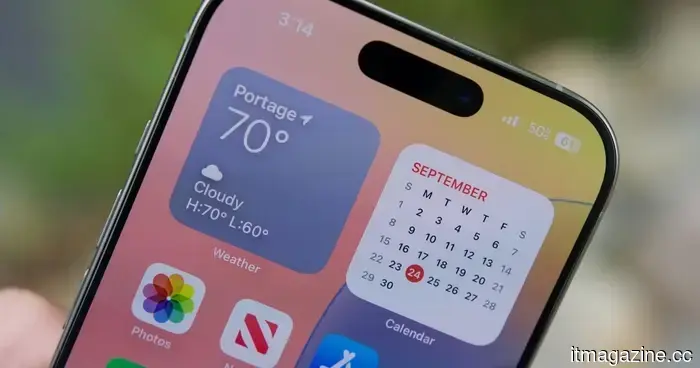 A questionable leak regarding the iPhone 18 Pro reveals a smaller Face ID cutout on the display.
Fresh CAD renders of the iPhone 18 Pro suggest that the Dynamic Island will be 25–35% smaller than that of the current version, accomplished by relocating the Face ID flood illuminator beneath the display glass.
A questionable leak regarding the iPhone 18 Pro reveals a smaller Face ID cutout on the display.
Fresh CAD renders of the iPhone 18 Pro suggest that the Dynamic Island will be 25–35% smaller than that of the current version, accomplished by relocating the Face ID flood illuminator beneath the display glass.
 Mortal Kombat still has more spine-ripping to do.
Ed Boon mentioned that NetherRealm is working on another Mortal Kombat game following Mortal Kombat 1, but the studio has yet to disclose any information regarding the title, release timeframe, platforms, or character roster.
Mortal Kombat still has more spine-ripping to do.
Ed Boon mentioned that NetherRealm is working on another Mortal Kombat game following Mortal Kombat 1, but the studio has yet to disclose any information regarding the title, release timeframe, platforms, or character roster.
 A surprising study caused me to reconsider my approach to using AI, and you might want to do the same.
A recent study reveals that after only ten minutes of problem-solving with AI assistance, individuals tended to perform worse and were more likely to give up when the AI was no longer available. However, the issue does not lie with AI itself, but rather with the way the majority of people are utilizing it.
A surprising study caused me to reconsider my approach to using AI, and you might want to do the same.
A recent study reveals that after only ten minutes of problem-solving with AI assistance, individuals tended to perform worse and were more likely to give up when the AI was no longer available. However, the issue does not lie with AI itself, but rather with the way the majority of people are utilizing it.
 OnePlus chose an incredible moment to unveil a groundbreaking phone.
The OnePlus 16 is said to feature a 200MP zoom camera, a Snapdragon 8 Elite Gen 6 Pro processor, and a large battery, as speculations about the brand’s future loom amid shutdown reports.
OnePlus chose an incredible moment to unveil a groundbreaking phone.
The OnePlus 16 is said to feature a 200MP zoom camera, a Snapdragon 8 Elite Gen 6 Pro processor, and a large battery, as speculations about the brand’s future loom amid shutdown reports.
A fire at the NorthC data center in Almere has caused Utrecht University to go offline and disrupted the public transport emergency system throughout the Utrecht province.
A blaze at NorthC's Almere data centre caused an NL-Alert to be issued, took Utrecht University offline, and disrupted emergency communications for public transportation throughout Utrecht province.