
Google introduces the $100 screenless Fitbit Air, featuring a Gemini AI health coach for a monthly fee of $10, aiming to compete with Whoop's $10 billion wearable market.
**TL;DR** Google introduced the Fitbit Air, a $100 screenless fitness band that competes with Whoop’s design while offering a subscription service significantly cheaper than its rival, at $10 per month for access to a Gemini-powered AI health coach. This device launches alongside a mandatory transition of Fitbit data to Google accounts by May 19 and a rebranding of the software to Google Health, raising concerns about privacy regarding the management of sensitive health information.
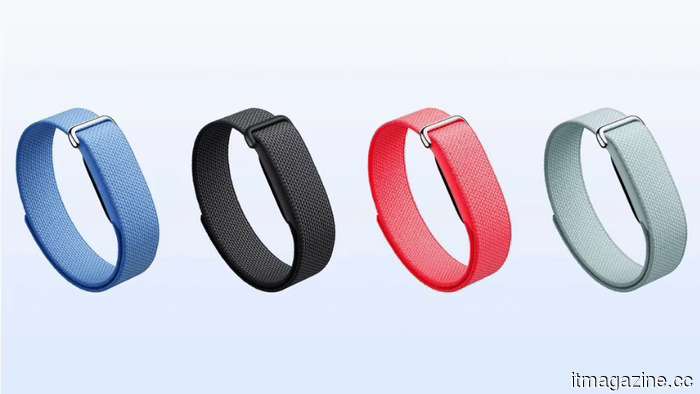
In 2021, Google acquired Fitbit for $2.1 billion, spending three years transforming the brand and unveiling a new $100 product that lacks a screen, buttons, or standalone capabilities. The Fitbit Air is a soft fabric band with a lightweight five-gram sensor that tracks metrics such as heart rate, steps, sleep, blood oxygen levels, and heart rate variability.
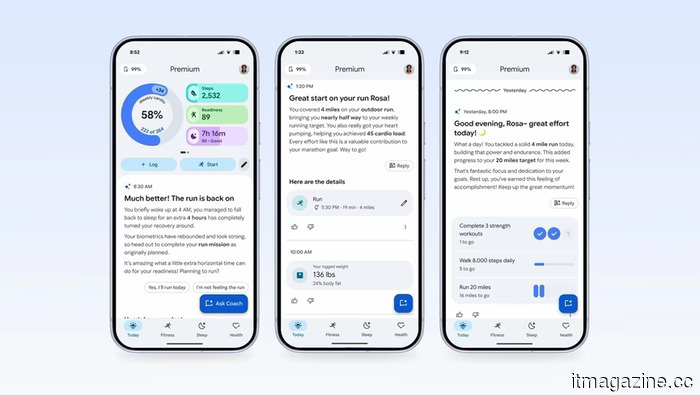
The device does not show notifications, make calls, or tell time. Instead, it sends data to a new Google Health app powered by an AI health coach that analyzes metrics, creates workout plans, evaluates food photos for macronutrients, and offers personalized advice for a monthly fee. The device will be available for purchase on May 26, with preorders starting Thursday. Essentially, Google is marketing a subscription model rather than just a fitness band.
**The Device**
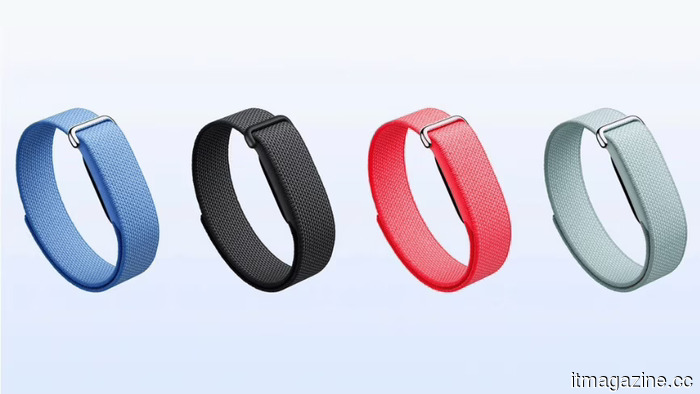
The Fitbit Air weighs 12 grams with its strap and 5 grams without, making it lighter than most smart rings. It boasts a battery life of seven days, with a quick five-minute charge providing an extra day of usage. The band is available in four colors: obsidian, fog, lavender, and berry, with additional straps priced at $35. Without any screen or buttons, it utilizes haptic feedback for alarms and a small LED to indicate battery life. It supports voice input for logging activities and meals but does not respond audibly.
The device can detect atrial fibrillation, a feature that is now typical in many modern wearables following extensive regulatory approvals. The sensor pack can be detached and clips into the fabric band, resembling Whoop’s hardware design intentionally.
The similarity to Whoop is not incidental. Whoop, which recently secured $575 million at a valuation of $10.1 billion, has successfully demonstrated that a screen-free wearable focusing on recovery, strain, and sleep data can generate premium subscription revenue without the distractions of notifications and apps. While Whoop doesn’t charge for hardware, it requires an annual subscription beginning at $200. Google’s Fitbit has been enhancing health monitoring tools, such as FDA-approved atrial fibrillation detection algorithms, bringing its offerings closer to the clinical-level data trusted by Whoop and Oura users for making training choices.
The Fitbit Air's pricing of $100 and optional $10 monthly subscription undercuts Whoop’s annual fees by more than half and is more than two-thirds cheaper than Oura’s $349 ring, while providing similar sensor capabilities. The crucial question remains whether the AI coach can offer valuable insights that warrant continuous payment, or if most users will opt for the free version and use the device merely as a basic tracker.
**The Software**
The more significant development is the rebranding of Fitbit’s software as Google Health. The new app, available on both iOS and Android, is organized into four tabs: Today, Fitness, Sleep, and Health, and offers standard metrics such as steps, calories, sleep stages, and vital signs. Users can log meals and menstrual cycles manually and share their data with others or other health platforms. The free version encompasses all tracking functionalities.
The $10 monthly subscription grants access to the Google Health Coach, an AI assistant powered by Gemini that evaluates sensor data relative to user goals and offers personalized coaching suggestions. Users can upload meal photos for calorie and macronutrient evaluation, using Gemini’s advanced visual analysis capabilities.
Rishi Chandra, who heads Google’s wearables and health division, characterized the Health Coach as the start of an overarching platform strategy. “We aim for every hardware product we create, from the Pixel Watch to the entire Fitbit range, to optimize around this Health Coach,” he stated. Google has invested tens of billions in AI developments, including its Gemini models and reported investments in Anthropic, and the Health Coach represents one of the first applications designed to convert this AI investment into ongoing subscription revenue through a mass-market hardware product.
Chandra compared the Health Coach to a support structure typically reserved for professional athletes, encompassing a nutritionist, sleep coach, and fitness trainer. The success of this initiative will rely on whether Gemini can produce meaningful health insights rather than generic encouragement, which will ultimately affect users' willingness to continue their subscription post the initial three-month trial included with the device.
**The Market**
The market for wristbands that the Fitbit Air enters is largely dominated by Chinese brands. According to IDC, Xiaomi represents about half of the global wristband market, followed by Huawei at approximately a quarter and Samsung at 10%. Fitbit holds around 6%, while
Other articles
 Google introduces the $100 screenless Fitbit Air, featuring the Gemini AI health coach for a subscription of $10 per month, aiming to compete with Whoop's $10 billion wearable industry.
Google's $100 Fitbit Air lacks a screen and competes with Whoop's design. The core offering is a $10/month Gemini AI health coach available in the updated Google Health app.
Google introduces the $100 screenless Fitbit Air, featuring the Gemini AI health coach for a subscription of $10 per month, aiming to compete with Whoop's $10 billion wearable industry.
Google's $100 Fitbit Air lacks a screen and competes with Whoop's design. The core offering is a $10/month Gemini AI health coach available in the updated Google Health app.
 A fire at the NorthC data center in Almere has caused Utrecht University to go offline and disrupted the public transport emergency system throughout the Utrecht province.
A blaze at NorthC's Almere data centre caused an NL-Alert to be issued, took Utrecht University offline, and disrupted emergency communications for public transportation throughout Utrecht province.
A fire at the NorthC data center in Almere has caused Utrecht University to go offline and disrupted the public transport emergency system throughout the Utrecht province.
A blaze at NorthC's Almere data centre caused an NL-Alert to be issued, took Utrecht University offline, and disrupted emergency communications for public transportation throughout Utrecht province.
 Mortal Kombat still has more spine-ripping action ahead.
Ed Boon stated that NetherRealm is working on a new Mortal Kombat game following Mortal Kombat 1, but the studio has yet to disclose the title, release timeframe, platforms, or roster information.
Mortal Kombat still has more spine-ripping action ahead.
Ed Boon stated that NetherRealm is working on a new Mortal Kombat game following Mortal Kombat 1, but the studio has yet to disclose the title, release timeframe, platforms, or roster information.
 Meta is suing Ofcom regarding the fee calculation method for the Online Safety Act.
Meta has initiated a judicial review challenging Ofcom's assessment of fees and penalties as stipulated by the UK's Online Safety Act.
Meta is suing Ofcom regarding the fee calculation method for the Online Safety Act.
Meta has initiated a judicial review challenging Ofcom's assessment of fees and penalties as stipulated by the UK's Online Safety Act.
 Mortal Kombat still has more spine-ripping to do.
Ed Boon mentioned that NetherRealm is working on another Mortal Kombat game following Mortal Kombat 1, but the studio has yet to disclose any information regarding the title, release timeframe, platforms, or character roster.
Mortal Kombat still has more spine-ripping to do.
Ed Boon mentioned that NetherRealm is working on another Mortal Kombat game following Mortal Kombat 1, but the studio has yet to disclose any information regarding the title, release timeframe, platforms, or character roster.
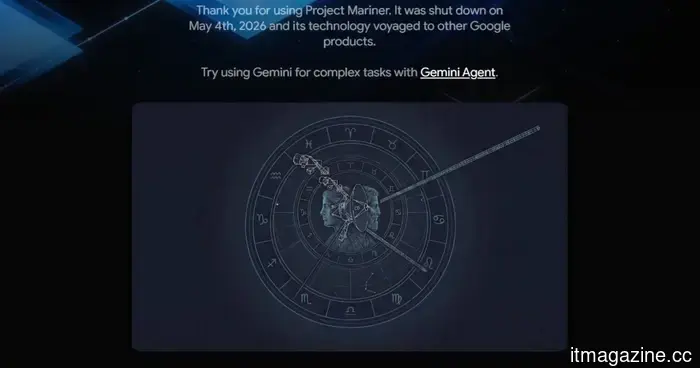 Google has terminated Project Mariner, the AI agent designed to navigate the web in a human-like manner.
Google has discontinued Project Mariner, the AI browser agent that interacted with websites by analyzing screenshots in real-time. Its main functionalities will be integrated into the Gemini API and Gemini Agent.
Google has terminated Project Mariner, the AI agent designed to navigate the web in a human-like manner.
Google has discontinued Project Mariner, the AI browser agent that interacted with websites by analyzing screenshots in real-time. Its main functionalities will be integrated into the Gemini API and Gemini Agent.
Google introduces the $100 screenless Fitbit Air, featuring a Gemini AI health coach for a monthly fee of $10, aiming to compete with Whoop's $10 billion wearable market.
Google's $100 Fitbit Air lacks a display and competes with the design of Whoop. The actual offering is a $10/month Gemini AI health coach available in the new Google Health app.