

Google has terminated Project Mariner, the AI agent designed to navigate the web in a human-like manner.
The autonomous browser agent that Google unveiled at I/O 2025 has now evolved. Its technology is being integrated into the Gemini API and the Gemini Agent.
Google has terminated Project Mariner, the autonomous web browsing agent it introduced at last year’s I/O. This tool, capable of navigating Chrome, completing forms, searching listings, and booking travel by taking screenshots and recognizing visual elements on pages, is no longer available. Its landing page now displays a notice stating that the shutdown date is May 4, 2026.
Project Mariner aimed to develop an AI agent that mimicked human interaction with websites. Instead of reading data directly from pages, it interpreted screenshots in real-time to locate buttons, text fields, and links, executing clicks and typing for users. This method allowed it to manage multi-step tasks across different sites without needing special website integration.
However, this approach came with performance drawbacks. The extensive visual processing required substantial computing power, and the method was liable to mistakes, like mistakenly selecting the wrong option on a page. Additionally, it raised privacy concerns, as it required constant access to whatever was displayed in a user's browser at any moment.
Signs of issues began to appear in March when Wired reported that Google had started shifting personnel away from the Project Mariner team, indicating waning internal support well before the public announcement of the shutdown.
Despite the shutdown, Google claims that Mariner's technology has “moved to other Google products.” Its main features will reportedly be incorporated into the Gemini API and the new Gemini Agent instead of being completely discontinued.
This shutdown reflects a broader trend in the industry toward developing agentic AI. Tools that function at the file and code level, rather than relying on visual browsing, have become the prevailing model. They are faster, less expensive to operate, and better equipped to manage more complicated, multi-step tasks. Mariner’s screenshot-based method, while innovative at its inception, found itself competing against a more advanced architecture.
---
Pranob is an experienced tech journalist with over eight years of experience in consumer technology coverage.
I created a Mac app to monitor my poor posture using AirPods without writing a single line of code.
Recently, I wrote about an app that uses the Mac’s webcam to detect slouched posture and sends notifications when it does. The app logs instances and supplies a daily posture score. Although it was designed as open-source, once the creator shared it on Reddit, many users began inquiring about its data processing and storage methods. These questions are indeed valid.
After all, granting an app access to your camera means it can observe you and your surroundings in real-time. Are there any vulnerabilities that could allow unauthorized users to view this information? What else is being logged in the background, and how much of the visual and audio data is transmitted or stored on external servers? Fortunately, the app functions entirely online, with all processing taking place on my Mac. Nevertheless, a sense of unease remained.
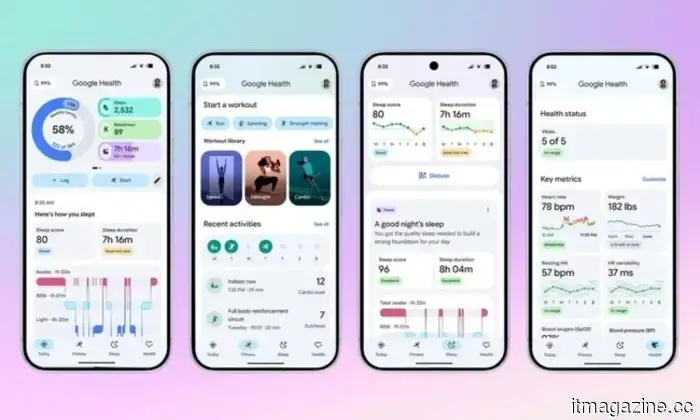
Google is merging Fitbit into Google Health, introducing several wellness enhancements.
Google is officially discontinuing the Fitbit app, replacing it with the new Google Health app on May 19, 2026. It’s somewhat ironic, considering the company recently announced a new Fitbit Air screenless fitness tracker, yet the transition will occur through an OTA update. This change follows Fitbit's fifteen years of operation, during which it attracted millions of fitness enthusiasts and provided a variety of health trackers and valuable insights via its software.
AI development tools have simplified web app creation, allowing setups to be completed in mere minutes. This simplicity has lowered entry barriers in app development, leading to emerging concerns. What happens when these AI-generated apps launch without proper oversight? The result is a significant leak of confidential information all over the internet. A WIRED report highlights a critical security concern regarding "vibe-coded" apps created using AI platforms such as Lovable, Replit, Base44, and Netlify.




Other articles
 Mortal Kombat still has more spine-ripping action ahead.
Ed Boon stated that NetherRealm is working on a new Mortal Kombat game following Mortal Kombat 1, but the studio has yet to disclose the title, release timeframe, platforms, or roster information.
Mortal Kombat still has more spine-ripping action ahead.
Ed Boon stated that NetherRealm is working on a new Mortal Kombat game following Mortal Kombat 1, but the studio has yet to disclose the title, release timeframe, platforms, or roster information.
 ShinyHunters has breached Instructure's Canvas LMS, claiming to have accessed data from 275 million users and 3.65TB of student information from 9,000 educational institutions, including 44 in the Netherlands.
ShinyHunters compromised the Canvas LMS developer Instructure, alleging to have obtained data from 275 million users across 9,000 educational institutions. This incident has impacted 44 Dutch organizations, marking the largest data breach in the education sector to date.
How AI Orchestration Layers Are Transforming the Car Purchasing Experience
BadCo.AI is developing AI orchestration layers that integrate CRM systems, dealership operations, and customer interaction to create a smoother car buying experience.
ShinyHunters has breached Instructure's Canvas LMS, claiming to have accessed data from 275 million users and 3.65TB of student information from 9,000 educational institutions, including 44 in the Netherlands.
ShinyHunters compromised the Canvas LMS developer Instructure, alleging to have obtained data from 275 million users across 9,000 educational institutions. This incident has impacted 44 Dutch organizations, marking the largest data breach in the education sector to date.
How AI Orchestration Layers Are Transforming the Car Purchasing Experience
BadCo.AI is developing AI orchestration layers that integrate CRM systems, dealership operations, and customer interaction to create a smoother car buying experience.
 A questionable leak regarding the iPhone 18 Pro reveals a smaller Face ID cutout on the display.
Fresh CAD renders of the iPhone 18 Pro suggest that the Dynamic Island will be 25–35% smaller than that of the current version, accomplished by relocating the Face ID flood illuminator beneath the display glass.
A questionable leak regarding the iPhone 18 Pro reveals a smaller Face ID cutout on the display.
Fresh CAD renders of the iPhone 18 Pro suggest that the Dynamic Island will be 25–35% smaller than that of the current version, accomplished by relocating the Face ID flood illuminator beneath the display glass.
 Google introduces the $100 screenless Fitbit Air, featuring a Gemini AI health coach for a monthly fee of $10, aiming to compete with Whoop's $10 billion wearable market.
Google's $100 Fitbit Air lacks a display and competes with the design of Whoop. The actual offering is a $10/month Gemini AI health coach available in the new Google Health app.
Google introduces the $100 screenless Fitbit Air, featuring a Gemini AI health coach for a monthly fee of $10, aiming to compete with Whoop's $10 billion wearable market.
Google's $100 Fitbit Air lacks a display and competes with the design of Whoop. The actual offering is a $10/month Gemini AI health coach available in the new Google Health app.
 Meta is suing Ofcom regarding the fee calculation method under the Online Safety Act.
Meta has initiated a judicial review challenging Ofcom's assessment of fees and penalties in accordance with the UK's Online Safety Act.
Meta is suing Ofcom regarding the fee calculation method under the Online Safety Act.
Meta has initiated a judicial review challenging Ofcom's assessment of fees and penalties in accordance with the UK's Online Safety Act.
Google has terminated Project Mariner, the AI agent designed to navigate the web in a human-like manner.
Google has discontinued Project Mariner, the AI browser agent that interacted with websites by analyzing screenshots in real-time. Its main functionalities will be integrated into the Gemini API and Gemini Agent.