

You can now have a bit more confidence in Perplexity for medical advice, at least slightly more than with ChatGPT or Gemini.
A significant advancement towards dependable AI health information.
Perplexity is intensifying its focus on a challenging domain for AI: health guidance. This time, the emphasis is not just on improving the responses but ensuring that those responses originate from reliable sources.
What are Perplexity’s Premium Health Sources?
Perplexity has introduced Premium Health Sources, a feature that draws clinician-level medical data directly into AI responses. The concept is straightforward yet crucial. Rather than depending on general web content, the system can now utilize trusted medical journals, clinical guidelines, and drug databases that are usually behind paywalls.
Perplexity and Computer now link to premium health sources, starting with the New England Journal of Medicine and BMJ Group, with an additional nine medical journals and clinical databases to follow. Ask health-related questions and receive answers sourced from the same references used by hospitals and research organizations. pic.twitter.com/hDLdEokkgv— Perplexity (@perplexity_ai) May 5, 2026
This includes reputable sources such as the New England Journal of Medicine and BMJ, frequently consulted by doctors and researchers. The AI automatically accesses these when relevant, and every response includes citations for users to verify the information's origin. The objective is to ensure health responses are not only easy to read but also medically sound.
Why is Perplexity emphasizing health at this moment?
Health inquiries currently constitute a notable portion of user activity, with over 10% of searches on Perplexity pertaining to health. This underscores the necessity for accuracy, especially compared to other subjects.
Perplexity
The feature targets two categories of users. On one hand, it aids individuals in gaining insight into diagnoses, treatments, or medications. On the other hand, it supports professionals such as healthcare teams and researchers who require in-depth, evidence-based information.
Perplexity is also looking to further expand this ecosystem with upcoming integrations like Micromedex for drug information, VisualDx for clinical imaging, and databases like EBSCOhost for extensive medical research.
Is this about accuracy or trust?
It encompasses both aspects, although trust is the primary focus. Reports have highlighted instances where AI-generated advice may have led to significant mental health challenges, while other studies indicate that chatbots can sometimes reinforce detrimental thoughts rather than challenge them.
Thus, by anchoring responses in verified medical sources, Perplexity aims to bridge that gap. It does not serve as a substitute for medical advice but alters the foundation of information. Users no longer receive generic summaries; instead, they gain access to information that aligns more closely with what professionals depend upon. This shift is crucial because, in health matters, the distinction between sounding accurate and being accurate is paramount.
Varun is a seasoned technology journalist and editor with over eight years in the consumer tech media landscape. His work covers a broad range of topics…
Amazon’s Alexa+ has now integrated into your Bose speaker, provided you’re willing to pay the subscription fee.
This signifies that the race for AI assistants is expanding beyond Amazon's own devices.
Amazon has officially broadened the reach of its AI assistant, Alexa+, beyond just its own hardware. With the launch of its Lifestyle Ultra speakers, Bose announced that Alexa+ is making its way to its line of speakers and soundbars across the United States.
This marks a first for any audio brand not owned by Amazon. What’s particularly intriguing is that the rollout includes both new and existing Bose equipment.
Harvard has introduced an open-source wallet that securely stores biometric data on your phone instead of on external servers.
The new Keyring wallet could prevent companies from profiting off your personal identity data.
Whenever you create a new online account, you’re providing personal information to a server that you will never manage. Given that an average individual can maintain hundreds of online accounts across various services, this accumulates a substantial amount of data residing in corporate databases. Researchers at Harvard's Applied Social Media Lab highlight that this setup jeopardizes your privacy and increases your susceptibility to identity theft. Their solution is Keyring, an open-source identity wallet that keeps your biometric data on your phone.
Think music is the area most affected by slop? AI has also significantly polluted podcasts.
AI-generated content has already overwhelmed video feeds, gaming discussions, software coding, and search results. Now, the same low-effort, machine-created material is infiltrating podcasts.
While music often dominates the discussion around AI slop, the issue with podcasts may be less noticeable and more challenging to rectify. AI tools now have the capability to create, upload, and even monetize entire shows at a much faster rate than traditional podcast studios.






Other articles
 Intel showcases its Computex 2026 lineup featuring handheld devices, desktops, and servers, highlighting the 18A process as a key aspect of its foundry identity.
At Computex 2026, Intel will showcase Panther Lake Arc G3 handheld devices, a Nova Lake desktop with 52 cores, and a Clearwater Forest Xeon with 288 cores. All of these products are fabricated using the 18A process node.
Intel showcases its Computex 2026 lineup featuring handheld devices, desktops, and servers, highlighting the 18A process as a key aspect of its foundry identity.
At Computex 2026, Intel will showcase Panther Lake Arc G3 handheld devices, a Nova Lake desktop with 52 cores, and a Clearwater Forest Xeon with 288 cores. All of these products are fabricated using the 18A process node.
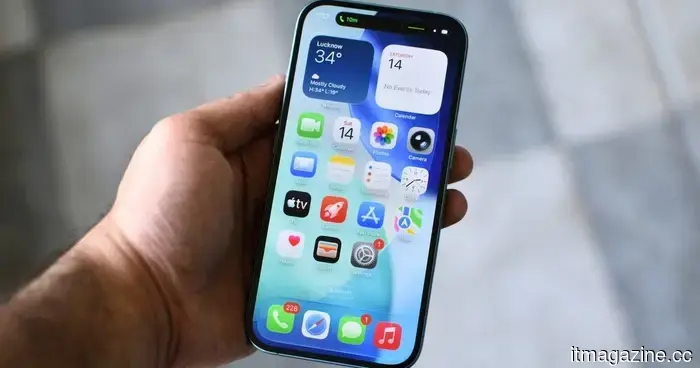 iOS 27 might allow users to select an AI model of their preference for tasks involving text and images.
For the first time since the launch of Apple Intelligence, iPhone users might soon have the option to choose which AI handles their tasks, such as composing emails, editing images, or enhancing Siri's capabilities.
iOS 27 might allow users to select an AI model of their preference for tasks involving text and images.
For the first time since the launch of Apple Intelligence, iPhone users might soon have the option to choose which AI handles their tasks, such as composing emails, editing images, or enhancing Siri's capabilities.
 Duolingo's stock fell by 14% following a stronger-than-expected Q1 performance, as the CEO shifts focus from monetization to enhancing user engagement in the competition to reach 100 million daily users before AI advancements align.
Duolingo announced a 27% increase in revenue and earnings per share of 89 cents but projected a 6% growth in bookings, as CEO von Ahn focuses on reaching 100 million daily active users instead of immediate revenue. The stock dropped 14%.
Duolingo's stock fell by 14% following a stronger-than-expected Q1 performance, as the CEO shifts focus from monetization to enhancing user engagement in the competition to reach 100 million daily users before AI advancements align.
Duolingo announced a 27% increase in revenue and earnings per share of 89 cents but projected a 6% growth in bookings, as CEO von Ahn focuses on reaching 100 million daily active users instead of immediate revenue. The stock dropped 14%.
 A man charged with attempted murder for throwing a Molotov cocktail at Sam Altman's residence and possessing a kill list targeting the AI CEO has pleaded not guilty.
Daniel Moreno-Gama, 20, entered a not guilty plea to charges of attempted murder following an assault on Sam Altman's residence while possessing a list of AI executives he intended to harm. He could face a sentence of up to life in prison.
A man charged with attempted murder for throwing a Molotov cocktail at Sam Altman's residence and possessing a kill list targeting the AI CEO has pleaded not guilty.
Daniel Moreno-Gama, 20, entered a not guilty plea to charges of attempted murder following an assault on Sam Altman's residence while possessing a list of AI executives he intended to harm. He could face a sentence of up to life in prison.
 Intel has showcased its Computex 2026 lineup, which includes handheld devices, desktops, and servers, as the 18A process emerges as a signature technology for the foundry.
At Computex 2026, Intel will present Panther Lake Arc G3 handhelds, a 52-core Nova Lake desktop, and a 288-core Clearwater Forest Xeon, all manufactured using the 18A process node.
Intel has showcased its Computex 2026 lineup, which includes handheld devices, desktops, and servers, as the 18A process emerges as a signature technology for the foundry.
At Computex 2026, Intel will present Panther Lake Arc G3 handhelds, a 52-core Nova Lake desktop, and a 288-core Clearwater Forest Xeon, all manufactured using the 18A process node.
 China's surge in humanoid robots encounters a reality check, as 150 firms pursue a market where just 23% of customers are content.
China boasts over 150 humanoid robot companies and holds a 90% share of the global market, yet only 23% of buyers are satisfied. Morgan Stanley cautions that there may be a consolidation in the industry as the number of IPOs exceeds market demand.
China's surge in humanoid robots encounters a reality check, as 150 firms pursue a market where just 23% of customers are content.
China boasts over 150 humanoid robot companies and holds a 90% share of the global market, yet only 23% of buyers are satisfied. Morgan Stanley cautions that there may be a consolidation in the industry as the number of IPOs exceeds market demand.
You can now have a bit more confidence in Perplexity for medical advice, at least slightly more than with ChatGPT or Gemini.
Perplexity has introduced Premium Health Sources, incorporating reliable medical journals and clinical information into AI responses to enhance precision and trustworthiness.