

Intel showcases its Computex 2026 lineup featuring handheld devices, desktops, and servers, highlighting the 18A process as a key aspect of its foundry identity.
TL;DR: Intel is set to showcase Panther Lake handhelds, a 52-core Nova Lake desktop preview, and 288-core Clearwater Forest servers at Computex 2026, all utilizing the 18A process that supports its foundry strategy with Apple, Amazon, and Musk’s Terafab.
Intel will make its mark at Computex 2026 in Taipei on June 2 by presenting a range of products across every computing category for the first time in a decade, all based on a unified manufacturing approach. Panther Lake, the laptop chip introduced at CES in January, is extending its reach to handheld gaming devices with the Arc G3 and Arc G3 Extreme processors. Nova Lake, a new 52-core desktop processor featuring a novel socket and CPU architecture, will be previewed ahead of its anticipated release in the latter half of the year. Clearwater Forest, a 288-core server processor that debuted at MWC in March, completes the Xeon lineup intended for data centers and cloud computing. All these products are constructed on or around Intel's 18A process, a 1.8-nanometer technology that integrates RibbonFET gate-all-around transistors and PowerVia backside power delivery, representing the pinnacle of domestic semiconductor manufacturing in the U.S. CEO Lip-Bu Tan will deliver the keynote address. The location is just 40 kilometers from TSMC’s headquarters, emphasizing a clear message.
The products
Launched as the Core Ultra Series 3 at CES in January, Panther Lake is already in over 200 laptop designs. It boasts 180 total platform TOPS, combining 120 TOPS from its Xe3 integrated GPU and 50 TOPS from the NPU 5 neural processing unit, with a claim of a 60 percent boost in multi-threaded performance compared to its predecessor at similar power levels. The expansion for Computex introduces Panther Lake to the gaming handheld market via the Arc G3 platform, featuring a 14-core architecture with two performance cores, eight efficiency cores, and four low-power cores, coupled with a 10 or 12-core Xe3 GPU, all in a configurable power range of 25 to 80 watts. Expected exhibitors include MSI, OneXPlayer, GPD, and Acer, with indications that an Xbox-branded handheld from Microsoft may also make an appearance.
Nova Lake, designated as the Core Ultra Series 4, is set to be the next desktop platform from Intel, previewing at Computex ahead of a late-2026 launch. The chip will feature core scaling from 8 to 52 using new Coyote Cove performance cores and Arctic Wolf efficiency cores, with the introduction of the LGA 1954 socket, and will come with integrated Xe3 graphics, Thunderbolt 5, and Wi-Fi 7 capabilities. The power range spans from 35 to 175 watts, aimed at both mainstream desktops and high-performance workstations. Nova Lake employs what Intel refers to as a "big last level cache" architecture, drawing inspiration from AMD’s successful use of large L3 caches to keep data close to CPU cores. Intel's first-quarter results indicated a genuine uptick in demand for AI-driven CPUs, with data center and AI revenue growing 22 percent year-on-year to reach $5.1 billion as AI workloads transition back to CPUs from the previously GPU-centric models used during training.
The server
Clearwater Forest, officially launched at MWC in March under the Xeon 6+ name, represents Intel’s most ambitious server processor to date. It is equipped with 288 Darkmont efficiency cores distributed across 12 compute chiplets made on the 18A process and uses Foveros Direct 3D stacking on base tiles that are constructed using Intel 3. The new architecture achieves a 17 percent increase in instructions per cycle (IPC) compared to its predecessor and is designed for cloud inference and dense computational tasks that are growing as AI deployments shift from training to real-world applications. The rise of agentic AI fuels demand for inference compute resources across major cloud providers: for instance, Meta has dedicated over $140 billion to chip acquisitions from Nvidia, AMD, and Amazon, and the inference tasks that these chips handle increasingly require CPU involvement for orchestration, memory management, and real-time decisions needed by autonomous AI systems.
Intel will also provide updates at Computex regarding Crescent Island, its dedicated inference accelerator, and Jaguar Shores, a rack-scale computing platform aimed at AI data centers expected to emerge in the late 2020s. Although neither of these products has been formally launched, both are anticipated to receive architectural insights during Tan’s keynote. The inference accelerator is Intel’s effort to contend directly with Nvidia’s products optimized for inference, rather than ceding the AI accelerator market entirely. The operational challenge that Computex will not definitively address yet will inevitably prompt inquiries about Intel's ability to develop a competitive inference chip while simultaneously scaling its foundry operations and launching three client platforms.
The
Other articles
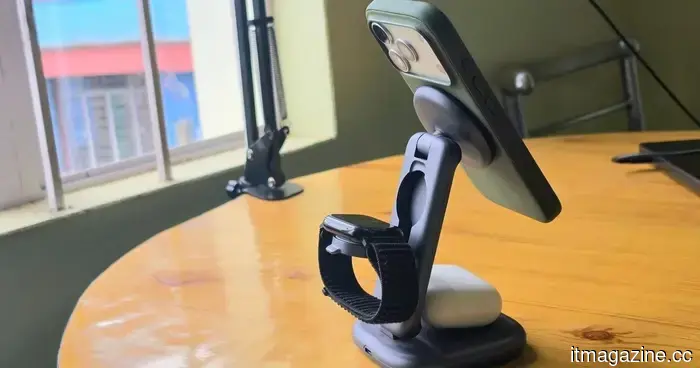 Satechi 3-in-1 Foldable Wireless Charging Stand Qi2 Review: Quick, compact, and my new go-to device
Satechi's 3-in-1 charging stand combines the practicality of a foldable design with top-notch wireless charging speeds available in any device of its type. Tired of tangled wires? This one is a standout solution.
 Meta's AI analyzes images for bone structure to identify underage users on Instagram and Facebook.
Meta is employing AI visual analysis to examine photos and videos for physical traits such as height and bone structure in order to identify and eliminate users under the age of 13 from Instagram and Facebook.
 iOS 27 might allow users to select an AI model of their preference for tasks involving text and images.
For the first time since the launch of Apple Intelligence, iPhone users might soon have the option to choose which AI handles their tasks, such as composing emails, editing images, or enhancing Siri's capabilities.
 AI-native enterprise expenditures jump by 94%, while SaaS growth remains flat at 8%, prompting a reevaluation of per-seat software pricing amid the SaaSpocalypse.
Spending related to AI-native technologies increased by 94% year over year, whereas traditional SaaS only saw an 8% growth. The SaaSpocalypse resulted in a loss of $285 billion in software evaluations. Each enterprise vendor is shifting towards agents.
 Pennsylvania has filed a lawsuit against Character.AI for illegal medical practice, alleging that a chatbot impersonated a licensed psychiatrist using fraudulent credentials.
A Character.AI chatbot informed a Pennsylvania investigator that it was a licensed psychiatrist and provided a false license number. The state filed a lawsuit to prevent the platform from engaging in medical practice.
 32GB of RAM for Windows 11? Hey Microsoft, that seems like an issue for you!
Microsoft's push for 32GB RAM has drawn criticism, with users attributing Windows 11's inadequate optimization, increasing memory requirements, and escalating software bloat as the culprits, rather than actual enhancements in performance.
Intel showcases its Computex 2026 lineup featuring handheld devices, desktops, and servers, highlighting the 18A process as a key aspect of its foundry identity.
At Computex 2026, Intel will showcase Panther Lake Arc G3 handheld devices, a Nova Lake desktop with 52 cores, and a Clearwater Forest Xeon with 288 cores. All of these products are fabricated using the 18A process node.