
Intel reaches record peak amid discussions with Apple on foundry services, while the US government's $8.9 billion investment sees a 300% gain in just nine months.
TL;DR: Intel reached a record high following Apple’s negotiations for foundry services, marking a 330% increase since the US government acquired a 10% stake. This turnaround is attributed to geopolitical pressures to manufacture chips in the US rather than Intel’s own manufacturing efficacy.
In April 2025, Intel's stock was valued at $18. The company had recently dismissed its CEO, lost the AI chip competition to Nvidia so completely that analysts stopped including it in comparisons, and was largely perceived in financial discussions as a potential acquisition target or candidate for breakup. However, fourteen months later, Intel achieved an all-time high after Bloomberg reported that Apple is exploring partnerships with Intel for chip manufacturing for its American devices. The stock surged 14% within a single day, extending its rise to 175% this year and over 330% since the US government acquired its stake in August 2024. This remarkable turnaround is unprecedented in modern semiconductor history and involved more than just Intel.
The investment
In August 2025, the US government invested $8.9 billion in Intel, acquiring 433 million shares at $20.47 each. This investment was funded through $5.7 billion from unpaid CHIPS Act grants, converted to equity, and $3.2 billion from the Secure Enclave defense program. The government obtained a 9.9% stake without board representation, governance rights, and agreed to vote according to Intel’s board on shareholder issues. Additionally, a five-year warrant was provided to purchase another 5% at $20 a share, only if Intel divests a majority of its foundry business. That stake is now valued at around $36 billion, translating to a return of more than 300% in just nine months — an investment that was never intended as a trade by Washington.
The government’s investment was strategic rather than merely financial. Intel has the sole advanced semiconductor fabrication facilities on US soil, while TSMC holds 64% of the global foundry market and produces nearly all of Apple’s, Nvidia’s, and AMD’s leading-edge chips primarily in Taiwan. This concentration poses a significant vulnerability for US industrial capacity, as indicated by national security officials. The CHIPS Act was created to address this risk, and the equity stake was meant to ensure Intel’s survival until these investments could make an impact.
The turnaround
Lip-Bu Tan took over as CEO in March 2025, following the board's decision to oust Pat Gelsinger due to discontent over Intel's response to Nvidia’s AI chip leadership. Tan, an experienced semiconductor investor and former Intel board member, stepped into a company that had seen its market value decline by over 60% in a year. He implemented a workforce reduction of 15,000 employees, restructured the foundry operations into a separate subsidiary, and concentrated engineering efforts on the 18A process node, Intel’s most advanced manufacturing technology, marking the first leading-edge logic process entirely developed in the US.
The results came more quickly than anticipated. In the first quarter of 2026, Intel reported a revenue of $13.6 billion, surpassing Wall Street's consensus of $12.3 billion by over a billion. Earnings per share reached 29 cents versus the expected one cent, leading to a 24% stock increase in one day, marking its best session since 1987. Revenue from data centers and AI rose by 22% year-over-year to $5.1 billion as demand for CPUs surged due to the shift towards AI workloads requiring processing beyond what Nvidia’s GPUs can offer. Foundry revenue increased by 16% to $5.4 billion. This marked the sixth consecutive quarter of exceeding expectations under Tan’s guidance.
The Apple situation
According to Bloomberg, Apple is in initial talks with Intel and Samsung regarding the manufacturing of some M-series processors, reflecting an industry trend referred to as the “Taiwan plus one” strategy. Since moving away from Samsung’s foundry in 2016, Apple has relied solely on TSMC. Tim Cook’s $600 billion pledge for American manufacturing, announced earlier this year as the American Manufacturing Program, provides both a political motivation and a strategic framework for diversifying to a US-based foundry. Intel’s 18A process, a 1.8-nanometer-class node expected to launch in late 2026, is the first American technology capable of producing chips for Apple.
These discussions are still in the early phases, and no orders have been finalized. Apple has internal reservations about whether Intel's yields and performance can match TSMC’s. Analysts predict that Apple would likely use Intel for the lower-end M-series components found in MacBook Air and basic iPad models, rather than the flagship chips in iPhones and MacBook Pros. If Apple were to shift 20% of its base M-series wafers to Intel, estimated foundry revenue could reach $630 million annually. For Intel,
Other articles
 Google Pixel 11 series: Tensor G6, Pixel Glow, updated cameras, and all other details that have been leaked so far.
The Google Pixel 11 series is several months from release, but leaks have already disclosed information regarding the new Tensor G6 chip, design modifications, camera enhancements, and additional features. Here’s all the information we currently have.
Google Pixel 11 series: Tensor G6, Pixel Glow, updated cameras, and all other details that have been leaked so far.
The Google Pixel 11 series is several months from release, but leaks have already disclosed information regarding the new Tensor G6 chip, design modifications, camera enhancements, and additional features. Here’s all the information we currently have.
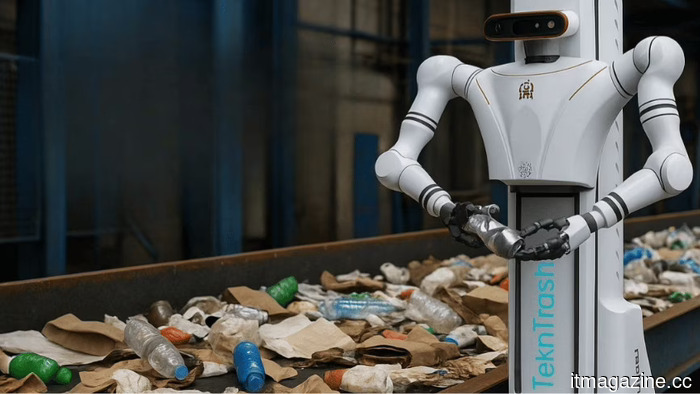 A UK recycling company has introduced a Chinese-manufactured humanoid robot in response to a 40% yearly employee turnover and an eightfold higher fatality rate in the waste sorting industry.
A UK recycling company has introduced a Chinese-made humanoid robot to address the challenges in the waste sorting industry, which experiences a 40% annual employee turnover and an eightfold increase in fatality rates.
A UK recycling company has introduced a Chinese-manufactured humanoid robot in response to a 40% yearly employee turnover and an eightfold higher fatality rate in the waste sorting industry.
A UK recycling company has introduced a Chinese-made humanoid robot to address the challenges in the waste sorting industry, which experiences a 40% annual employee turnover and an eightfold increase in fatality rates.
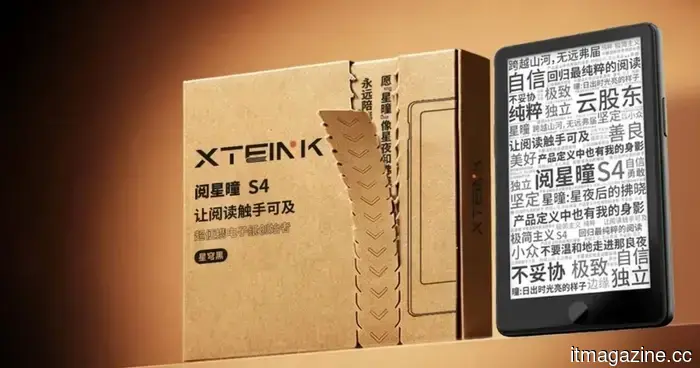 Xteink's newest e-reader features Android on a compact display that easily attaches to your phone.
Xteink's latest S4 swaps its exclusive operating system for Android 11, allowing access to third-party reading applications such as Kindle, Kobo, and Libby.
Xteink's newest e-reader features Android on a compact display that easily attaches to your phone.
Xteink's latest S4 swaps its exclusive operating system for Android 11, allowing access to third-party reading applications such as Kindle, Kobo, and Libby.
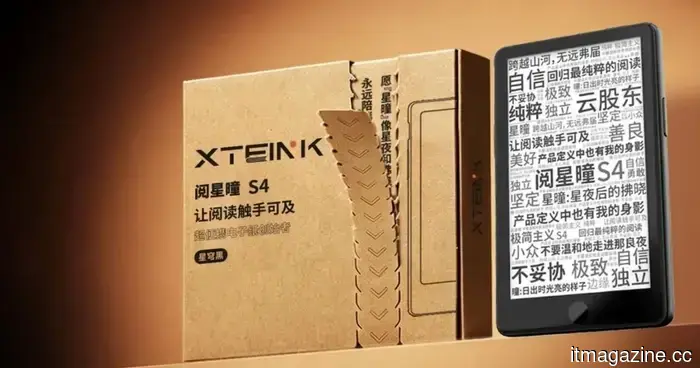 Xteink's newest e-reader introduces Android on a compact screen that easily attaches to your phone.
Xteink's latest S4 replaces its proprietary operating system with Android 11, allowing access to third-party reading applications such as Kindle, Kobo, and Libby.
Xteink's newest e-reader introduces Android on a compact screen that easily attaches to your phone.
Xteink's latest S4 replaces its proprietary operating system with Android 11, allowing access to third-party reading applications such as Kindle, Kobo, and Libby.
 Google Pixel 11 series: Tensor G6, Pixel Glow, updated cameras, and all other information that has been leaked thus far.
The Google Pixel 11 series is several months from launch, but leaks have already disclosed information regarding the new Tensor G6 chip, design modifications, camera enhancements, and more. Here's all the information we have at this point.
Intel reaches an all-time high amid discussions with Apple regarding foundry services, as the US government's $8.9 billion investment sees a 300% return in just nine months.
Intel's shares rose 14% following discussions about chip manufacturing with Apple, adding to a 330% increase since the government acquired a 10% stake. The 18A node is attracting interest from Apple, Musk, and Amazon.
Google Pixel 11 series: Tensor G6, Pixel Glow, updated cameras, and all other information that has been leaked thus far.
The Google Pixel 11 series is several months from launch, but leaks have already disclosed information regarding the new Tensor G6 chip, design modifications, camera enhancements, and more. Here's all the information we have at this point.
Intel reaches an all-time high amid discussions with Apple regarding foundry services, as the US government's $8.9 billion investment sees a 300% return in just nine months.
Intel's shares rose 14% following discussions about chip manufacturing with Apple, adding to a 330% increase since the government acquired a 10% stake. The 18A node is attracting interest from Apple, Musk, and Amazon.
Intel reaches record peak amid discussions with Apple on foundry services, while the US government's $8.9 billion investment sees a 300% gain in just nine months.
Intel's stock surged 14% due to discussions about chip manufacturing with Apple, continuing a 330% increase since the government acquired a 10% stake. The 18A node is attracting interest from Apple, Musk, and Amazon.