
Intel reaches an all-time high amid discussions with Apple about foundry services, as the US government's $8.9 billion investment sees a 300% return in just nine months.
**TL;DR** Intel reached a record high after Apple began discussions about using its foundry, continuing a 330 percent surge since the US government acquired a 10 percent stake. This revival was influenced more by geopolitical demand for US-based chip production than by Intel's manufacturing alone.
In April 2025, Intel's shares were valued at 18 dollars. The company had recently dismissed its CEO, lost the AI chip competition to Nvidia to such an extent that analysts excluded it from rival comparisons, and was largely viewed in financial circles as a takeover target or a company at risk of fragmentation. Just fourteen months later, Intel achieved an all-time high on Tuesday following Bloomberg's report of Apple's initial talks to use Intel's foundry for its American products. The stock surged 14 percent in one day, marking a 175 percent rise for the year and over 330 percent since the US government took a 10 percent stake last August. This remarkable turnaround is unprecedented in recent semiconductor history and wasn’t accomplished solely by Intel.
**The Stake**
In August 2025, the US government injected 8.9 billion dollars into Intel's common stock, acquiring 433 million shares priced at 20.47 dollars each. This funding came from two sources: 5.7 billion dollars from unfulfilled CHIPS Act grants converted into equity and 3.2 billion dollars from the Secure Enclave defense program. The government received a 9.9 percent stake without board representation or governance rights, pledging to vote with Intel's board on shareholder issues. Additionally, it secured a five-year warrant to purchase an extra five percent at 20 dollars per share, which would activate only if Intel sold a majority of its foundry business. This investment is now valued at around 36 billion dollars, yielding over 300 percent in less than a year— a return unforeseen by Washington.
The government’s investment was not driven by financial motives; it was strategic. Intel operates the sole advanced semiconductor fabrication facilities in the United States. TSMC dominates 64 percent of the global foundry market, producing almost all of Apple’s, Nvidia’s, and AMD’s most cutting-edge chips predominantly in Taiwan. National security officials have identified the concentration of critical technology production in Taiwan, just 130 kilometers from China, as a significant vulnerability for the United States. The CHIPS Act aimed to mitigate this risk. The equity stake was intended to ensure Intel's longevity until CHIPS Act investments could yield benefits.
**The Turnaround**
Lip-Bu Tan took over as CEO in March 2025, following the board’s dismissal of Pat Gelsinger over the company's inability to counter Nvidia’s AI chip supremacy. Tan, an experienced semiconductor investor and former Intel board member, took charge of a company that had seen its market value plummet by over 60 percent within a year. He laid off 15,000 employees, restructured the foundry business into a distinct subsidiary, and prioritized engineering efforts on the 18A process node, Intel's most advanced manufacturing technology and the first cutting-edge logic process entirely developed in the U.S.
Results came quicker than anticipated. In the first quarter of 2026, Intel reported revenue of 13.6 billion dollars, exceeding Wall Street's forecast of 12.3 billion dollars. Earnings per share reached 29 cents, far above the expected one cent, resulting in a single-day stock surge of 24 percent—the largest increase since 1987. Revenue from data centers and AI rose 22 percent year-on-year to 5.1 billion dollars, driven by rising CPU demand for agentic AI workloads that require more processing than Nvidia’s GPUs can provide. Foundry revenue also grew by 16 percent to 5.4 billion dollars. This marked the sixth consecutive quarter where Intel exceeded expectations under Tan.
**The Apple Question**
According to Bloomberg, Apple is in early-stage discussions with Intel and Samsung about manufacturing some of its M-series processors, a move branded as a “Taiwan plus one” strategy. Since 2016, Apple has exclusively relied on TSMC after stepping away from Samsung’s foundry. Tim Cook's 600 billion dollar pledge for American manufacturing—revealed as the American Manufacturing Program earlier this year—spurred both political and strategic motivation to diversify to a US-based foundry. Intel's 18A process, a 1.8-nanometer-class node set to launch in late 2026, is the first American manufacturing technology that could potentially produce Apple's chips.
These discussions are still in the early stages, and no orders have been finalized yet. Apple harbors internal doubts about whether Intel's yields and performance can match those of TSMC. Analysts suggest that Apple is more likely to use Intel for lower-end M-series components, such as those for the MacBook Air and base iPad models, rather than flagship processors for the iPhone and MacBook Pro. If Apple transitions
Other articles
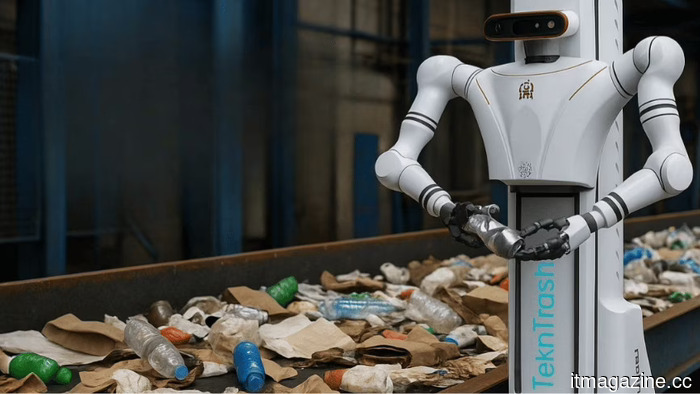 A UK recycling company has introduced a Chinese-manufactured humanoid robot in response to a 40% yearly employee turnover and an eightfold higher fatality rate in the waste sorting industry.
A UK recycling company has introduced a Chinese-made humanoid robot to address the challenges in the waste sorting industry, which experiences a 40% annual employee turnover and an eightfold increase in fatality rates.
A UK recycling company has introduced a Chinese-manufactured humanoid robot in response to a 40% yearly employee turnover and an eightfold higher fatality rate in the waste sorting industry.
A UK recycling company has introduced a Chinese-made humanoid robot to address the challenges in the waste sorting industry, which experiences a 40% annual employee turnover and an eightfold increase in fatality rates.
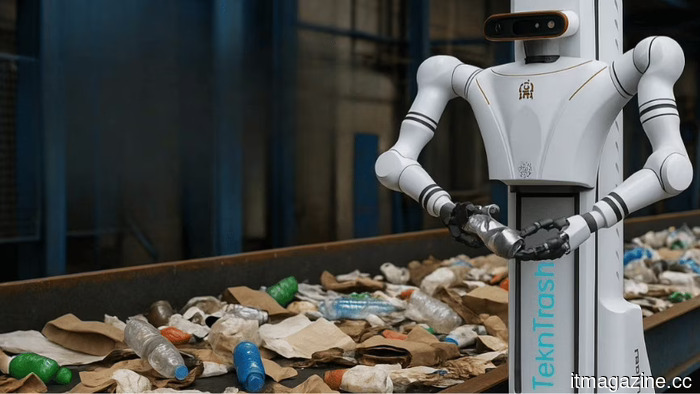 A UK recycling company has introduced a Chinese-made humanoid robot to address the challenges in the waste sorting industry, which is experiencing a 40% annual employee turnover and an eightfold higher fatality rate.
A UK recycling company has introduced a humanoid robot made in China to address the challenges in the waste sorting industry, which is experiencing a 40% annual turnover of staff and an eightfold higher fatality rate.
Intel reaches record peak amid discussions with Apple on foundry services, while the US government's $8.9 billion investment sees a 300% gain in just nine months.
Intel's stock surged 14% due to discussions about chip manufacturing with Apple, continuing a 330% increase since the government acquired a 10% stake. The 18A node is attracting interest from Apple, Musk, and Amazon.
A UK recycling company has introduced a Chinese-made humanoid robot to address the challenges in the waste sorting industry, which is experiencing a 40% annual employee turnover and an eightfold higher fatality rate.
A UK recycling company has introduced a humanoid robot made in China to address the challenges in the waste sorting industry, which is experiencing a 40% annual turnover of staff and an eightfold higher fatality rate.
Intel reaches record peak amid discussions with Apple on foundry services, while the US government's $8.9 billion investment sees a 300% gain in just nine months.
Intel's stock surged 14% due to discussions about chip manufacturing with Apple, continuing a 330% increase since the government acquired a 10% stake. The 18A node is attracting interest from Apple, Musk, and Amazon.
 Schools are utilizing VR headsets to help alleviate student stress and address attention problems.
Schools in London are employing VR headsets to assist students in coping with exam stress and ADHD, with 90% of students indicating an instant reduction in their stress levels.
Schools are utilizing VR headsets to help alleviate student stress and address attention problems.
Schools in London are employing VR headsets to assist students in coping with exam stress and ADHD, with 90% of students indicating an instant reduction in their stress levels.
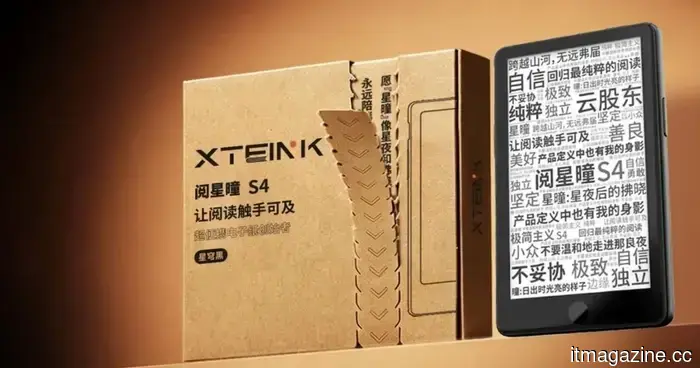 Xteink's newest e-reader introduces Android on a compact screen that easily attaches to your phone.
Xteink's latest S4 replaces its proprietary operating system with Android 11, allowing access to third-party reading applications such as Kindle, Kobo, and Libby.
Intel reaches an all-time high amid discussions with Apple regarding foundry services, as the US government's $8.9 billion investment sees a 300% return in just nine months.
Intel's shares rose 14% following discussions about chip manufacturing with Apple, adding to a 330% increase since the government acquired a 10% stake. The 18A node is attracting interest from Apple, Musk, and Amazon.
Xteink's newest e-reader introduces Android on a compact screen that easily attaches to your phone.
Xteink's latest S4 replaces its proprietary operating system with Android 11, allowing access to third-party reading applications such as Kindle, Kobo, and Libby.
Intel reaches an all-time high amid discussions with Apple regarding foundry services, as the US government's $8.9 billion investment sees a 300% return in just nine months.
Intel's shares rose 14% following discussions about chip manufacturing with Apple, adding to a 330% increase since the government acquired a 10% stake. The 18A node is attracting interest from Apple, Musk, and Amazon.
Intel reaches an all-time high amid discussions with Apple about foundry services, as the US government's $8.9 billion investment sees a 300% return in just nine months.
Intel’s shares surged 14% due to discussions regarding chip manufacturing with Apple, building on a 330% increase since the government acquired a 10% stake. The 18A node is attracting interest from Apple, Musk, and Amazon.