
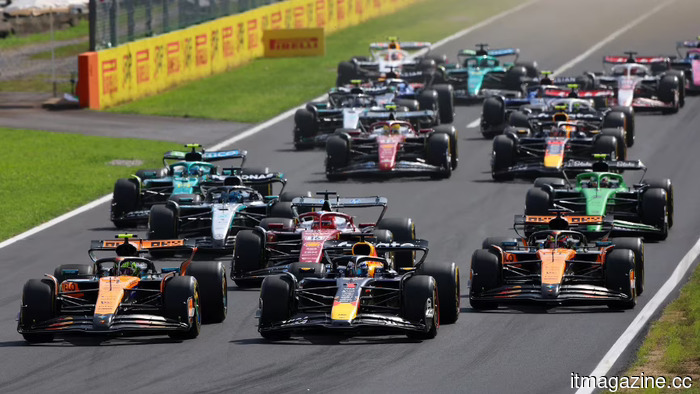
AI is now a sponsor in F1, as well as serving as a strategist and a technical director.
In the past six months, eight new AI partnerships have been established, with Williams operating Claude, McLaren using Gemini, and Red Bull leveraging Oracle. The significant regulatory changes set for 2026 have transformed the Formula One paddock into one of the largest live commercial AI implementations in sports.
Traditionally, Formula One teams have relied on data, albeit quietly; now they are more vocal about it. As reported by Reuters, new AI collaborations among F1 and its 11 teams have surged, with tech spending outpacing almost all other budget categories. Notably, AI and machine-learning companies represent four of the top 15 new sponsors in the sport. Key partnerships include Williams’ integration of Anthropic’s Claude, Red Bull’s expanding relationship with Oracle, and McLaren’s transition from Google Pixel hardware to Gemini.
This shift highlights a convergence of engineering and software, signaling a significant moment in the sport's evolution.
The financial landscape is evolving: according to data from Ampere Analysis, technology now leads the top spending categories for F1 teams, reaching an estimated $769 million last season—a 41% increase from the previous year. Yahoo Sports’ coverage breaks down these partnerships, revealing a concentrated cluster of AI and cloud firms, including CoreWeave, which is now working with Aston Martin.
Oracle's role with Red Bull has deepened, Anthropic is newly engaged with Williams for race strategy, and Google has incorporated Gemini into McLaren’s analytics. Each partnership is not only a marketing strategy but also a substantial operational commitment.
The crux of this evolution is the 2026 technical regulation overhaul—the most extensive change in over ten years—affecting car development significantly and favoring teams adept at quickly assessing numerous design variations while placing those relying on traditional wind-tunnel testing at a disadvantage. For instance, Racing Bulls partnered with Neural Concept to utilize digital twins and machine learning for aerodynamic design assessments that would be impossible within the FIA's testing limits, a strategy mirrored by many teams.
Since the 2022 budget cap, F1 has become a sport where competitive advantages hinge on financial resources, computational power, and talent access. IMD’s analysis identifies that under budget restrictions, winning teams are those achieving the highest decision quality per computing dollar spent, highlighting the role of generative AI in strategy rooms, engineering, and CFD workflows.
During race weekends, AI's contributions are evident in real-time calculations. According to Google Cloud, McLaren runs nearly 300 million simulations before race day, enabling generative models to identify pit-window options and tire strategies that no human strategist could evaluate within a single weekend. The resulting predictions are described as having an "almost eerie" accuracy.
Beyond visible applications, Formula 1 has developed generative AI workflows on AWS to expedite race-day problem-solving, addressing telemetry anomalies and minimizing delays in broadcasting incidents. Additionally, Lenovo's ThinkPad X9 Aura Edition was tested at the Chinese Grand Prix, yielding analytics insights over 30% faster than traditional laptops—incremental improvements that accumulate over a full season.
The FIA is also embracing AI for enforcing technical regulations, marking a shift to algorithmic rule enforcement as they seek analytical capabilities on par with the teams.
The partnership between Anthropic and Williams demonstrates a larger strategic trend in the AI sector as Anthropic launches a $1.5 billion enterprise AI services firm. The Williams project acts as a testing ground for Claude in a live environment, providing valuable insights for Anthropic's future enterprise clients.
The scale of data produced by F1 cars has reached a point where AI investment seems justified. Reports suggest McLaren vehicles generate approximately 250 million data points per race, and with newer sensors, that number is likely increasing. In 2026, cars boast between 300 and 600 onboard sensors, streaming vast amounts of telemetry data that encompass aerodynamic, mechanical, electrical, thermal, and driver-input metrics.
Teams are using advanced AI strategies: Mercedes employs G42’s predictive algorithms alongside SAP systems, Ferrari has developed custom models on Amazon SageMaker to enhance CFD simulations, while McLaren utilizes mobile data centers for real-time updates of their digital twins. Although approaches may differ, the overarching trend remains consistent.
However, challenges and limitations persist. The talent issue is one such constraint. Race strategists, akin to fighter pilots, possess years of intuition that technology cannot fully replicate. Pure-AI competition lacks the human stakes that influence outcomes, and while humans remain integral to the pit wall, they are now equipped with advanced tools.
The cost cap also poses questions about competitive equity, as F1’s $135 million budget cap aims to prevent an unchecked arms race in computing and engineering, yet AI deployment could revitalize that race. Debates surrounding the accounting treatment of AI resources from partners are ongoing, whether the FIA will tighten regulations or permit AI sponsorships as a legitimate cost-cap limitation remains to be seen.
Lastly, if all teams gain equivalent access to generative AI, the competitive edge from its implementation may diminish
Other articles
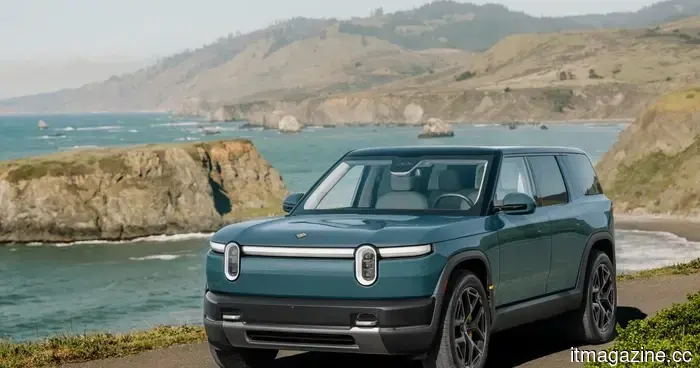 Rivian has managed to cut the production costs of the R2 EVs by 50%. Hopefully, this reduction will be reflected in prices for consumers.
Rivian claims that the R2 is more than 50% less expensive to manufacture compared to its R1 models, which represents a significant advance towards more affordable electric vehicles, provided that consumers recognize the value.
Rivian has managed to cut the production costs of the R2 EVs by 50%. Hopefully, this reduction will be reflected in prices for consumers.
Rivian claims that the R2 is more than 50% less expensive to manufacture compared to its R1 models, which represents a significant advance towards more affordable electric vehicles, provided that consumers recognize the value.
 STMicroelectronics aims to generate over $3 billion from the space sector.
STMicroelectronics aims to achieve over $3 billion in total revenue from space chips between 2026 and 2028, boosted by the growth of Starlink.
STMicroelectronics aims to generate over $3 billion from the space sector.
STMicroelectronics aims to achieve over $3 billion in total revenue from space chips between 2026 and 2028, boosted by the growth of Starlink.
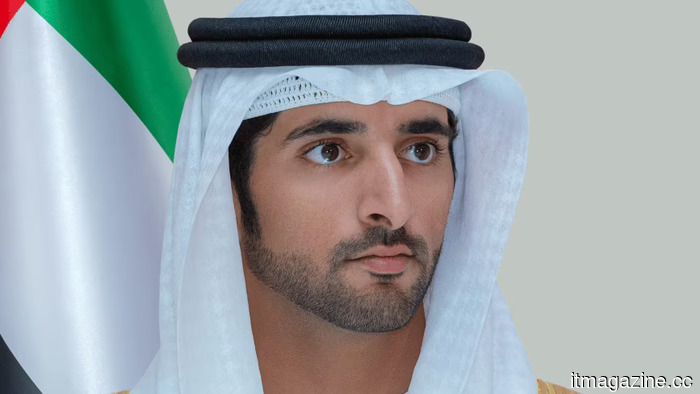 Dubai requires private sector companies to adopt agentic AI within two years, supported by incubators, training programs, and specialized funding.
Sheikh Hamdan initiates a two-year initiative aimed at encouraging Dubai's private sector to embrace agentic AI. Training will be provided to all business councils, incubators, and funds via the Chamber.
Dubai requires private sector companies to adopt agentic AI within two years, supported by incubators, training programs, and specialized funding.
Sheikh Hamdan initiates a two-year initiative aimed at encouraging Dubai's private sector to embrace agentic AI. Training will be provided to all business councils, incubators, and funds via the Chamber.
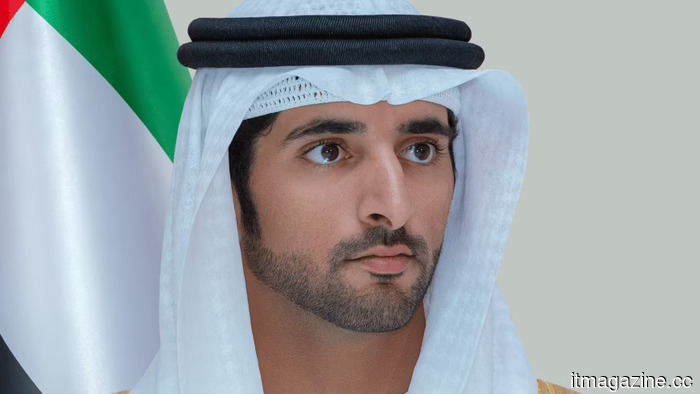 Dubai requires the adoption of agentic AI in the private sector within a two-year timeframe, supported by incubators, training programs, and allocated funds.
Sheikh Hamdan initiates a two-year effort for the private sector in Dubai to embrace agentic AI. Training will be provided for all business councils, incubators, and funds via the Chamber.
Dubai requires the adoption of agentic AI in the private sector within a two-year timeframe, supported by incubators, training programs, and allocated funds.
Sheikh Hamdan initiates a two-year effort for the private sector in Dubai to embrace agentic AI. Training will be provided for all business councils, incubators, and funds via the Chamber.
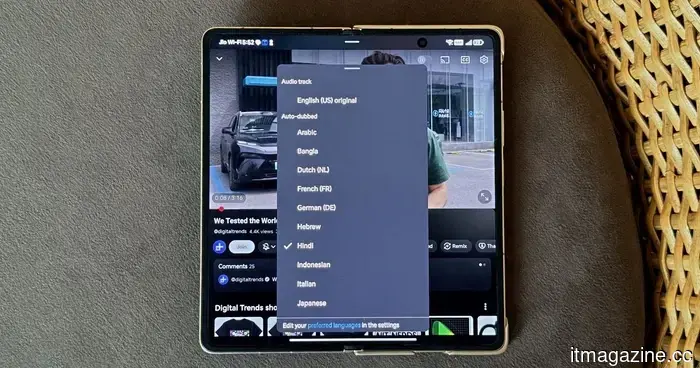 YouTube's auto-dubbing lacks a vital option: a way to turn it off.
I didn't request to listen to Marques Brownlee speaking Japanese. YouTube made that choice for me, and there's no universal way to disable it.
YouTube's auto-dubbing lacks a vital option: a way to turn it off.
I didn't request to listen to Marques Brownlee speaking Japanese. YouTube made that choice for me, and there's no universal way to disable it.
 This PC is spacious enough to reside in and features its own air conditioning system to cool its large components.
A Chinese creator constructed a room-sized RGB PC that includes a desk, oversized fake components, and a 12kW air conditioner, transforming desktop cooling into an immersive experience focused on heat and airflow.
This PC is spacious enough to reside in and features its own air conditioning system to cool its large components.
A Chinese creator constructed a room-sized RGB PC that includes a desk, oversized fake components, and a 12kW air conditioner, transforming desktop cooling into an immersive experience focused on heat and airflow.
AI is now a sponsor in F1, as well as serving as a strategist and a technical director.
In a span of six months, Formula One has seen the introduction of eight new AI partnerships, including Williams utilizing Claude, McLaren employing Gemini, and Red Bull collaborating with Oracle.