
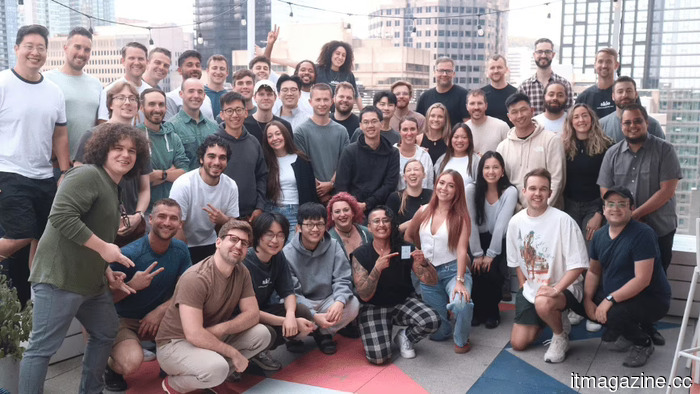
Skio, which received support from Y Combinator, was sold to Recharge for $105 million in cash after achieving an annual recurring revenue of $32 million without a marketing or sales team.
Skio, a Shopify subscription platform supported by $8 million in funding and without any spending on marketing, sales, or advertising, was acquired by Recharge for $105 million in cash. At the time of acquisition, Skio had achieved $32 million in annual recurring revenue (ARR) and processed $4 billion in payments. Founder Kennan Frost, who previously founded Skio, has since initiated a new AI advertising venture named Icon, which is backed by Founders Fund.
Frost dropped out of college and worked as an engineer at Pinterest until an incident caused him to leave. He applied to Y Combinator in 2020 and felt he struggled through the program until pivoting to focus on subscription payments, which led to his success. Skio was bought by Recharge on April 30, 2026, after Frost had stepped back from operational duties for about two years, appointing a new CEO while he pursued new projects. Although the acquisition may seem small compared to larger enterprise software deals, it stands out for what a startup can achieve without typical spending on marketing and sales.
Skio developed subscription infrastructure for Shopify merchants, providing essential billing, retention, customer portals, and analytics tools for brands that sell products on a recurring basis. Recharge dominated the subscription commerce market on Shopify, supporting over 20,000 merchants and processing more than $20 billion in gross merchandise volume each year. In contrast, Skio marketed itself as a faster, more modern choice with deeper compatibility with Shopify, enhanced customer portals, and quicker integration, appealing to brands that found Recharge too inflexible and slow.
As subscription billing sits at the core of the checkout process for recurring-revenue brands, Skio's premise was that established players like Recharge had become hindered by outdated technology. This strategy proved successful enough to generate $32 million in ARR, but it was not distinctive enough to fend off the incumbent from acquiring the challenger.
The financials of the deal are quite straightforward, with Skio raising $8 million in total capital and selling for $105 million in cash, translating to a return of approximately 13 times the invested capital for its investors. Frost advanced this with an unconventional approach to operations—eschewing marketing budgets, advertising, and dedicated sales teams. Instead, growth stemmed from product excellence and word-of-mouth recommendations within the Shopify community. In just three years, Frost grew Skio from zero to $10 million in ARR and profitability. The new CEO continued this model by focusing spending solely on engineering and product development, allowing the product itself to drive customer acquisition, with the company processing $4 billion in payments at sale time. The trend of larger SaaS firms purchasing smaller, innovative competitors rather than investing in product development is a familiar pattern in enterprise software, and Recharge’s acquisition of Skio fits this strategy.
Shopify now sustains more than 5.6 million active online stores globally, processing over $300 billion in gross merchandise volume in 2025. The platform's annual revenue reached $11.6 billion, with about 73% of that coming from merchant solutions, which include payments, shipping, and third-party applications operating within Shopify's ecosystem. Subscription apps play a vital role in this ecosystem by turning one-time buyers into repeat customers, enhancing the unit economics for brands.
The new Recharge-Skio entity will manage subscriptions for over 20,000 merchants, making the consolidation strategically beneficial for Recharge as it acquires Skio’s technology and customer base while eliminating its closest competitor. For the broader Shopify subscription market, this deal reduces competition, notably affecting merchants who chose Skio due to its distinction from Recharge, now finding themselves under Recharge's service. The consolidation of fintech and commerce infrastructure has rapidly increased in 2026, with companies acquiring those with product advantages to create larger entities that serve markets that cannot sustain multiple scaled competitors.
Frost's trajectory after Skio represents the rapid pace of the current startup cycle. He has already established Icon, which is supported by Peter Thiel's Founders Fund, recently closing a $6 billion growth fund in May 2026, alongside executives from OpenAI, Pika, and Cognition. Icon leverages AI to create and manage advertising campaigns, positioning itself as an AI-native alternative to the agencies and performance marketing teams relied upon by direct-to-consumer brands. The transition from subscription infrastructure to AI-driven advertising may seem significant, but both serve the same market—Shopify merchants seeking to elevate their brands with limited resources.
The fastest-growing companies backed by Y Combinator are now reaching billion-dollar valuations in less than three years, and while Frost's exit from Skio is comparatively smaller, it reflects a trend among alumni: creating a product with minimal capital, achieving profitability, selling to a larger player, and then reinvesting the founder's credibility and capital into new opportunities. The $105 million exit is not the conclusion; it marks the beginning of the next venture.
Frost shared on social media that Skio started
Other articles
 Grok is set to arrive on CarPlay as iOS 26.4 transforms the car dashboard into a battleground for AI platforms.
Grok has joined ChatGPT, Perplexity, Claude, and Gemini on CarPlay following the release of iOS 26.4, which allowed AI chatbots on the platform. The car dashboard has now become the most competitive interface in technology.
Grok is set to arrive on CarPlay as iOS 26.4 transforms the car dashboard into a battleground for AI platforms.
Grok has joined ChatGPT, Perplexity, Claude, and Gemini on CarPlay following the release of iOS 26.4, which allowed AI chatbots on the platform. The car dashboard has now become the most competitive interface in technology.
 DJI is prohibited in both Beijing and Washington as security concerns regarding drones pressure the world's leading manufacturer from both directions.
Beijing prohibited all drone sales starting May 1. In December, the US FCC prohibited new products from DJI. The company that pioneered the industry finds itself in a conflict involving two governments.
DJI is prohibited in both Beijing and Washington as security concerns regarding drones pressure the world's leading manufacturer from both directions.
Beijing prohibited all drone sales starting May 1. In December, the US FCC prohibited new products from DJI. The company that pioneered the industry finds itself in a conflict involving two governments.
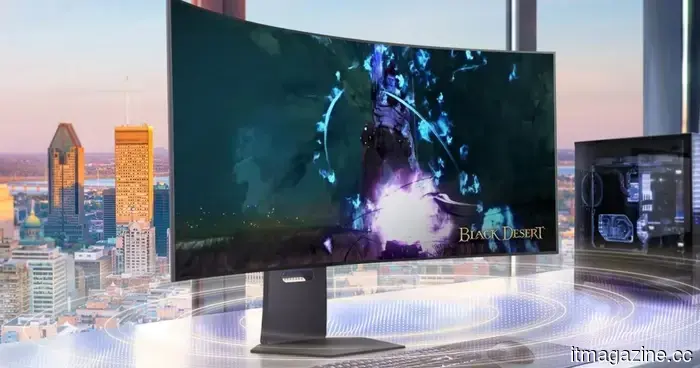 LG's newest luxurious gaming monitor features a 45-inch OLED display that achieves 330Hz at 5K resolution.
The LG UltraGear 45GX950B incorporates AI functionalities such as upscaling and scene optimization, while maintaining the same OLED panel and key specifications as its previous model.
LG's newest luxurious gaming monitor features a 45-inch OLED display that achieves 330Hz at 5K resolution.
The LG UltraGear 45GX950B incorporates AI functionalities such as upscaling and scene optimization, while maintaining the same OLED panel and key specifications as its previous model.
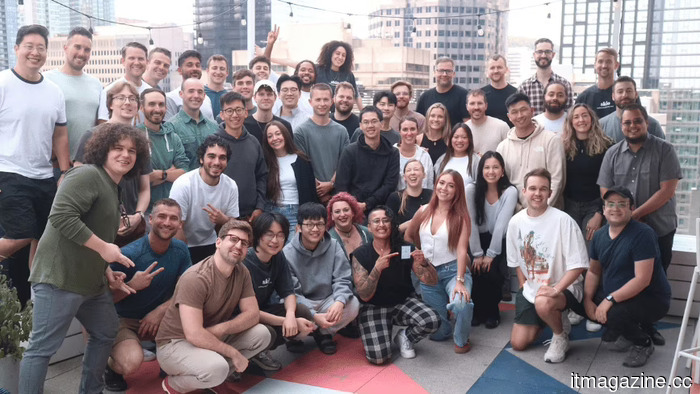 Skio, supported by Y Combinator, was sold to Recharge for $105 million in cash after achieving an annual recurring revenue of $32 million without a marketing or sales team.
Skio secured $8 million in funding, reached an annual recurring revenue of $32 million without a sales team or advertising, and was sold to Recharge, a competitor of Shopify in the subscription space, for $105 million in cash. The founder has previously launched an AI startup called Icon.
Skio, supported by Y Combinator, was sold to Recharge for $105 million in cash after achieving an annual recurring revenue of $32 million without a marketing or sales team.
Skio secured $8 million in funding, reached an annual recurring revenue of $32 million without a sales team or advertising, and was sold to Recharge, a competitor of Shopify in the subscription space, for $105 million in cash. The founder has previously launched an AI startup called Icon.
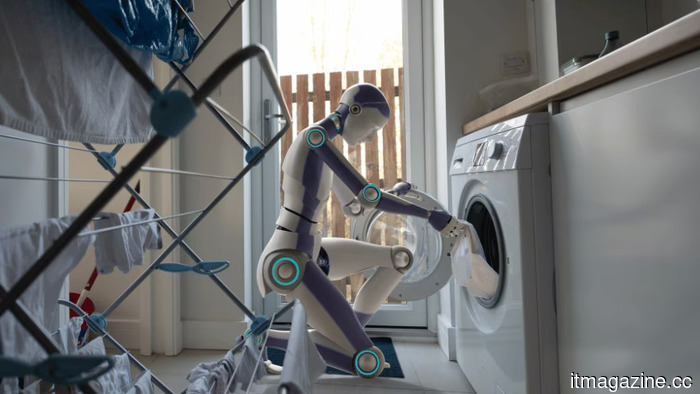 China's smartphone supply chain shifts focus to humanoid robots as Lingyi iTech aims for production of 500,000 units by 2030.
Lingyi iTech, Lens Technology, and Foxconn are converting their smartphone manufacturing facilities for humanoid robots. Morgan Stanley has increased its 2026 forecast for China to 28,000 units.
China's smartphone supply chain shifts focus to humanoid robots as Lingyi iTech aims for production of 500,000 units by 2030.
Lingyi iTech, Lens Technology, and Foxconn are converting their smartphone manufacturing facilities for humanoid robots. Morgan Stanley has increased its 2026 forecast for China to 28,000 units.
 DJI faces bans in both Beijing and Washington as security concerns regarding drones pressure the world's leading manufacturer from both directions.
Beijing prohibited all drone sales starting May 1. In December, the US FCC halted the introduction of new DJI products. The company that pioneered the industry finds itself in a dilemma involving two governments.
DJI faces bans in both Beijing and Washington as security concerns regarding drones pressure the world's leading manufacturer from both directions.
Beijing prohibited all drone sales starting May 1. In December, the US FCC halted the introduction of new DJI products. The company that pioneered the industry finds itself in a dilemma involving two governments.
Skio, which received support from Y Combinator, was sold to Recharge for $105 million in cash after achieving an annual recurring revenue of $32 million without a marketing or sales team.
Skio secured $8M in funding, achieved an annual recurring revenue of $32M without a sales team or advertisements, and was acquired by Recharge, a competitor of Shopify in the subscription space, for $105M in cash. The founder has also launched an AI startup named Icon.