
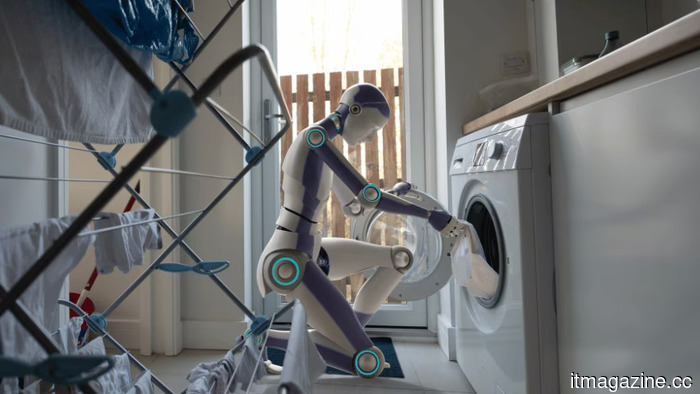
China's smartphone supply chain shifts focus to humanoid robots as Lingyi iTech aims for production of 500,000 units by 2030.
TL;DR: China's smartphone supply chain is shifting towards the production of humanoid robots, as companies like Lingyi iTech, Lens Technology, and AAC Technologies convert their precision component factories for robotics. Morgan Stanley has revised its 2026 projection to 28,000 units, while Foxconn is setting up robot manufacturing lines in Vietnam and UBTech's Walker S2 is entering mass production with orders surpassing 800 million yuan.
In April, the Honor D1 humanoid robot completed the Beijing half-marathon in 48 minutes and 19 seconds while under remote control and 50 minutes and 26 seconds autonomously, outperforming all other robots in the competition. The winning robot utilized liquid-cooling technology originally developed for Honor’s smartphones, with structural pieces provided by Lens Technology and AAC Technologies, major players in China's precision parts market. The assembly of this bipedal robot, which can run 21 kilometers without overheating, was done by a company previously focused mainly on smartphone screens.
This marks the emergence of China's humanoid robot industry in 2026, which is being developed from an already established supply chain rather than from scratch.
The shift
In early 2026, Lingyi iTech, a manufacturer in Shenzhen supplying components to Apple, Samsung, and Xiaomi, announced it would fully commit to embodied intelligence. The company is constructing a super factory in Beijing with plans to produce 10,000 humanoid robots annually by the end of 2026 and 500,000 per year by 2030. Lens Technology, known for producing cover glass for iPhones and Samsung devices, provided materials for the Honor D1, while AAC Technologies contributed additional precision components. These firms are not startups in robotics; they are established players from the smartphone era repurposing their existing resources.
The rationale behind this transition is industrial rather than speculative. While China's smartphone market shipped around 280 million units in 2025, growth has stagnated. Components like precision motors, sensors, thermal management systems, lightweight structures, and battery cells utilized in phones are equally relevant for humanoid robots, and the existing factories for mass production already exist with engineers in place. The shift is about moving from one product type to another while leveraging the same supply chain.
The manufacturing landscape
UBTech, one of the largest humanoid robot firms in China, collaborated with Foxconn in 2025 to integrate Walker S1 robots into iPhone assembly lines. The newer Walker S2 model began mass production in early 2026, with orders surpassing 800 million yuan. Foxconn is also preparing to set up humanoid robot manufacturing lines in Vietnam, with production trials slated for September 2026 and official production to commence in November. The factory that has produced the most iPhones globally is now gearing up to manufacture robots that will build the next wave of consumer electronics.
Tesla views its Shanghai Gigafactory as essential to mass-producing its Optimus humanoid robot, recognizing China's leading role in supplying necessary components. However, Tesla’s ambitions face a market that is more advanced than many in the West perceive. Morgan Stanley revised its forecast for China's humanoid robot sales in 2026 to 28,000 units, marking a 133 percent increase from the previous year, and anticipates a 16 percent drop in material costs due to efficiencies transferring from smartphone production to robotics.
Key figures
In 2025, Shenzhen's robotics output reached a peak of 242.6 billion yuan, a 20 percent rise year-on-year. The city now represents 43 percent of China's overall service robot output, and production costs for humanoid robots are declining at an annual rate of around 20 percent, a trend reminiscent of the early stages of smartphone manufacturing.
Morgan Stanley forecasts that the global humanoid robot market could hit $5 trillion by 2050, with 25.4 million robots deployed worldwide by 2036. Tesla has increased its capital expenditure in 2026 to $25 billion, with a notable portion allocated to Optimus production and AI chip development. While Tesla plans for hundreds of units in 2026, Chinese manufacturers are gearing up for tens of thousands, not due to lacking ambition but owing to their readiness of supply chains.
The competitive landscape
The quest to commercialize humanoid robots is global, but the advantage in manufacturing is centralized. Siemens and Humanoid successfully tested an Nvidia-powered humanoid robot in a live factory scenario in Erlangen, Germany, confirming its applicability in production settings. Meta acquired Assured Robot Intelligence to create an open platform for humanoid robot intelligence, positioning itself as an alternative to robotics firms in China and the U.S. Meanwhile, Neura Robotics in Germany has garnered investor interest as an option beyond Chinese and American robotics endeavors.
Yet, producing at scale presents a different set of challenges compared to creating prototypes. China commands about 90 percent of the global humanoid robot market, not because its robots are necessarily superior, but due to a more
Other articles
 As the RAM shortage impacts the gaming sector, Nvidia might bring back a previous RTX 3000 series graphics card.
Nvidia might reintroduce the RTX 3060 due to VRAM shortages affecting gaming GPUs, presenting a viable option with increased memory despite its older design.
As the RAM shortage impacts the gaming sector, Nvidia might bring back a previous RTX 3000 series graphics card.
Nvidia might reintroduce the RTX 3060 due to VRAM shortages affecting gaming GPUs, presenting a viable option with increased memory despite its older design.
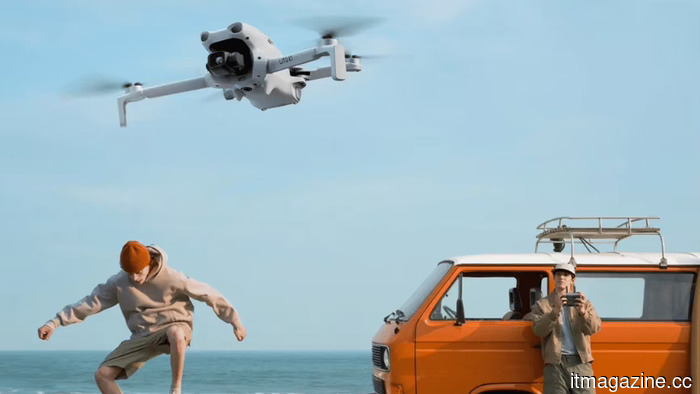 DJI is prohibited in both Beijing and Washington as security concerns regarding drones pressure the world's leading manufacturer from both directions.
Beijing prohibited all drone sales starting May 1. In December, the US FCC prohibited new products from DJI. The company that pioneered the industry finds itself in a conflict involving two governments.
DJI is prohibited in both Beijing and Washington as security concerns regarding drones pressure the world's leading manufacturer from both directions.
Beijing prohibited all drone sales starting May 1. In December, the US FCC prohibited new products from DJI. The company that pioneered the industry finds itself in a conflict involving two governments.
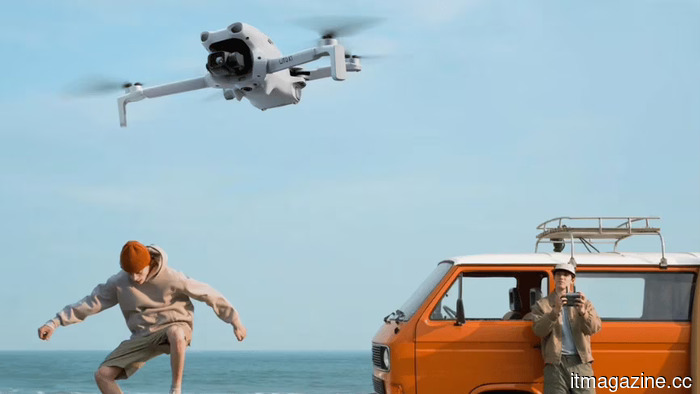 DJI has been prohibited in both Beijing and Washington as security concerns regarding drones press the world's largest manufacturer from both directions.
Beijing prohibited all drone sales starting May 1. In December, the US FCC halted new DJI products. The company that pioneered the industry now finds itself caught between two governments.
DJI has been prohibited in both Beijing and Washington as security concerns regarding drones press the world's largest manufacturer from both directions.
Beijing prohibited all drone sales starting May 1. In December, the US FCC halted new DJI products. The company that pioneered the industry now finds itself caught between two governments.
 Planet Labs introduces three additional Pelican satellites, buoyed by a $900 million backlog and defense contracts that contribute to its first year of profitability.
Planet Labs initiated the launch of Pelicans 7-9 equipped with Nvidia AI, progressing towards a 32-satellite constellation. The company has achieved profitability, boasting a backlog of $900 million along with significant contracts with NATO and the NRO.
Planet Labs introduces three additional Pelican satellites, buoyed by a $900 million backlog and defense contracts that contribute to its first year of profitability.
Planet Labs initiated the launch of Pelicans 7-9 equipped with Nvidia AI, progressing towards a 32-satellite constellation. The company has achieved profitability, boasting a backlog of $900 million along with significant contracts with NATO and the NRO.
 As the RAM crisis impacts the gaming sector, Nvidia may bring back a previous RTX 3000 series GPU.
Nvidia might reintroduce the RTX 3060 due to VRAM shortages affecting gaming GPUs, providing a sensible option with increased memory despite its older design.
As the RAM crisis impacts the gaming sector, Nvidia may bring back a previous RTX 3000 series GPU.
Nvidia might reintroduce the RTX 3060 due to VRAM shortages affecting gaming GPUs, providing a sensible option with increased memory despite its older design.
 Amazon's revenue in Q1 reaches $181.5 billion, but the $16.8 billion gain from Anthropic inflates net income, while free cash flow declines by 95%.
AWS increased by 28% to reach $37.6 billion, while Amazon's custom chip division surpassed $20 billion on an annualized basis. However, over half of the net income was derived from a revaluation of the Anthropic investment.
Amazon's revenue in Q1 reaches $181.5 billion, but the $16.8 billion gain from Anthropic inflates net income, while free cash flow declines by 95%.
AWS increased by 28% to reach $37.6 billion, while Amazon's custom chip division surpassed $20 billion on an annualized basis. However, over half of the net income was derived from a revaluation of the Anthropic investment.
China's smartphone supply chain shifts focus to humanoid robots as Lingyi iTech aims for production of 500,000 units by 2030.
Lingyi iTech, Lens Technology, and Foxconn are converting their smartphone manufacturing facilities for humanoid robots. Morgan Stanley has increased its 2026 forecast for China to 28,000 units.