
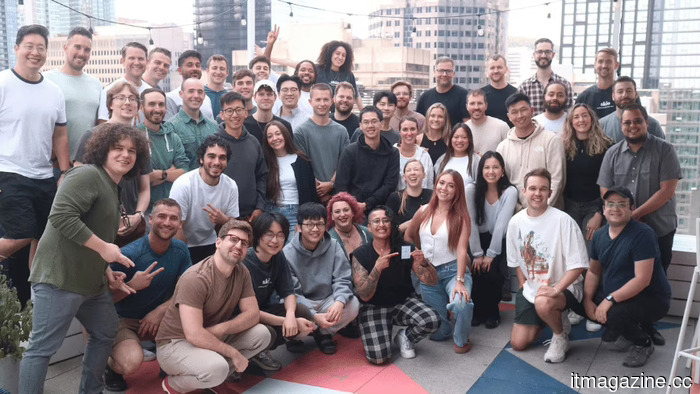
Skio, which received backing from YC, was acquired by Recharge for $105 million in cash after achieving a $32 million ARR without a marketing or sales team.
TL;DR: Skio, a Shopify subscription platform developed with $8 million in total funding and no spending on marketing or sales, was acquired by Recharge for $105 million in cash after achieving $32 million in annual recurring revenue and processing $4 billion in payments. Founder Kennan Frost has since launched Icon, an AI advertising firm supported by Founders Fund.
Kennan Frost, who dropped out of college, previously worked as an engineer at Pinterest before experiencing a panic attack and leaving. In 2020, he applied to Y Combinator and described his time there as a struggle until a pivot to subscription payments turned things around. Five years later, on April 30, 2026, his company, Skio, was sold to Recharge, its largest competitor, for $105 million. Skio had raised a total of $8 million from investors and reached $32 million in annual recurring revenue while processing around $4 billion in transactions. Frost had stepped back from the company roughly two years prior, entrusting operations to a new CEO as he pursued new ventures. While the acquisition is modest by enterprise software standards, it is remarkable considering what a startup achieved without traditional expenditures.
The product offered by Skio created subscription infrastructure for Shopify merchants, including billing, retention, customer portals, and analytics tools necessary for recurring sales. Recharge dominates the subscription commerce market on Shopify, serving over 20,000 merchants and processing more than $20 billion annually. Skio aimed to present itself as a faster, more modern alternative, offering enhanced compatibility, better customer experiences, and quicker integration for brands that found Recharge too inflexible and slow in feature deployment. The checkout experience has become the most critical product in e-commerce, with subscription billing at its core, impacting brand loyalty through various customer interactions. Skio's product strategy was based on the belief that incumbents like Recharge had outdated systems that could not adapt quickly enough to current market demands, a hypothesis that proved valid with their $32 million in ARR, although not distinct enough to prevent Recharge from acquiring them.
The financial details of the exit are notably straightforward. Skio raised $8 million and was sold for $105 million, yielding approximately 13 times the invested capital for its investors. Frost's operational methodology defied conventional SaaS practices, with no spending on marketing, advertising, or a dedicated sales team. Instead, the company's growth relied on product quality and word-of-mouth within the Shopify community. In just three years, Frost scaled Skio from zero to $10 million in ARR and profitability. The new CEO, who began leading about two years ago, maintained this approach by focusing solely on engineering and product development, allowing the product itself to drive customer acquisition. At the time of the sale, the company was processing $4 billion in payments yearly. A prevailing trend in enterprise software is larger companies buying smaller, more innovative ones rather than developing competing products, a logic Recharge followed in acquiring Skio, as it is often cheaper and quicker to purchase a new subscription platform than to create one from the ground up.
Shopify now supports over 5.6 million active online stores globally and processed more than $300 billion in gross merchandise volume in 2025. Its annual revenue hit $11.6 billion, with roughly 73 percent derived from merchant solutions, which encompasses payment, shipping, and third-party apps that integrate with Shopify's main commerce platform. Subscription applications play a vital role in this ecosystem, converting one-time buyers into repeat customers, thereby enhancing the unit economics for brands. The combined Recharge-Skio entity will oversee subscriptions for over 20,000 merchants. For Recharge, this acquisition strategically enhances its technology and customer base while removing a major competitor. However, it also diminishes competition in the Shopify subscription market, as merchants who opted for Skio due to its differentiation now become Recharge customers. The pace of mergers and acquisitions in the fintech and commerce infrastructure sectors has accelerated in 2026, as firms with distribution advantages acquire those with product strengths in smaller markets.
Frost's journey post-Skio showcases the rapid evolution within the current startup landscape. He has already founded a new company, Icon, supported by Peter Thiel’s Founders Fund, which closed a significant $6 billion growth fund in May 2026, along with talent from OpenAI, Pika, and Cognition. Icon employs AI to develop and manage advertising campaigns, aiming to serve as an AI-centric alternative to the creative agencies and performance marketing teams utilized by direct-to-consumer brands. Transitioning from subscription infrastructure to AI-led advertising is not as abrupt as it might seem, as both services target the same customers—Shopify merchants seeking to expand their brands despite limited resources.
The fastest-growing companies backed by Y Combinator are now reaching billion-dollar valuations rapidly, and while Frost’s exit from Skio may seem smaller in comparison, it illustrates a recurring pattern among accelerator alumni: build a product with minimal funding, achieve profitability, sell
Other articles
 Skio, supported by Y Combinator, was sold to Recharge for $105 million in cash after achieving an annual recurring revenue of $32 million without a marketing or sales team.
Skio secured $8 million in funding, reached an annual recurring revenue of $32 million without a sales team or advertising, and was sold to Recharge, a competitor of Shopify in the subscription space, for $105 million in cash. The founder has previously launched an AI startup called Icon.
Skio, supported by Y Combinator, was sold to Recharge for $105 million in cash after achieving an annual recurring revenue of $32 million without a marketing or sales team.
Skio secured $8 million in funding, reached an annual recurring revenue of $32 million without a sales team or advertising, and was sold to Recharge, a competitor of Shopify in the subscription space, for $105 million in cash. The founder has previously launched an AI startup called Icon.
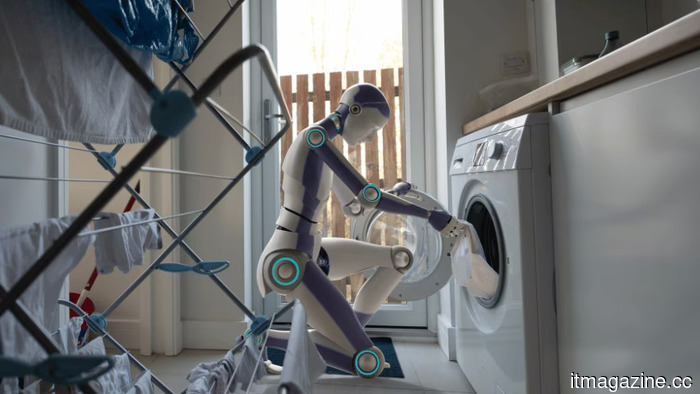 China's smartphone supply chain shifts focus to humanoid robots as Lingyi iTech aims for production of 500,000 units by 2030.
Lingyi iTech, Lens Technology, and Foxconn are converting their smartphone manufacturing facilities for humanoid robots. Morgan Stanley has increased its 2026 forecast for China to 28,000 units.
China's smartphone supply chain shifts focus to humanoid robots as Lingyi iTech aims for production of 500,000 units by 2030.
Lingyi iTech, Lens Technology, and Foxconn are converting their smartphone manufacturing facilities for humanoid robots. Morgan Stanley has increased its 2026 forecast for China to 28,000 units.
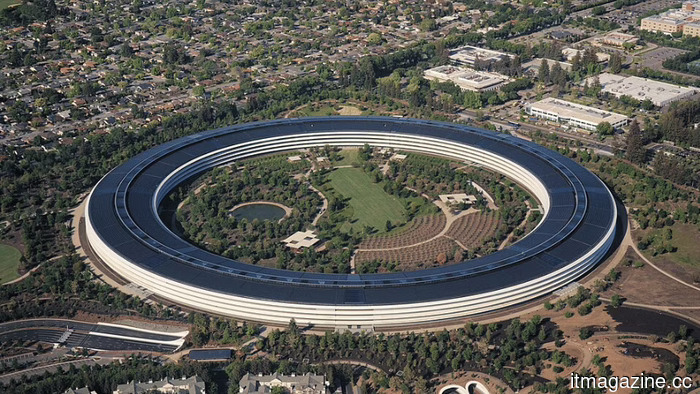 Apple abandons its net cash neutral goal as incoming CEO Ternus gets ready to make investments in AI and acquisitions.
Apple has discontinued its net cash neutral policy following Q2 earnings of $111.2 billion. Incoming CEO Ternus will now have the ability to invest instead of solely returning cash to shareholders.
Apple abandons its net cash neutral goal as incoming CEO Ternus gets ready to make investments in AI and acquisitions.
Apple has discontinued its net cash neutral policy following Q2 earnings of $111.2 billion. Incoming CEO Ternus will now have the ability to invest instead of solely returning cash to shareholders.
 Amazon's revenue for Q1 reaches $181.5 billion, but a $16.8 billion gain from Anthropic boosts net income while free cash flow plummets by 95%.
AWS increased by 28% to reach $37.6 billion, and Amazon's custom chip division surpassed $20 billion on an annualized basis. However, over half of the net income was derived from a revaluation of its investment in Anthropic.
Amazon's revenue for Q1 reaches $181.5 billion, but a $16.8 billion gain from Anthropic boosts net income while free cash flow plummets by 95%.
AWS increased by 28% to reach $37.6 billion, and Amazon's custom chip division surpassed $20 billion on an annualized basis. However, over half of the net income was derived from a revaluation of its investment in Anthropic.
 DJI has been prohibited in both Beijing and Washington due to security concerns surrounding drones, putting pressure on the world’s largest manufacturer from both ends.
Beijing prohibited all drone sales starting May 1. In December, the US FCC halted new products from DJI. The company that pioneered the industry is trapped between two governments.
DJI has been prohibited in both Beijing and Washington due to security concerns surrounding drones, putting pressure on the world’s largest manufacturer from both ends.
Beijing prohibited all drone sales starting May 1. In December, the US FCC halted new products from DJI. The company that pioneered the industry is trapped between two governments.
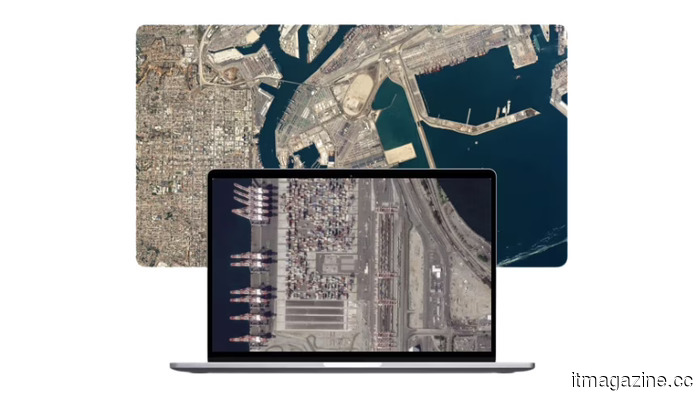 Planet Labs introduces three additional Pelican satellites, buoyed by a $900 million backlog and defense contracts that contribute to its first year of profitability.
Planet Labs initiated the launch of Pelicans 7-9 equipped with Nvidia AI, progressing towards a 32-satellite constellation. The company has achieved profitability, boasting a backlog of $900 million along with significant contracts with NATO and the NRO.
Planet Labs introduces three additional Pelican satellites, buoyed by a $900 million backlog and defense contracts that contribute to its first year of profitability.
Planet Labs initiated the launch of Pelicans 7-9 equipped with Nvidia AI, progressing towards a 32-satellite constellation. The company has achieved profitability, boasting a backlog of $900 million along with significant contracts with NATO and the NRO.
Skio, which received backing from YC, was acquired by Recharge for $105 million in cash after achieving a $32 million ARR without a marketing or sales team.
Skio secured $8 million in funding, achieved an annual recurring revenue of $32 million without a sales team or advertising, and was acquired by Recharge, a competitor of Shopify's subscription service, for $105 million in cash. The founder has previously launched the AI startup Icon.