
OpenAI has made ChatGPT subscriptions available to OpenClaw's 3.2 million users, while Anthropic restricts Claude access to the AI agent platform.
TL;DR OpenAI has made subscriptions for ChatGPT available to OpenClaw, an open-source AI agent framework boasting 346,000 stars on GitHub and 3.2 million users. This allows subscribers to operate autonomous agents using GPT-5.4 for $23 each month. This move contrasts with Anthropic’s earlier decision to restrict Claude subscriptions from OpenClaw in April, creating a competitive divide where OpenAI favors wider distribution while Anthropic focuses on protecting its margins. Sam Altman shared on X at 2:33 a.m. on May 2: “You can now log in to OpenClaw with your ChatGPT account and use your subscription there! Happy lobstering.” This announcement, presented casually as a minor update, has significant implications. OpenAI has effectively made its ChatGPT subscription the system for authentication and billing for OpenClaw, which is now the fastest-growing project in GitHub history, achieving 346,000 stars in less than five months and with over three million users. ChatGPT Plus subscribers can log in via OAuth, utilize GPT-5.4 through the Codex endpoint, and run autonomous AI agents on their own equipment for a total of $23 per month. OpenAI did not develop the most popular AI agent; it hired the developers, supported the foundation, and provided the login access.
The lobster
OpenClaw was developed in November 2025 by Peter Steinberger, an Austrian developer who previously sold a software firm for $100 million and was experimenting with AI coding tools in a café in Madrid. The initial version was named Clawdbot, referencing Anthropic’s Claude with a lobster mascot. Following a trademark dispute from Anthropic, Steinberger renamed it Moltbot, and then finally OpenClaw, as that “never quite rolled off the tongue.” The lobster mascot remained.
The product operates as a locally hosted AI agent connecting to various large language models such as Claude, GPT, DeepSeek, and more, facilitating communication through popular messaging apps like WhatsApp, Telegram, Signal, Discord, Slack, iMessage, and Microsoft Teams. It autonomously manages calendars, sends emails, organizes files, writes code, browses the web, and executes multi-step workflows, keeping data on the user’s local machine. The agent operates continuously in the background. At Nvidia’s GTC conference in March, Jensen Huang referred to it as “the most popular open-source project in human history,” claiming it surpassed React’s decade-long GitHub record in only 60 days.
In February, Altman revealed that Steinberger would join OpenAI to help “drive the next generation of personal agents” and that OpenClaw would be transferred to an independent foundation, with ongoing support and funding from OpenAI. At an AI event, Sequoia distributed 200 engraved Mac Minis as OpenClaw evolved into an infrastructure layer that venture capitalists couldn't own. The message from Silicon Valley’s leading firms was unmistakable: the agent layer would remain open, and business models must adapt around it instead of atop it.
The opposite bets
On April 4, Anthropic prohibited Claude Pro and Max subscribers from utilizing their flat-rate subscription plans with OpenClaw and other third-party AI agent frameworks. The rationale was cost-related: OpenClaw agents operating independently can produce thousands of API calls daily, consuming significantly more computing resources than manual input by a user in a chat window. Anthropic concluded that unrestricted subscription access via an agent framework was economically unfeasible and curtailed it.
Anthropic’s choice to block OpenClaw from Claude subscriptions was a protective strategy to safeguard profit margins. In contrast, OpenAI’s decision to open ChatGPT subscriptions to OpenClaw is a proactive strategy. By positioning ChatGPT as the default backend for the most utilized agent framework, OpenAI is banking on the influx of new subscribers to offset the higher computing costs per user. The economics hinge on OpenClaw converting a considerable segment of its 3.2 million users into paying ChatGPT subscribers. If successful, OpenAI would establish a distribution channel for its subscription service that traditional marketing efforts could not create.
The competitive landscape is clear. Anthropic perceived OpenClaw as a cost issue, while OpenAI identified it as a distribution prospect. One company secured the door; the other opened it and distributed the keys.
The risks
OpenClaw’s swift expansion has seen a parallel rise in security challenges. In late January, a severe remote code execution vulnerability, CVE-2026-25253, was revealed: any website a user visited could covertly connect to the agent’s local server through an unvalidated WebSocket, allowing a cross-site hijack to escalate to full code execution on the user’s device. Security researchers audited ClawHub, OpenClaw’s skills marketplace, and found 824 confirmed malicious entries among 10,700 available skills, with 335 linked to one coordinated attack
Other articles
 Grok is set to arrive on CarPlay as iOS 26.4 transforms the car dashboard into a battleground for AI platforms.
Grok has joined ChatGPT, Perplexity, Claude, and Gemini on CarPlay following the release of iOS 26.4, which allowed AI chatbots on the platform. The car dashboard has now become the most competitive interface in technology.
Grok is set to arrive on CarPlay as iOS 26.4 transforms the car dashboard into a battleground for AI platforms.
Grok has joined ChatGPT, Perplexity, Claude, and Gemini on CarPlay following the release of iOS 26.4, which allowed AI chatbots on the platform. The car dashboard has now become the most competitive interface in technology.
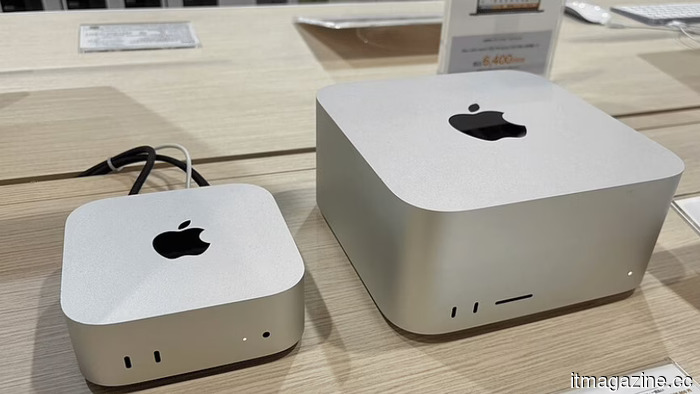 Apple discontinues the $599 Mac Mini as the demand for DRAM in AI data centers leads to an unprecedented 90% increase in memory prices and a worldwide shortage.
Apple has stopped producing the 256GB Mac Mini due to a 90% increase in DRAM prices in the first quarter of 2026. AI servers currently account for 23% of worldwide memory wafer production, resulting in a 10-20% rise in PC prices.
Apple discontinues the $599 Mac Mini as the demand for DRAM in AI data centers leads to an unprecedented 90% increase in memory prices and a worldwide shortage.
Apple has stopped producing the 256GB Mac Mini due to a 90% increase in DRAM prices in the first quarter of 2026. AI servers currently account for 23% of worldwide memory wafer production, resulting in a 10-20% rise in PC prices.
 Tesla offers the Shanghai-manufactured Model 3 in Canada for C$39,490 following the Carney-Beijing agreement that reduces the Chinese EV tariff to 6.1%.
The Model 3 produced in Shanghai by Tesla is priced at C$39,490 in Canada, thanks to Carney's trade agreement with Beijing. The quota of 49,000 vehicles allows for the import of Chinese electric vehicles to Canada with a tariff of 6.1%.
Tesla offers the Shanghai-manufactured Model 3 in Canada for C$39,490 following the Carney-Beijing agreement that reduces the Chinese EV tariff to 6.1%.
The Model 3 produced in Shanghai by Tesla is priced at C$39,490 in Canada, thanks to Carney's trade agreement with Beijing. The quota of 49,000 vehicles allows for the import of Chinese electric vehicles to Canada with a tariff of 6.1%.
 Grok is set to arrive on CarPlay as iOS 26.4 transforms the car dashboard into the next battleground for AI platforms.
Grok has joined ChatGPT, Perplexity, Claude, and Gemini on CarPlay following the opening of the platform to AI chatbots with iOS 26.4. The car dashboard has now become the most competitive display in the tech industry.
Grok is set to arrive on CarPlay as iOS 26.4 transforms the car dashboard into the next battleground for AI platforms.
Grok has joined ChatGPT, Perplexity, Claude, and Gemini on CarPlay following the opening of the platform to AI chatbots with iOS 26.4. The car dashboard has now become the most competitive display in the tech industry.
 Planet Labs introduces three additional Pelican satellites as a $900 million backlog and defense contracts lead to its first profitable year.
Planet Labs deployed Pelicans 7-9 featuring Nvidia AI, progressing toward a 32-satellite constellation. The company achieved profitability, boasting a $900M backlog along with significant agreements with NATO and the NRO.
Planet Labs introduces three additional Pelican satellites as a $900 million backlog and defense contracts lead to its first profitable year.
Planet Labs deployed Pelicans 7-9 featuring Nvidia AI, progressing toward a 32-satellite constellation. The company achieved profitability, boasting a $900M backlog along with significant agreements with NATO and the NRO.
 Indeed, it may be wise to treat your AI with kindness — here’s why that idea isn’t as absurd as it seems.
You may have experienced it — that somewhat empty, mechanical feeling when an AI interaction lacks depth. Research is beginning to clarify why this occurs and who is to blame for it.
Indeed, it may be wise to treat your AI with kindness — here’s why that idea isn’t as absurd as it seems.
You may have experienced it — that somewhat empty, mechanical feeling when an AI interaction lacks depth. Research is beginning to clarify why this occurs and who is to blame for it.
OpenAI has made ChatGPT subscriptions available to OpenClaw's 3.2 million users, while Anthropic restricts Claude access to the AI agent platform.
ChatGPT subscribers now have the ability to utilize OpenClaw's AI agents through GPT-5.4 for a monthly fee of $23. Anthropic has restricted access to Claude. OpenAI and Anthropic have taken opposing approaches on the same product.